ADVERTISEMENT

Mass transit infrastructure: Key to sustainability

Published Mar 3, 2025 11:21 pm

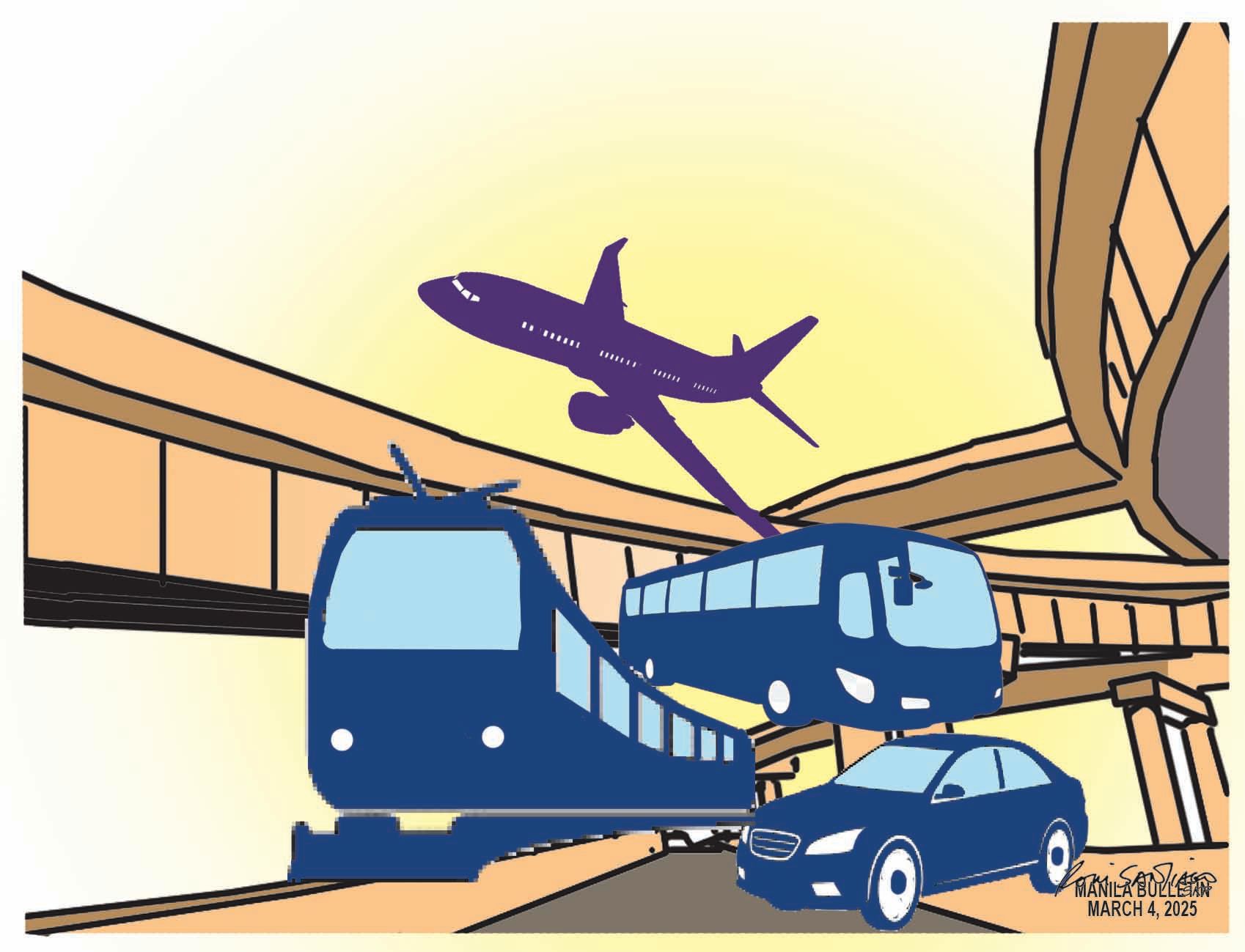
E CARTOON MAR 4, 2025 (1).jpg


Metro Manila, one of the world’s most vibrant urban centers, finds itself crippled by a chronic traffic nightmare that wastes millions of pesos daily. According to a recent report by the Japan International Cooperation Agency (JICA), the city loses vast sums due to gridlock — a consequence of the overwhelming dependence on private vehicles and the lack of viable mass transport. Clearly, there is need for a comprehensive, forward-thinking approach to prioritize mass transit infrastructure as the cornerstone of a more efficient, livable Metro Manila.


This is the situation facing new Department of Transportation (DOTr) Secretary Vince Dizon. He has created a Flagship Project Management Office (FPMO) that he himself will lead. Among the priority projects are: the Metro Manila Subway Project, North-South Commuter Railway Project, EDSA Busway Project, EDSA Greenways Project, Cebu Bus Rapid Transit in the Visayas and Davao Public Transport Modernization Project in Mindanao.


Secretary Dizon faces enormous challenges.


At the heart of our mobility crisis lies an overabundance of private cars that choke our roads, triggering delays that ripple through economic activities and everyday life. The financial drain imposed by traffic congestion is staggering, affecting commuters, businesses, emergency services, and overall urban productivity. It is clear that short-term fixes alone cannot reverse this trend. Instead, we must address the root causes by investing in long-term, sustainable mass transport solutions that can revitalize our urban environment.


Fundamentally, the solution is to expand and modernize our mass transit infrastructure. Metro Manila urgently needs a network that seamlessly integrates multiple modes of public transportation—commuter rail lines, bus rapid transit (BRT) systems, and modernized jeepney services—into one cohesive system.


Metro Manila’s predicament may soon be mirrored in Cebu, Davao and other emergent urban centers. This makes transport network integration even more imperative — not only to mitigate the economic losses documented by JICA but also help create a greener, more sustainable cities.  


First, the government must consider expanding the existing rail network and establishing dedicated BRT corridors. This requires close collaboration among national agencies, local government units, and private stakeholders to secure funding, streamline regulations, and, as initiated by Secretary Dizon, fast-track project implementation.


Second, policies that disincentivize excessive private car use must be put in place. Aside from the number-coding regulations that reduce the number of cars on the road during peak hours, promoting ride-sharing schemes, telecommuting, and staggered work hours can further diffuse traffic congestion.


While these long-term solutions are being developed, stop-gap measures could provide immediate relief. Optimizing traffic signal timings, designating dedicated bus lanes in other major thoroughfares, and employing real-time traffic management systems can significantly reduce bottlenecks. Moreover, enhancing non-motorized transport by expanding pedestrian zones and establishing protected bike lanes can promote healthier lifestyles and reduce dependency on motorized transport.


Implementing these measures requires unwavering political will, robust public-private partnerships, and active community participation. The benefits extend far beyond alleviating traffic congestion. A reformed mass transport system will reduce air pollution, improve public health, and boost economic competitiveness — ensuring a higher quality of life.
The time to act is now.  Our ability to reimagine urban mobility and invest in mass transit as the backbone of our transportation network are keys to the attainment of a sustainable future.

Related Tags

EDITORIAL
ADVERTISEMENT
.most-popular .layout-ratio{ padding-bottom: 79.13%; } @media (min-width: 768px) and (max-width: 1024px) { .widget-title { font-size: 15px !important; } }

{{ articles_filter_1561_widget.title }}

.most-popular .layout-ratio{ padding-bottom: 79.13%; } @media (min-width: 768px) and (max-width: 1024px) { .widget-title { font-size: 15px !important; } }

{{ articles_filter_1562_widget.title }}

.most-popular .layout-ratio{ padding-bottom: 79.13%; } @media (min-width: 768px) and (max-width: 1024px) { .widget-title { font-size: 15px !important; } }

{{ articles_filter_1563_widget.title }}

{{ articles_filter_1564_widget.title }}

.mb-article-details { position: relative; } .mb-article-details .article-body-preview, .mb-article-details .article-body-summary{ font-size: 17px; line-height: 30px; font-family: "Libre Caslon Text", serif; color: #000; } .mb-article-details .article-body-preview iframe , .mb-article-details .article-body-summary iframe{ width: 100%; margin: auto; } .read-more-background { background: linear-gradient(180deg, color(display-p3 1.000 1.000 1.000 / 0) 13.75%, color(display-p3 1.000 1.000 1.000 / 0.8) 30.79%, color(display-p3 1.000 1.000 1.000) 72.5%); position: absolute; height: 200px; width: 100%; bottom: 0; display: flex; justify-content: center; align-items: center; padding: 0; } .read-more-background a{ color: #000; } .read-more-btn { padding: 17px 45px; font-family: Inter; font-weight: 700; font-size: 18px; line-height: 16px; text-align: center; vertical-align: middle; border: 1px solid black; background-color: white; } .hidden { display: none; }
function initializeAllSwipers() { // Get all hidden inputs with cms_article_id document.querySelectorAll('[id^="cms_article_id_"]').forEach(function (input) { const cmsArticleId = input.value; const articleSelector = '#article-' + cmsArticleId + ' .body_images'; const swiperElement = document.querySelector(articleSelector); if (swiperElement && !swiperElement.classList.contains('swiper-initialized')) { new Swiper(articleSelector, { loop: true, pagination: false, navigation: { nextEl: '#article-' + cmsArticleId + ' .swiper-button-next', prevEl: '#article-' + cmsArticleId + ' .swiper-button-prev', }, }); } }); } setTimeout(initializeAllSwipers, 3000); const intersectionObserver = new IntersectionObserver( (entries) => { entries.forEach((entry) => { if (entry.isIntersecting) { const newUrl = entry.target.getAttribute("data-url"); if (newUrl) { history.pushState(null, null, newUrl); let article = entry.target; // Extract metadata const author = article.querySelector('.author-section').textContent.replace('By', '').trim(); const section = article.querySelector('.section-info ').textContent.replace(' ', ' '); const title = article.querySelector('.article-title h1').textContent; // Parse URL for Chartbeat path format const parsedUrl = new URL(newUrl, window.location.origin); const cleanUrl = parsedUrl.host + parsedUrl.pathname; // Update Chartbeat configuration if (typeof window._sf_async_config !== 'undefined') { window._sf_async_config.path = cleanUrl; window._sf_async_config.sections = section; window._sf_async_config.authors = author; } // Track virtual page view with Chartbeat if (typeof pSUPERFLY !== 'undefined' && typeof pSUPERFLY.virtualPage === 'function') { try { pSUPERFLY.virtualPage({ path: cleanUrl, title: title, sections: section, authors: author }); } catch (error) { console.error('ping error', error); } } // Optional: Update document title if (title && title !== document.title) { document.title = title; } } } }); }, { threshold: 0.1 } ); function showArticleBody(button) { const article = button.closest("article"); const summary = article.querySelector(".article-body-summary"); const body = article.querySelector(".article-body-preview"); const readMoreSection = article.querySelector(".read-more-background"); // Hide summary and read-more section summary.style.display = "none"; readMoreSection.style.display = "none"; // Show the full article body body.classList.remove("hidden"); } document.addEventListener("DOMContentLoaded", () => { let loadCount = 0; // Track how many times articles are loaded const offset = [1, 2, 3, 4, 5, 6, 7, 8, 9, 10]; // Offset values const currentUrl = window.location.pathname.substring(1); let isLoading = false; // Prevent multiple calls if (!currentUrl) { console.log("Current URL is invalid."); return; } const sentinel = document.getElementById("load-more-sentinel"); if (!sentinel) { console.log("Sentinel element not found."); return; } function isSentinelVisible() { const rect = sentinel.getBoundingClientRect(); return ( rect.top < window.innerHeight && rect.bottom >= 0 ); } function onScroll() { if (isLoading) return; if (isSentinelVisible()) { if (loadCount >= offset.length) { console.log("Maximum load attempts reached."); window.removeEventListener("scroll", onScroll); return; } isLoading = true; const currentOffset = offset[loadCount]; window.loadMoreItems().then(() => { let article = document.querySelector('#widget_1690 > div:nth-last-of-type(2) article'); intersectionObserver.observe(article) loadCount++; }).catch(error => { console.error("Error loading more items:", error); }).finally(() => { isLoading = false; }); } } window.addEventListener("scroll", onScroll); });

Sign up by email to receive news.