ADVERTISEMENT

Zero energy cooling chamber to prolong shelf life of vegetables

Published Mar 20, 2025 07:19 am

DA-RFO-II-Zero-Energy-Cooling-Chamber.jpg

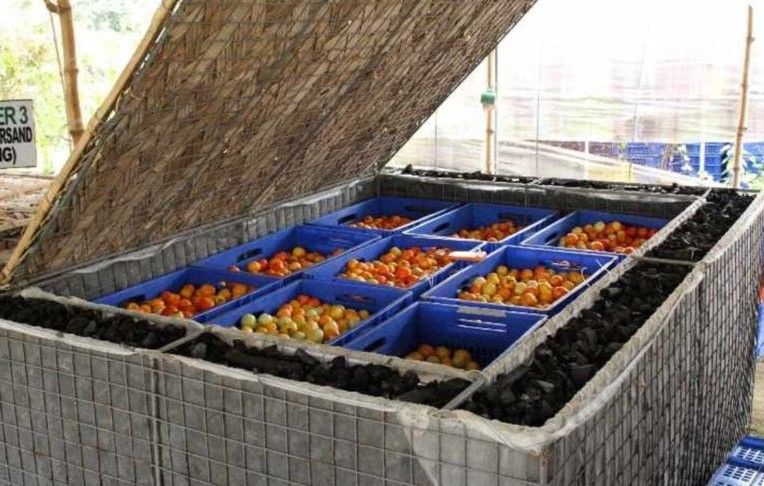
A look at ZEC-C (DA photo)

The Department of Agriculture’s (DA) Cagayan Valley office has unveiled a new technology designed to extend the shelf life of freshly harvested vegetables, particularly tomatoes and eggplants.

Known as the zero-energy cooling chamber (ZEC-C), this new tool provides farmers with a cost-effective and energy-efficient storage system that extends the freshness of their produce.

Farmers across Region 2, where lowland vegetable production is a vital industry, face the perennial problem of vegetable spoilage.

“My anxiety level rises around this time of the year, when farmers harvest their produce, especially vegetables like tomatoes. We constantly worry about hearing news of vegetables being dumped by the roadside,” said DA-Regional Field Office 2 Regional Executive Director Rose Mary Aquino in a statement.

“We needed a solution to this persistent problem, and our Cagayan Valley Research Center (CVRC) delivered ZEC-C,” she added.

According to the DA, the development of ZEC-C took two years and involved collaboration among stakeholders in the agriculture industry.

A team of technology developers, led by CRVC’s Mary Jane Ibarra, conducted various trials to identify the appropriate walling material.

It was then discovered that charcoal insulation effectively lowers temperatures by five to 10 degrees Celsius, maintaining humidity levels of 85 to 90 percent that are ideal for vegetable storage.

“This is the kind of creative thinking we need to modernize agriculture, increase farmer profits, reduce waste, and improve food security,” said Agriculture Secretary Francisco Tiu Laurel.

Laurel said the new technology not only supports the government’s goal of enhancing food security but also helps farmers increase their income.

ZEC-C can preserve tomatoes for up to 21 days and eggplants for up to five days, based on freshness, firmness, and color.

Other vegetables, such as bottle gourd (upo) and sponge gourd (payola) can stay in excellent condition for up to six days.

A ZEC-C unit can store as much as 500 kilos of fresh harvests or approximately ₱45,000 worth of vegetables.

“An economic analysis showed a return on investment of at least 71 percent for tomatoes and 32 percent for eggplants over a five- to 21-day storage cycle,” the DA said.

ZEC-C will officially launch later this March at the Nueva Vizcaya Agricultural Trading Center, where two units with one-ton capacities will be awarded.

Additional units with capacities ranging from 200 kilos to one ton will be distributed to towns in Isabela.

Related Tags

Vegetables Department of Agriculture (DA) Cagayan Valley
ADVERTISEMENT
.most-popular .layout-ratio{ padding-bottom: 79.13%; } @media (min-width: 768px) and (max-width: 1024px) { .widget-title { font-size: 15px !important; } }

{{ articles_filter_1561_widget.title }}

.most-popular .layout-ratio{ padding-bottom: 79.13%; } @media (min-width: 768px) and (max-width: 1024px) { .widget-title { font-size: 15px !important; } }

{{ articles_filter_1562_widget.title }}

.most-popular .layout-ratio{ padding-bottom: 79.13%; } @media (min-width: 768px) and (max-width: 1024px) { .widget-title { font-size: 15px !important; } }

{{ articles_filter_1563_widget.title }}

{{ articles_filter_1564_widget.title }}

.mb-article-details { position: relative; } .mb-article-details .article-body-preview, .mb-article-details .article-body-summary{ font-size: 17px; line-height: 30px; font-family: "Libre Caslon Text", serif; color: #000; } .mb-article-details .article-body-preview iframe , .mb-article-details .article-body-summary iframe{ width: 100%; margin: auto; } .read-more-background { background: linear-gradient(180deg, color(display-p3 1.000 1.000 1.000 / 0) 13.75%, color(display-p3 1.000 1.000 1.000 / 0.8) 30.79%, color(display-p3 1.000 1.000 1.000) 72.5%); position: absolute; height: 200px; width: 100%; bottom: 0; display: flex; justify-content: center; align-items: center; padding: 0; } .read-more-background a{ color: #000; } .read-more-btn { padding: 17px 45px; font-family: Inter; font-weight: 700; font-size: 18px; line-height: 16px; text-align: center; vertical-align: middle; border: 1px solid black; background-color: white; } .hidden { display: none; }
function initializeAllSwipers() { // Get all hidden inputs with cms_article_id document.querySelectorAll('[id^="cms_article_id_"]').forEach(function (input) { const cmsArticleId = input.value; const articleSelector = '#article-' + cmsArticleId + ' .body_images'; const swiperElement = document.querySelector(articleSelector); if (swiperElement && !swiperElement.classList.contains('swiper-initialized')) { new Swiper(articleSelector, { loop: true, pagination: false, navigation: { nextEl: '#article-' + cmsArticleId + ' .swiper-button-next', prevEl: '#article-' + cmsArticleId + ' .swiper-button-prev', }, }); } }); } setTimeout(initializeAllSwipers, 3000); const intersectionObserver = new IntersectionObserver( (entries) => { entries.forEach((entry) => { if (entry.isIntersecting) { const newUrl = entry.target.getAttribute("data-url"); if (newUrl) { history.pushState(null, null, newUrl); let article = entry.target; // Extract metadata const author = article.querySelector('.author-section').textContent.replace('By', '').trim(); const section = article.querySelector('.section-info ').textContent.replace(' ', ' '); const title = article.querySelector('.article-title h1').textContent; // Parse URL for Chartbeat path format const parsedUrl = new URL(newUrl, window.location.origin); const cleanUrl = parsedUrl.host + parsedUrl.pathname; // Update Chartbeat configuration if (typeof window._sf_async_config !== 'undefined') { window._sf_async_config.path = cleanUrl; window._sf_async_config.sections = section; window._sf_async_config.authors = author; } // Track virtual page view with Chartbeat if (typeof pSUPERFLY !== 'undefined' && typeof pSUPERFLY.virtualPage === 'function') { try { pSUPERFLY.virtualPage({ path: cleanUrl, title: title, sections: section, authors: author }); } catch (error) { console.error('ping error', error); } } // Optional: Update document title if (title && title !== document.title) { document.title = title; } } } }); }, { threshold: 0.1 } ); function showArticleBody(button) { const article = button.closest("article"); const summary = article.querySelector(".article-body-summary"); const body = article.querySelector(".article-body-preview"); const readMoreSection = article.querySelector(".read-more-background"); // Hide summary and read-more section summary.style.display = "none"; readMoreSection.style.display = "none"; // Show the full article body body.classList.remove("hidden"); } document.addEventListener("DOMContentLoaded", () => { let loadCount = 0; // Track how many times articles are loaded const offset = [1, 2, 3, 4, 5, 6, 7, 8, 9, 10]; // Offset values const currentUrl = window.location.pathname.substring(1); let isLoading = false; // Prevent multiple calls if (!currentUrl) { console.log("Current URL is invalid."); return; } const sentinel = document.getElementById("load-more-sentinel"); if (!sentinel) { console.log("Sentinel element not found."); return; } function isSentinelVisible() { const rect = sentinel.getBoundingClientRect(); return ( rect.top < window.innerHeight && rect.bottom >= 0 ); } function onScroll() { if (isLoading) return; if (isSentinelVisible()) { if (loadCount >= offset.length) { console.log("Maximum load attempts reached."); window.removeEventListener("scroll", onScroll); return; } isLoading = true; const currentOffset = offset[loadCount]; window.loadMoreItems().then(() => { let article = document.querySelector('#widget_1690 > div:nth-last-of-type(2) article'); intersectionObserver.observe(article) loadCount++; }).catch(error => { console.error("Error loading more items:", error); }).finally(() => { isLoading = false; }); } } window.addEventListener("scroll", onScroll); });

Sign up by email to receive news.