ADVERTISEMENT

Mercedes-Benz electric G-Class coming later this year

The ultimate off-road SUV, charged

Published Mar 19, 2025 02:30 am

031925MercedesBenzG580E1.jpg

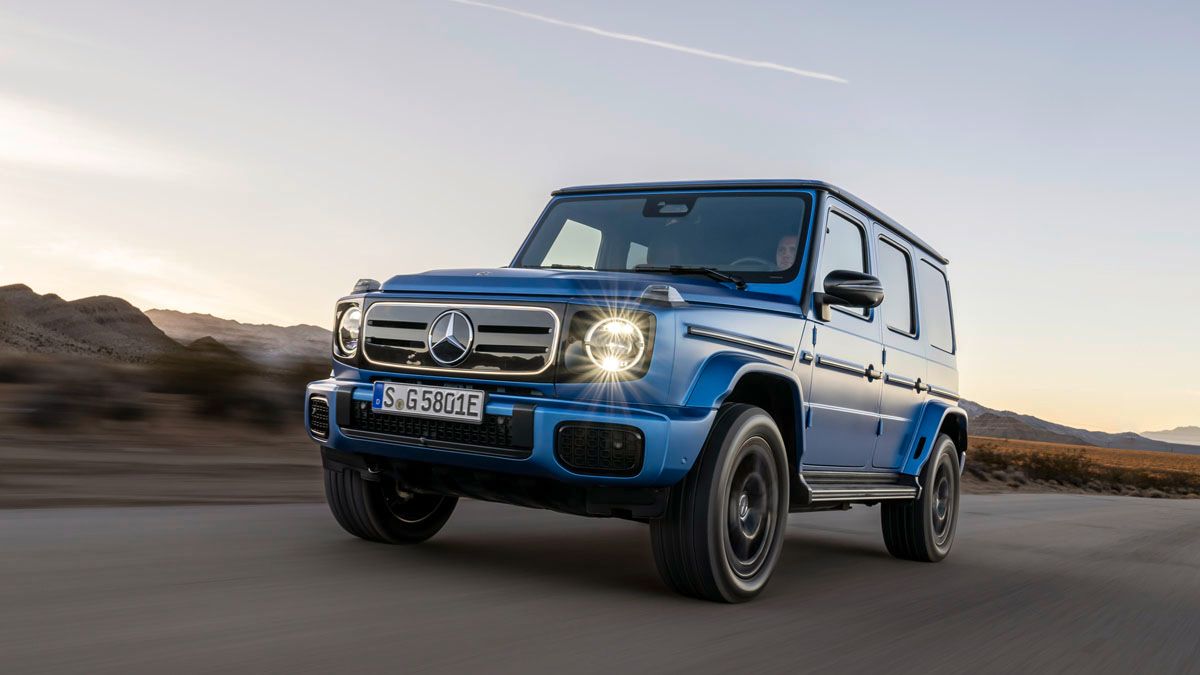
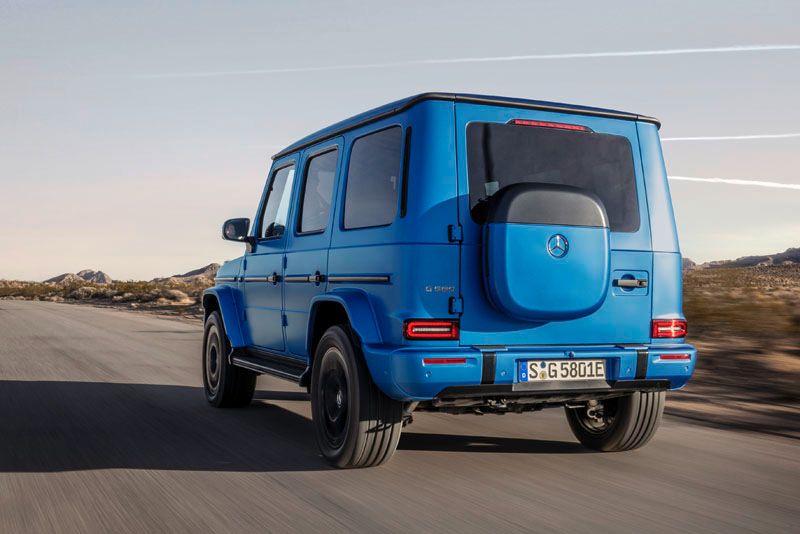
One of the most anticipated additions to Mercedes-Benz’s electric vehicle lineup may finally arrive later this year. Inchcape Philippines, distributor of Mercedes-Benz cars in the country announced that it plans to introduce the highly anticipated Gelandewagen (G-Class) variant later this year. Called the G580 with EQ Technology, this model features the iconic form and all the luxuries expected of a G-Class, but is now fully-electric.
031925MercedesBenzG580E4.jpg

Some fans may already be aware of the electric G-Class’s unique abilities: particularly the ability to rotate 360-degrees or more in place. This ability to turn in place, much like a tank, is thanks to the electric motors powering each wheel, totaling to four. This is much more than the typical one or two fitted on most electric vehicles.
031925MercedesBenzG580E3.jpg

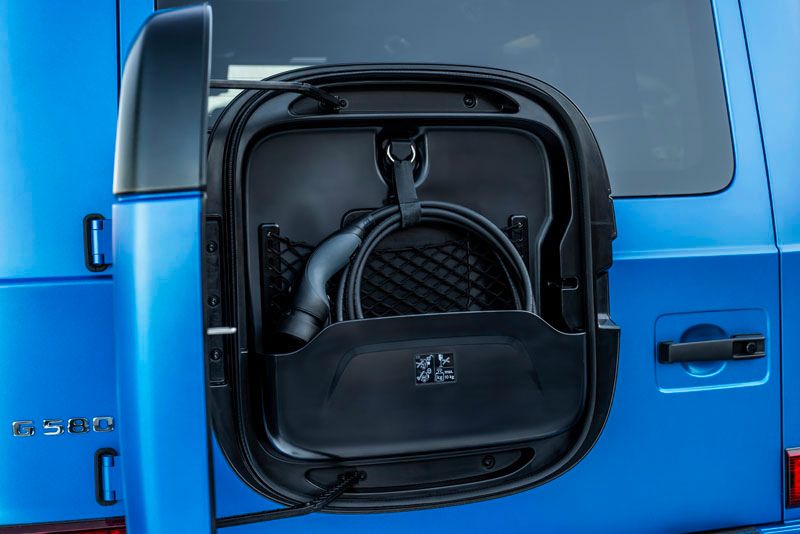
All four electric motors can combine to produce a system output of 587-PS and a whopping 1,164-Nm of torque. Power is supplied by a 116-kWh lithium-ion battery, which can reportedly power it for up to 473-km based on the WLTP cycle.

As expected of this flagship SUV, it has quite the performance figures as well. It can accelerate from 0 – 100-km/h in 4.7 seconds. It can then continue to an electronically limited top speed of 180 km/h. 
031925MercedesBenzG580E2.jpg

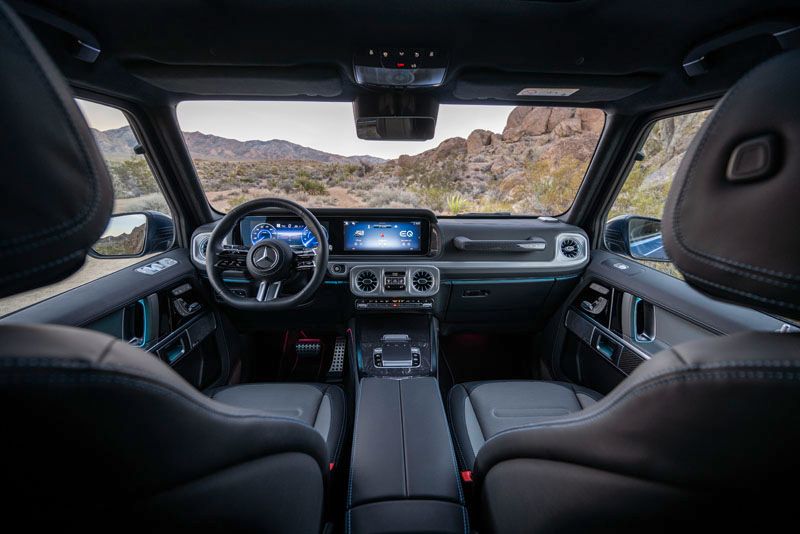
Mercedes-Benz claims it’s off-road abilities are even better than its ICE counterpart as the four electric motors can work together or independently to distribute torque and traction to whichever wheel needs it. This grants it torque vectoring as well as the ability to simulate differential locks. It also has unique features like three-speed intelligent off-road crawl functions, G-Turn, and G-Steering, which is the ability to turn like a tank we described earlier. 
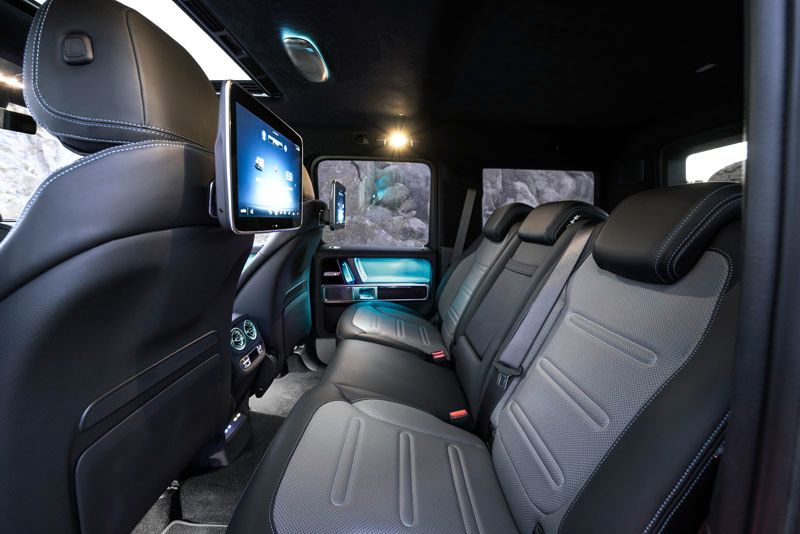
031925MercedesBenzG580E5.jpg

Because it is electric and all the related components are air-tight and waterproof, the electric G-Class is even more capable than its ICE counterpart when it comes to water. It's rated to have a maximum water-wading depth of 850mm.

Mercedes-Benz says this model may arrive some time in the second or third quarter of 2025. More specifications, standard equipment, and optional extras, as well as price will be revealed later in the year. Of course, like the ICE G-Class, this model’s price will come at a premium.
 

Related Tags

Mercedes-Benz battery electric vehicle
ADVERTISEMENT
.most-popular .layout-ratio{ padding-bottom: 79.13%; } @media (min-width: 768px) and (max-width: 1024px) { .widget-title { font-size: 15px !important; } }

{{ articles_filter_1561_widget.title }}

.most-popular .layout-ratio{ padding-bottom: 79.13%; } @media (min-width: 768px) and (max-width: 1024px) { .widget-title { font-size: 15px !important; } }

{{ articles_filter_1562_widget.title }}

.most-popular .layout-ratio{ padding-bottom: 79.13%; } @media (min-width: 768px) and (max-width: 1024px) { .widget-title { font-size: 15px !important; } }

{{ articles_filter_1563_widget.title }}

{{ articles_filter_1564_widget.title }}

.mb-article-details { position: relative; } .mb-article-details .article-body-preview, .mb-article-details .article-body-summary{ font-size: 17px; line-height: 30px; font-family: "Libre Caslon Text", serif; color: #000; } .mb-article-details .article-body-preview iframe , .mb-article-details .article-body-summary iframe{ width: 100%; margin: auto; } .read-more-background { background: linear-gradient(180deg, color(display-p3 1.000 1.000 1.000 / 0) 13.75%, color(display-p3 1.000 1.000 1.000 / 0.8) 30.79%, color(display-p3 1.000 1.000 1.000) 72.5%); position: absolute; height: 200px; width: 100%; bottom: 0; display: flex; justify-content: center; align-items: center; padding: 0; } .read-more-background a{ color: #000; } .read-more-btn { padding: 17px 45px; font-family: Inter; font-weight: 700; font-size: 18px; line-height: 16px; text-align: center; vertical-align: middle; border: 1px solid black; background-color: white; } .hidden { display: none; }
function initializeAllSwipers() { // Get all hidden inputs with cms_article_id document.querySelectorAll('[id^="cms_article_id_"]').forEach(function (input) { const cmsArticleId = input.value; const articleSelector = '#article-' + cmsArticleId + ' .body_images'; const swiperElement = document.querySelector(articleSelector); if (swiperElement && !swiperElement.classList.contains('swiper-initialized')) { new Swiper(articleSelector, { loop: true, pagination: false, navigation: { nextEl: '#article-' + cmsArticleId + ' .swiper-button-next', prevEl: '#article-' + cmsArticleId + ' .swiper-button-prev', }, }); } }); } setTimeout(initializeAllSwipers, 3000); const intersectionObserver = new IntersectionObserver( (entries) => { entries.forEach((entry) => { if (entry.isIntersecting) { const newUrl = entry.target.getAttribute("data-url"); if (newUrl) { history.pushState(null, null, newUrl); let article = entry.target; // Extract metadata const author = article.querySelector('.author-section').textContent.replace('By', '').trim(); const section = article.querySelector('.section-info ').textContent.replace(' ', ' '); const title = article.querySelector('.article-title h1').textContent; // Parse URL for Chartbeat path format const parsedUrl = new URL(newUrl, window.location.origin); const cleanUrl = parsedUrl.host + parsedUrl.pathname; // Update Chartbeat configuration if (typeof window._sf_async_config !== 'undefined') { window._sf_async_config.path = cleanUrl; window._sf_async_config.sections = section; window._sf_async_config.authors = author; } // Track virtual page view with Chartbeat if (typeof pSUPERFLY !== 'undefined' && typeof pSUPERFLY.virtualPage === 'function') { try { pSUPERFLY.virtualPage({ path: cleanUrl, title: title, sections: section, authors: author }); } catch (error) { console.error('ping error', error); } } // Optional: Update document title if (title && title !== document.title) { document.title = title; } } } }); }, { threshold: 0.1 } ); function showArticleBody(button) { const article = button.closest("article"); const summary = article.querySelector(".article-body-summary"); const body = article.querySelector(".article-body-preview"); const readMoreSection = article.querySelector(".read-more-background"); // Hide summary and read-more section summary.style.display = "none"; readMoreSection.style.display = "none"; // Show the full article body body.classList.remove("hidden"); } document.addEventListener("DOMContentLoaded", () => { let loadCount = 0; // Track how many times articles are loaded const offset = [1, 2, 3, 4, 5, 6, 7, 8, 9, 10]; // Offset values const currentUrl = window.location.pathname.substring(1); let isLoading = false; // Prevent multiple calls if (!currentUrl) { console.log("Current URL is invalid."); return; } const sentinel = document.getElementById("load-more-sentinel"); if (!sentinel) { console.log("Sentinel element not found."); return; } function isSentinelVisible() { const rect = sentinel.getBoundingClientRect(); return ( rect.top < window.innerHeight && rect.bottom >= 0 ); } function onScroll() { if (isLoading) return; if (isSentinelVisible()) { if (loadCount >= offset.length) { console.log("Maximum load attempts reached."); window.removeEventListener("scroll", onScroll); return; } isLoading = true; const currentOffset = offset[loadCount]; window.loadMoreItems().then(() => { let article = document.querySelector('#widget_1690 > div:nth-last-of-type(2) article'); intersectionObserver.observe(article) loadCount++; }).catch(error => { console.error("Error loading more items:", error); }).finally(() => { isLoading = false; }); } } window.addEventListener("scroll", onScroll); });

Sign up by email to receive news.