ADVERTISEMENT

PH Navy to test Spike-ER NLOS missile system aboard Acero-class gunboats

Published Mar 18, 2025 05:55 am
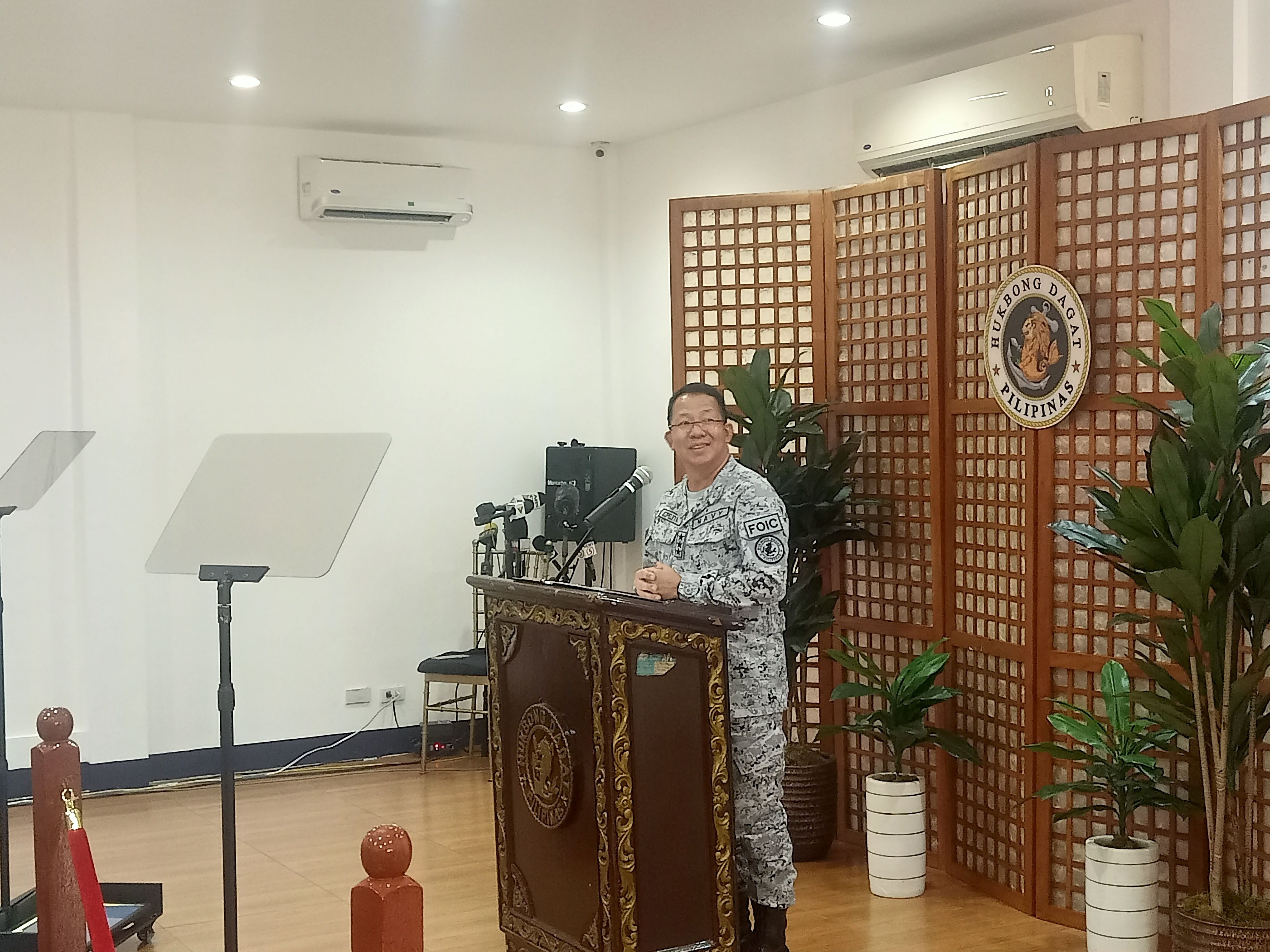
Philippine Navy Jose Ma Ambrosio Ezpeleta.jpg
Philippine Navy Flag Officer in Command, Vice Adm. Jose Ma Ambrosio Ezpeleta answers questions from the media during a press briefing at the Navy's headquarters in Manila on March 18, 2025. (Photo: Martin Sadongdong / MANILA BULLETIN)

The Philippine Navy (PN) will hold a live fire exercise in Bataan next month to determine the precision strike capability of the Spike-ER non-line of sight (NLOS) missile weapons system aboard two Acero-class patrol gunboats.

Vice Admiral Jose Ma Ambrosio Ezpeleta, PN Flag Officer in Command, said the live fire exercise involving fast-attack interdiction craft (FAIC) BRP Tomas Campo (PG-908) and BRP Albert Majini (PG-909) will be held in Mariveles town on April 21.

“These live missile firings represent a significant advancement in our operational capabilities and mark a step in refining shipping realistic and combat-ready military doctrines,” he said in a press briefing at the Navy’s headquarters in Manila.

Developed by Israel’s Rafael Advanced Defense Systems, the Spike NLOS precision-guided missile system has an exceptional operating range of up to 32 kilometers – and up to 50 kilometers from the air – successfully engaging non-line-of-sight targets.

It is equipped with advanced electro-optical and infrared sensors, and offers day and night operational capabilities, enhancing its effectiveness in various combat scenarios.

“They have longer operational range. Because of its range and capability to engage targets over the horizon, it's more potent,” Navy spokesperson Captain John Percie Alcos explained of the capabilities of the Spike-ER NLOS.

Last year, the PN also test-fired the Spike-ER NLOS missiles aboard the Acero-class patrol craft.

However, Alcos bared that it would be the first time the PN would fire multiple missile systems aboard different naval assets.

A separate live fire event will feature the French Mistral infrared homing short-range air defense system.

“These live fire exercises are crucial for the Navy to further enhance its operational capabilities as well as validate existing war-fighting doctrines in order for us to effectively perform our mandate of protecting our maritime rights and jurisdictions,” Alcos said.

“By continuously conducting exercises, we not only improve the skills of our sailors but also test the system that we have onboard,” he added.

Related Tags

Philippine Navy Spike-ER NLOS missile system Vice Admiral Jose Ma Ambrosio Ezpeleta
ADVERTISEMENT
.most-popular .layout-ratio{ padding-bottom: 79.13%; } @media (min-width: 768px) and (max-width: 1024px) { .widget-title { font-size: 15px !important; } }

{{ articles_filter_1561_widget.title }}

.most-popular .layout-ratio{ padding-bottom: 79.13%; } @media (min-width: 768px) and (max-width: 1024px) { .widget-title { font-size: 15px !important; } }

{{ articles_filter_1562_widget.title }}

.most-popular .layout-ratio{ padding-bottom: 79.13%; } @media (min-width: 768px) and (max-width: 1024px) { .widget-title { font-size: 15px !important; } }

{{ articles_filter_1563_widget.title }}

{{ articles_filter_1564_widget.title }}

.mb-article-details { position: relative; } .mb-article-details .article-body-preview, .mb-article-details .article-body-summary{ font-size: 17px; line-height: 30px; font-family: "Libre Caslon Text", serif; color: #000; } .mb-article-details .article-body-preview iframe , .mb-article-details .article-body-summary iframe{ width: 100%; margin: auto; } .read-more-background { background: linear-gradient(180deg, color(display-p3 1.000 1.000 1.000 / 0) 13.75%, color(display-p3 1.000 1.000 1.000 / 0.8) 30.79%, color(display-p3 1.000 1.000 1.000) 72.5%); position: absolute; height: 200px; width: 100%; bottom: 0; display: flex; justify-content: center; align-items: center; padding: 0; } .read-more-background a{ color: #000; } .read-more-btn { padding: 17px 45px; font-family: Inter; font-weight: 700; font-size: 18px; line-height: 16px; text-align: center; vertical-align: middle; border: 1px solid black; background-color: white; } .hidden { display: none; }
function initializeAllSwipers() { // Get all hidden inputs with cms_article_id document.querySelectorAll('[id^="cms_article_id_"]').forEach(function (input) { const cmsArticleId = input.value; const articleSelector = '#article-' + cmsArticleId + ' .body_images'; const swiperElement = document.querySelector(articleSelector); if (swiperElement && !swiperElement.classList.contains('swiper-initialized')) { new Swiper(articleSelector, { loop: true, pagination: false, navigation: { nextEl: '#article-' + cmsArticleId + ' .swiper-button-next', prevEl: '#article-' + cmsArticleId + ' .swiper-button-prev', }, }); } }); } setTimeout(initializeAllSwipers, 3000); const intersectionObserver = new IntersectionObserver( (entries) => { entries.forEach((entry) => { if (entry.isIntersecting) { const newUrl = entry.target.getAttribute("data-url"); if (newUrl) { history.pushState(null, null, newUrl); let article = entry.target; // Extract metadata const author = article.querySelector('.author-section').textContent.replace('By', '').trim(); const section = article.querySelector('.section-info ').textContent.replace(' ', ' '); const title = article.querySelector('.article-title h1').textContent; // Parse URL for Chartbeat path format const parsedUrl = new URL(newUrl, window.location.origin); const cleanUrl = parsedUrl.host + parsedUrl.pathname; // Update Chartbeat configuration if (typeof window._sf_async_config !== 'undefined') { window._sf_async_config.path = cleanUrl; window._sf_async_config.sections = section; window._sf_async_config.authors = author; } // Track virtual page view with Chartbeat if (typeof pSUPERFLY !== 'undefined' && typeof pSUPERFLY.virtualPage === 'function') { try { pSUPERFLY.virtualPage({ path: cleanUrl, title: title, sections: section, authors: author }); } catch (error) { console.error('ping error', error); } } // Optional: Update document title if (title && title !== document.title) { document.title = title; } } } }); }, { threshold: 0.1 } ); function showArticleBody(button) { const article = button.closest("article"); const summary = article.querySelector(".article-body-summary"); const body = article.querySelector(".article-body-preview"); const readMoreSection = article.querySelector(".read-more-background"); // Hide summary and read-more section summary.style.display = "none"; readMoreSection.style.display = "none"; // Show the full article body body.classList.remove("hidden"); } document.addEventListener("DOMContentLoaded", () => { let loadCount = 0; // Track how many times articles are loaded const offset = [1, 2, 3, 4, 5, 6, 7, 8, 9, 10]; // Offset values const currentUrl = window.location.pathname.substring(1); let isLoading = false; // Prevent multiple calls if (!currentUrl) { console.log("Current URL is invalid."); return; } const sentinel = document.getElementById("load-more-sentinel"); if (!sentinel) { console.log("Sentinel element not found."); return; } function isSentinelVisible() { const rect = sentinel.getBoundingClientRect(); return ( rect.top < window.innerHeight && rect.bottom >= 0 ); } function onScroll() { if (isLoading) return; if (isSentinelVisible()) { if (loadCount >= offset.length) { console.log("Maximum load attempts reached."); window.removeEventListener("scroll", onScroll); return; } isLoading = true; const currentOffset = offset[loadCount]; window.loadMoreItems().then(() => { let article = document.querySelector('#widget_1690 > div:nth-last-of-type(2) article'); intersectionObserver.observe(article) loadCount++; }).catch(error => { console.error("Error loading more items:", error); }).finally(() => { isLoading = false; }); } } window.addEventListener("scroll", onScroll); });

Sign up by email to receive news.