

ADVERTISEMENT

Hamas agrees to release a US-Israeli hostage and the bodies of 4 other dual nationals

Published Mar 14, 2025 12:55 pm

JERUSALEM (AP) — Hamas said on Friday it has accepted a proposal from mediators to release one living American-Israeli hostage and the bodies of four dual-nationals, hostages who had died in captivity. The announcement came as talks continue in Qatar to try to broker the next stage of the Israel-Hamas ceasefire.
AP25072681897271.jpg
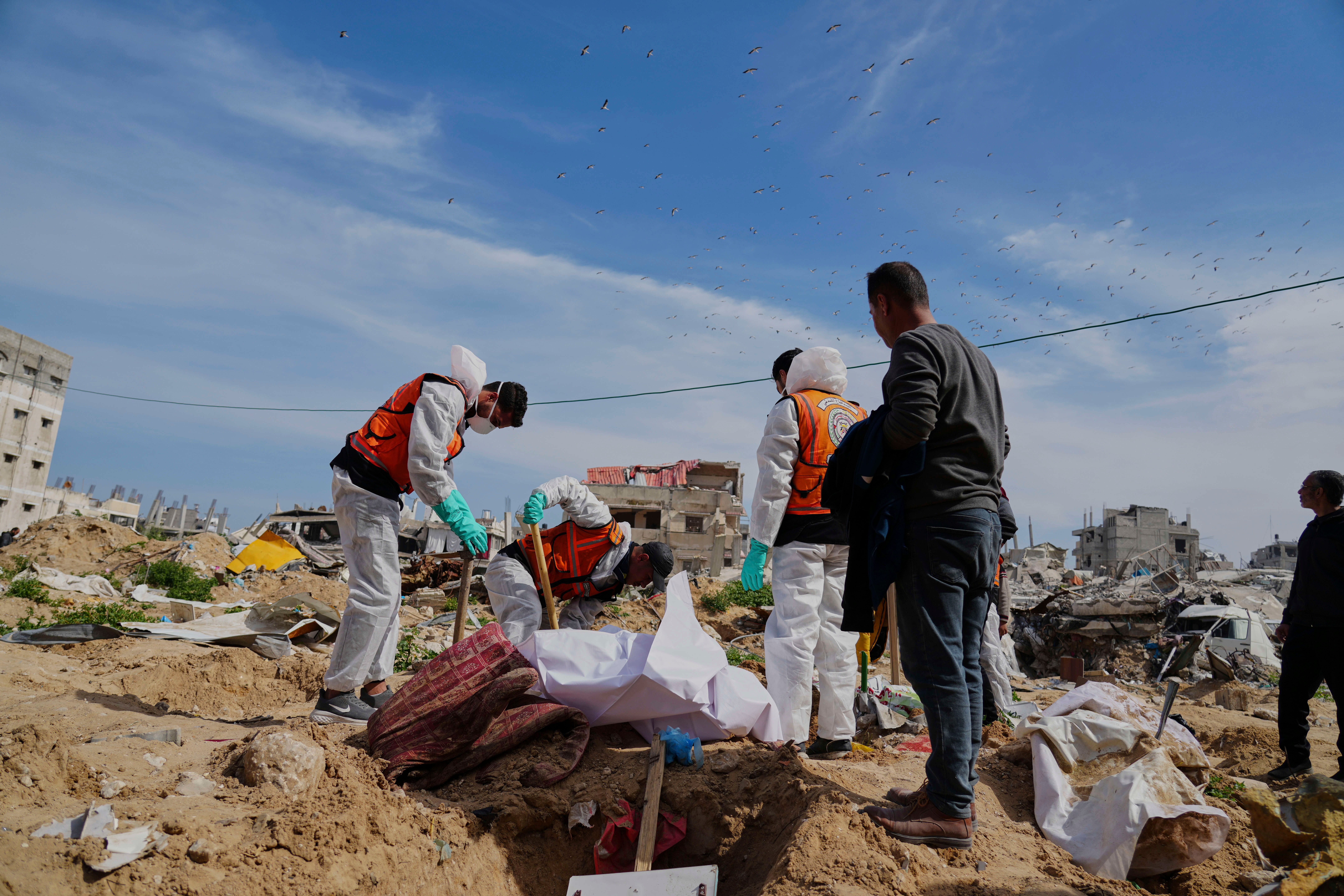
The bodies of Palestinians killed during the Israel-Hamas war and were buried in a mass grave at Shifa Hospital yard are exhumed for identification and reburial in Gaza City's official cemeteries, on Thursday, March 13, 2025. (AP Photo/Abdel Kareem Hana)

The militant group in the Gaza Strip did not immediately specify when the release of soldier Edan Alexander and the four bodies would occur, and other countries party to the agreement did not immediately confirm the Hamas statement.

Alexander was 19 when he was taken from his base on the border with Gaza in southern Israel during the Hamas attack on Oct. 7, 2023 that sparked the war.

It was not clear which parties had participated in negotiating the deal. The United States, led by the Trump administration's hostage envoy Steve Witkoff, has been pushing for a proposal that would extend the truce and see a limited number of hostage for prisoner exchanges.

Following the Hamas statement, Israeli Prime Minister Benjamin Netanyahu huddled with top advisers in security consultations, according to an Israeli official who was not authorized to speak on the record about the matter.

The first phase of the ceasefire ended two weeks ago.

The White House last week made a surprise announcement, saying that American officials had engaged in “ongoing talks and discussions” with Hamas officials, stepping away from a long-held U.S. policy of not directly engaging with the militant group. That prompted a terse response from Netanyahu’s office.

It was not immediately clear whether those talks were at all linked to Hamas’ Friday announcement about the release of the American hostage.

In a separate statement, Hamas official Husam Badran reaffirmed what he said was Hamas’ commitment to fully implementing the ceasefire agreement in all its phases, warning that any Israeli deviation from the terms would return negotiations to square one.

The ceasefire has paused the deadliest and most destructive fighting ever between Israel and Hamas. The first phase allowed the return of 25 living hostages and the remains of eight others in exchange for the release of nearly 2,000 Palestinian prisoners.

Israeli forces have withdrawn to buffer zones inside Gaza, hundreds of thousands of displaced Palestinians have returned to northern Gaza for the first time since early in the war, and hundreds of trucks of aid entered per day until Israel suspended supplies.

Israel has been pressing Hamas to release half of the remaining hostages in return for an extension of the first phase, and a promise to negotiate a lasting truce. Hamas is believed to have 24 living hostages and the bodies of 35 others.

Two weeks ago, Israel cut off all supplies to Gaza and its more than 2 million people as it pressed Hamas to agree. The militant group has said that the move would affect the remaining hostages as well.

Hamas wants to start negotiations on the ceasefire’s more difficult second phase, which would see the release of remaining hostages from Gaza, the withdrawal of Israeli forces and a lasting peace.

The militant group said with support cut off to Gaza, some 80% of the population has now lost access to food sources, with aid distribution halted and markets running out of supplies, while 90% are unable to access clean drinking water.

In Jerusalem, some 80,000 Muslim worshippers prayed on Friday at the Al-Aqsa mosque compound for the second week of Ramadan, according to the Islamic Trust, which monitors the site. Israel is tightly controlling access, allowing only men over 55 and women over 50 to enter from the occupied territory for the prayers.

“The conditions are extremely difficult,” said Yousef Badeen, a Palestinian who had left the southern West Bank city of Hebron at dawn to make it to Jerusalem, said. “We wish they will open it for good.”

Hamas accused Israel of escalating a “religious war” against Palestinians with what it called the “systematic targeting of Muslim religious practices” through its restrictions at Al-Aqsa mosque.

Related Tags

World news
ADVERTISEMENT
.most-popular .layout-ratio{ padding-bottom: 79.13%; } @media (min-width: 768px) and (max-width: 1024px) { .widget-title { font-size: 15px !important; } }

{{ articles_filter_1561_widget.title }}

.most-popular .layout-ratio{ padding-bottom: 79.13%; } @media (min-width: 768px) and (max-width: 1024px) { .widget-title { font-size: 15px !important; } }

{{ articles_filter_1562_widget.title }}

.most-popular .layout-ratio{ padding-bottom: 79.13%; } @media (min-width: 768px) and (max-width: 1024px) { .widget-title { font-size: 15px !important; } }

{{ articles_filter_1563_widget.title }}

{{ articles_filter_1564_widget.title }}

.mb-article-details { position: relative; } .mb-article-details .article-body-preview, .mb-article-details .article-body-summary{ font-size: 17px; line-height: 30px; font-family: "Libre Caslon Text", serif; color: #000; } .mb-article-details .article-body-preview iframe , .mb-article-details .article-body-summary iframe{ width: 100%; margin: auto; } .read-more-background { background: linear-gradient(180deg, color(display-p3 1.000 1.000 1.000 / 0) 13.75%, color(display-p3 1.000 1.000 1.000 / 0.8) 30.79%, color(display-p3 1.000 1.000 1.000) 72.5%); position: absolute; height: 200px; width: 100%; bottom: 0; display: flex; justify-content: center; align-items: center; padding: 0; } .read-more-background a{ color: #000; } .read-more-btn { padding: 17px 45px; font-family: Inter; font-weight: 700; font-size: 18px; line-height: 16px; text-align: center; vertical-align: middle; border: 1px solid black; background-color: white; } .hidden { display: none; }
function initializeAllSwipers() { // Get all hidden inputs with cms_article_id document.querySelectorAll('[id^="cms_article_id_"]').forEach(function (input) { const cmsArticleId = input.value; const articleSelector = '#article-' + cmsArticleId + ' .body_images'; const swiperElement = document.querySelector(articleSelector); if (swiperElement && !swiperElement.classList.contains('swiper-initialized')) { new Swiper(articleSelector, { loop: true, pagination: false, navigation: { nextEl: '#article-' + cmsArticleId + ' .swiper-button-next', prevEl: '#article-' + cmsArticleId + ' .swiper-button-prev', }, }); } }); } setTimeout(initializeAllSwipers, 3000); const intersectionObserver = new IntersectionObserver( (entries) => { entries.forEach((entry) => { if (entry.isIntersecting) { const newUrl = entry.target.getAttribute("data-url"); if (newUrl) { history.pushState(null, null, newUrl); let article = entry.target; // Extract metadata const author = article.querySelector('.author-section').textContent.replace('By', '').trim(); const section = article.querySelector('.section-info ').textContent.replace(' ', ' '); const title = article.querySelector('.article-title h1').textContent; // Parse URL for Chartbeat path format const parsedUrl = new URL(newUrl, window.location.origin); const cleanUrl = parsedUrl.host + parsedUrl.pathname; // Update Chartbeat configuration if (typeof window._sf_async_config !== 'undefined') { window._sf_async_config.path = cleanUrl; window._sf_async_config.sections = section; window._sf_async_config.authors = author; } // Track virtual page view with Chartbeat if (typeof pSUPERFLY !== 'undefined' && typeof pSUPERFLY.virtualPage === 'function') { try { pSUPERFLY.virtualPage({ path: cleanUrl, title: title, sections: section, authors: author }); } catch (error) { console.error('ping error', error); } } // Optional: Update document title if (title && title !== document.title) { document.title = title; } } } }); }, { threshold: 0.1 } ); function showArticleBody(button) { const article = button.closest("article"); const summary = article.querySelector(".article-body-summary"); const body = article.querySelector(".article-body-preview"); const readMoreSection = article.querySelector(".read-more-background"); // Hide summary and read-more section summary.style.display = "none"; readMoreSection.style.display = "none"; // Show the full article body body.classList.remove("hidden"); } document.addEventListener("DOMContentLoaded", () => { let loadCount = 0; // Track how many times articles are loaded const offset = [1, 2, 3, 4, 5, 6, 7, 8, 9, 10]; // Offset values const currentUrl = window.location.pathname.substring(1); let isLoading = false; // Prevent multiple calls if (!currentUrl) { console.log("Current URL is invalid."); return; } const sentinel = document.getElementById("load-more-sentinel"); if (!sentinel) { console.log("Sentinel element not found."); return; } function isSentinelVisible() { const rect = sentinel.getBoundingClientRect(); return ( rect.top < window.innerHeight && rect.bottom >= 0 ); } function onScroll() { if (isLoading) return; if (isSentinelVisible()) { if (loadCount >= offset.length) { console.log("Maximum load attempts reached."); window.removeEventListener("scroll", onScroll); return; } isLoading = true; const currentOffset = offset[loadCount]; window.loadMoreItems().then(() => { let article = document.querySelector('#widget_1690 > div:nth-last-of-type(2) article'); intersectionObserver.observe(article) loadCount++; }).catch(error => { console.error("Error loading more items:", error); }).finally(() => { isLoading = false; }); } } window.addEventListener("scroll", onScroll); });

Sign up by email to receive news.