ADVERTISEMENT

Majority of the world's population breathes dirty air, report says

Published Mar 12, 2025 02:39 am
f4a6fe3356ebb38c89d3dd4ded4d3141.jpeg
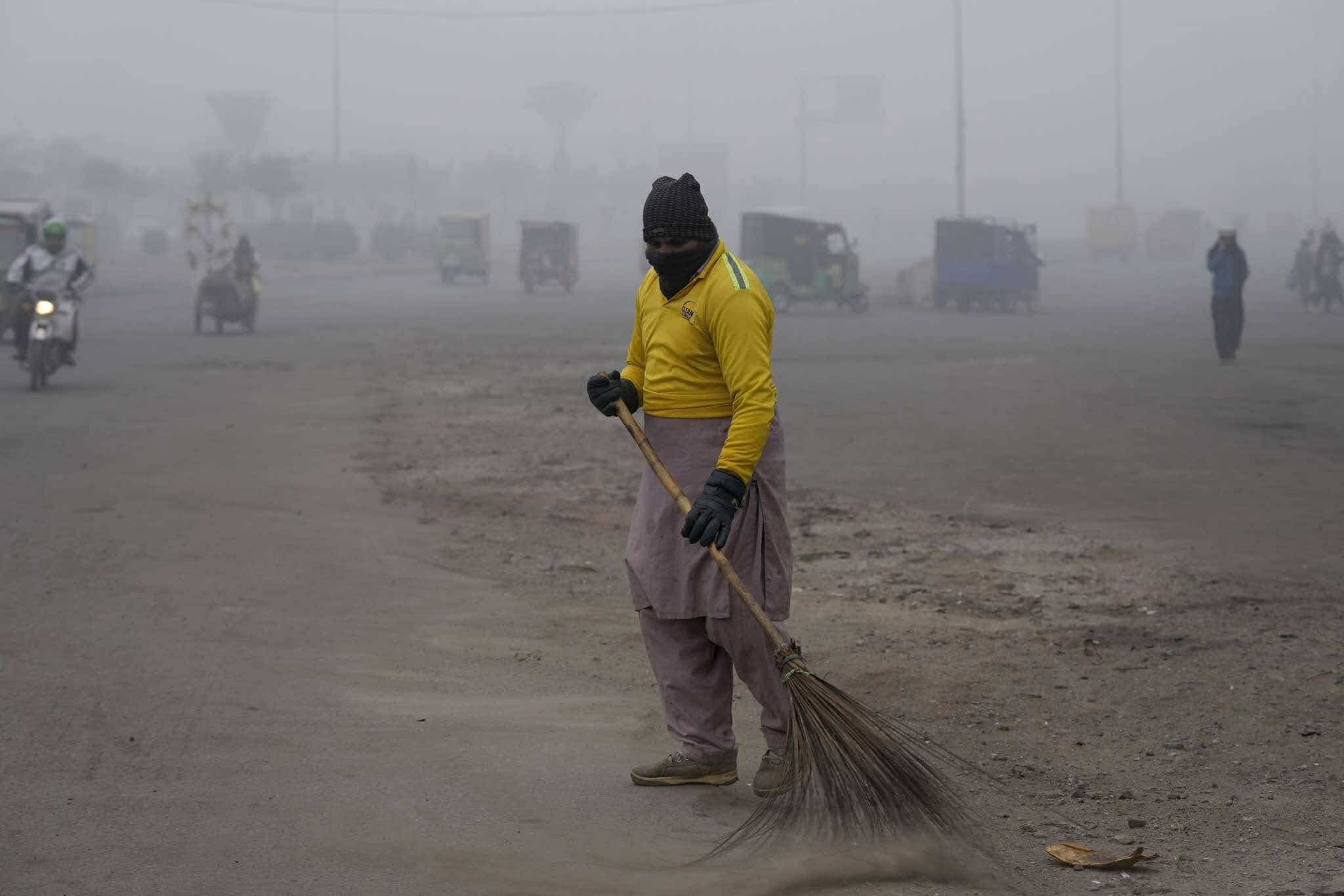
A sweeper cleans as smog envelops the area and reduces visibility in Lahore, Pakistan, Jan. 11, 2024. (AP Photo/K.M. Chaudary, File)

BENGALURU, India (AP) — Most of the world has dirty air, with just 17 percent of cities globally meeting air pollution guidelines, a report Tuesday found.

Switzerland-based air quality monitoring database IQAir analyzed data from 40,000 air quality monitoring stations in 138 countries and found that Chad, Congo, Bangladesh, Pakistan and India had the dirtiest air. India had six of the nine most polluted cities with the industrial town of Byrnihat in northeastern India the worst.

Experts said the real amount of air pollution might be far greater as many parts of the world lack the monitoring needed for more accurate data. In Africa, for example, there is only one monitoring station for every 3.7 million people.

More air quality monitors are being set up to counter the issue, the report said. This year, report authors were able to incorporate data from 8,954 new locations and around a thousand new monitors as a result of efforts to better monitor air pollution.

But last week, data monitoring for air pollution was dealt a blow when the U.S. State Department announced it would no longer make public its data from its embassies and consulates around the world.

Breathing in polluted air over a long period of time can cause respiratory illness, Alzheimer's disease and cancer, said Fatimah Ahamad, chief scientist and air pollution expert at Malaysia-based Sunway Centre for Planetary Health. The World Health Organization estimates that air pollution kills around 7 million people each year.

Ahamad said much more needs to be done to cut air pollution levels. The WHO had earlier found that 99 percent of the world's population lives in places that do not meet recommended air quality levels.

"If you have bad water, no water, you can tell people to wait for half an hour a day, the water will come. But if you have bad air, you cannot tell people to pause breathing," she said.

Several cities like Beijing, Seoul, South Korea, and Rybnik in Poland have successfully improved their air quality through stricter regulations on pollution from vehicles, power plants and industry. They've also promoted cleaner energy and invested in public transportation.

Another notable effort to curb severe air pollution was the Association of Southeast Asian Nations agreement on transboundary haze pollution. Even though its had limited success so far, 10 countries in the region pledged to work together to monitor and curb pollution from large forest fires, a common occurrence in the region during dry seasons.

Shweta Narayan, a campaign lead at the Global Climate and Health Alliance, said many of the regions witnessing the worst air pollution are also places where planet-heating gases are released extensively through the burning of coal, oil and gas. Slashing planet-warming emissions to slow the heating up of the planet can also improve air quality, she said.

Air pollution and climate crisis "are two sides of the same coin," she said.

Related Tags

world health organization IQAir air quality monitors transboundary haze pollution Fatimah Ahamad Air pollution
ADVERTISEMENT
.most-popular .layout-ratio{ padding-bottom: 79.13%; } @media (min-width: 768px) and (max-width: 1024px) { .widget-title { font-size: 15px !important; } }

{{ articles_filter_1561_widget.title }}

.most-popular .layout-ratio{ padding-bottom: 79.13%; } @media (min-width: 768px) and (max-width: 1024px) { .widget-title { font-size: 15px !important; } }

{{ articles_filter_1562_widget.title }}

.most-popular .layout-ratio{ padding-bottom: 79.13%; } @media (min-width: 768px) and (max-width: 1024px) { .widget-title { font-size: 15px !important; } }

{{ articles_filter_1563_widget.title }}

{{ articles_filter_1564_widget.title }}

.mb-article-details { position: relative; } .mb-article-details .article-body-preview, .mb-article-details .article-body-summary{ font-size: 17px; line-height: 30px; font-family: "Libre Caslon Text", serif; color: #000; } .mb-article-details .article-body-preview iframe , .mb-article-details .article-body-summary iframe{ width: 100%; margin: auto; } .read-more-background { background: linear-gradient(180deg, color(display-p3 1.000 1.000 1.000 / 0) 13.75%, color(display-p3 1.000 1.000 1.000 / 0.8) 30.79%, color(display-p3 1.000 1.000 1.000) 72.5%); position: absolute; height: 200px; width: 100%; bottom: 0; display: flex; justify-content: center; align-items: center; padding: 0; } .read-more-background a{ color: #000; } .read-more-btn { padding: 17px 45px; font-family: Inter; font-weight: 700; font-size: 18px; line-height: 16px; text-align: center; vertical-align: middle; border: 1px solid black; background-color: white; } .hidden { display: none; }
function initializeAllSwipers() { // Get all hidden inputs with cms_article_id document.querySelectorAll('[id^="cms_article_id_"]').forEach(function (input) { const cmsArticleId = input.value; const articleSelector = '#article-' + cmsArticleId + ' .body_images'; const swiperElement = document.querySelector(articleSelector); if (swiperElement && !swiperElement.classList.contains('swiper-initialized')) { new Swiper(articleSelector, { loop: true, pagination: false, navigation: { nextEl: '#article-' + cmsArticleId + ' .swiper-button-next', prevEl: '#article-' + cmsArticleId + ' .swiper-button-prev', }, }); } }); } setTimeout(initializeAllSwipers, 3000); const intersectionObserver = new IntersectionObserver( (entries) => { entries.forEach((entry) => { if (entry.isIntersecting) { const newUrl = entry.target.getAttribute("data-url"); if (newUrl) { history.pushState(null, null, newUrl); let article = entry.target; // Extract metadata const author = article.querySelector('.author-section').textContent.replace('By', '').trim(); const section = article.querySelector('.section-info ').textContent.replace(' ', ' '); const title = article.querySelector('.article-title h1').textContent; // Parse URL for Chartbeat path format const parsedUrl = new URL(newUrl, window.location.origin); const cleanUrl = parsedUrl.host + parsedUrl.pathname; // Update Chartbeat configuration if (typeof window._sf_async_config !== 'undefined') { window._sf_async_config.path = cleanUrl; window._sf_async_config.sections = section; window._sf_async_config.authors = author; } // Track virtual page view with Chartbeat if (typeof pSUPERFLY !== 'undefined' && typeof pSUPERFLY.virtualPage === 'function') { try { pSUPERFLY.virtualPage({ path: cleanUrl, title: title, sections: section, authors: author }); } catch (error) { console.error('ping error', error); } } // Optional: Update document title if (title && title !== document.title) { document.title = title; } } } }); }, { threshold: 0.1 } ); function showArticleBody(button) { const article = button.closest("article"); const summary = article.querySelector(".article-body-summary"); const body = article.querySelector(".article-body-preview"); const readMoreSection = article.querySelector(".read-more-background"); // Hide summary and read-more section summary.style.display = "none"; readMoreSection.style.display = "none"; // Show the full article body body.classList.remove("hidden"); } document.addEventListener("DOMContentLoaded", () => { let loadCount = 0; // Track how many times articles are loaded const offset = [1, 2, 3, 4, 5, 6, 7, 8, 9, 10]; // Offset values const currentUrl = window.location.pathname.substring(1); let isLoading = false; // Prevent multiple calls if (!currentUrl) { console.log("Current URL is invalid."); return; } const sentinel = document.getElementById("load-more-sentinel"); if (!sentinel) { console.log("Sentinel element not found."); return; } function isSentinelVisible() { const rect = sentinel.getBoundingClientRect(); return ( rect.top < window.innerHeight && rect.bottom >= 0 ); } function onScroll() { if (isLoading) return; if (isSentinelVisible()) { if (loadCount >= offset.length) { console.log("Maximum load attempts reached."); window.removeEventListener("scroll", onScroll); return; } isLoading = true; const currentOffset = offset[loadCount]; window.loadMoreItems().then(() => { let article = document.querySelector('#widget_1690 > div:nth-last-of-type(2) article'); intersectionObserver.observe(article) loadCount++; }).catch(error => { console.error("Error loading more items:", error); }).finally(() => { isLoading = false; }); } } window.addEventListener("scroll", onScroll); });

Sign up by email to receive news.