






 Philippines
National
Marcos honors food workers, pushes experiential tourism at Filipino Food Month kick-off
Philippines
National
Marcos honors food workers, pushes experiential tourism at Filipino Food Month kick-off
Marcos honors food workers, pushes experiential tourism at Filipino Food Month kick-off


At A Glance
- President Marcos likewise promoted food as a key part of "experiential tourism," where visitors seek immersive cultural activities.
President Marcos highlighted the vital role of Filipino food workers in nourishing the nation and preserving its culture as he led the national kick-off celebration of Filipino Food Month.
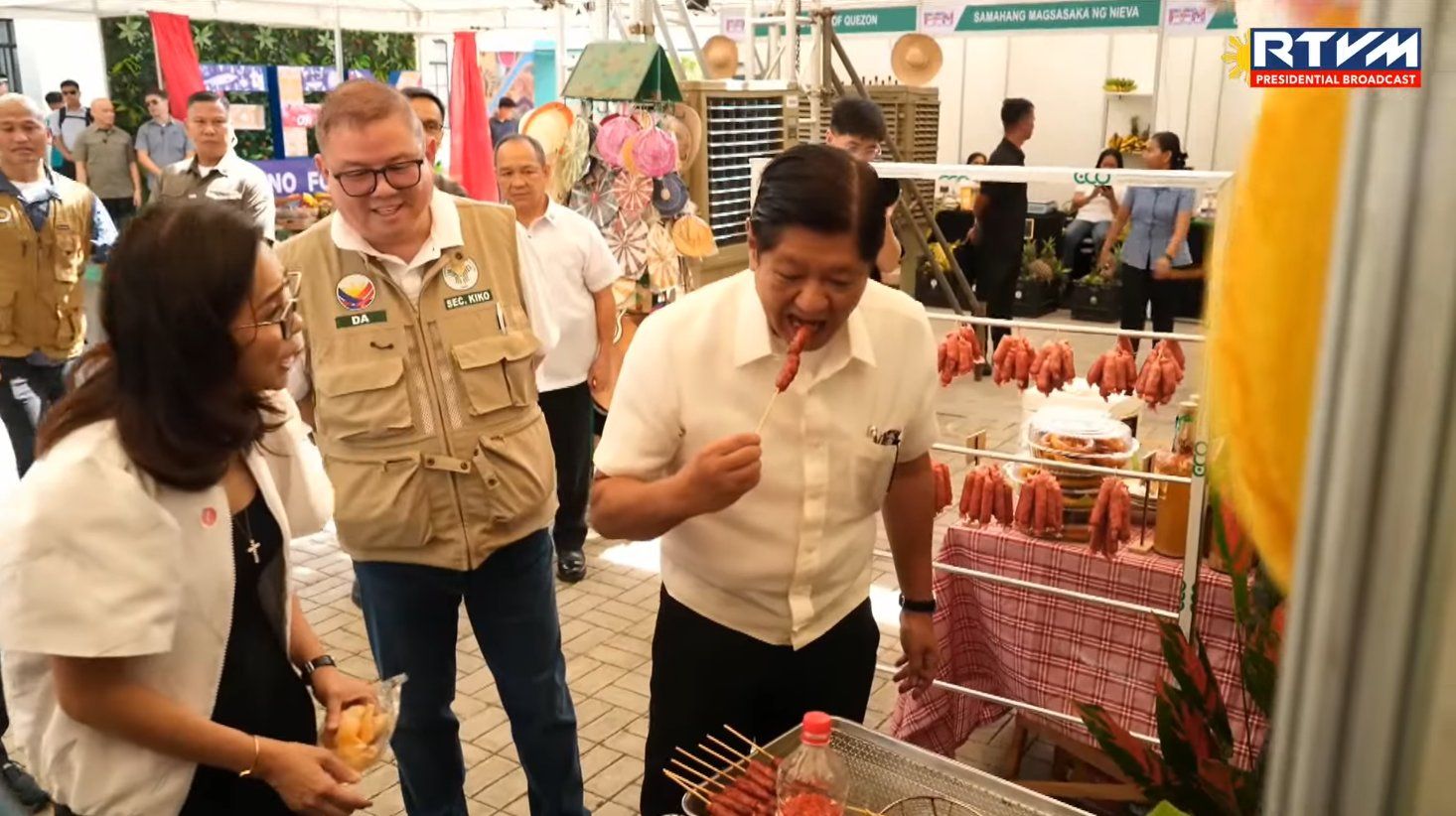
In his speech in Lucena City on Friday, April 4, the President paid tribute and asked Filipinos to appreciate the local cuisine and the people behind every meal.
"Sa bawat na masarap na putahe ay may mga kamay na nagtitiyaga upang tayo ay may maihain sa ating mga mesa (Behind every delicious dish are hands that work hard so we have something to serve on our tables," he said.
"Ang bawat ulam na kanilang hinahanda ay may katumbas na sipag at tiyaga (Every dish they prepare is marked with hard work and perseverance)," he added.
Marcos particularly mentioned the country's farmers, fisherfolk, and even cooks in small eateries.
"[Sila] ay ating purihin at pasalamatan (We should praise and thank them)," he said.
Government support
To support these workers, President Marcos reiterated the government's ongoing efforts to ensure food accessibility and affordability.
"Ang pamahalaan ay patuloy na gumagawa ng mga hakbang upang masiguro na may sapat at murang pagkain para sa bawat Pilipino (The government continues to take steps to ensure there is enough and affordable food for every Filipino)," he said.
He cited programs such as the Kadiwa Program, the P29 Program, Rice for All, setting a maximum suggested retail price on pork, and agriculture funding.
Sa ganitong paraan, ang mura at dekalidad na pagkaing Pilipino ay magbibigay lakas sa ating katawan [at] magpapayaman pa sa kultura natin at pagkakakilanlan (In this way, affordable and quality Filipino food will nourish our bodies and enrich our culture and identity)," he explained.
Food as mirror of culture
President Marcos likewise highlighted food's cultural value, saying food is the "fastest way" to appreciate culture.
He recalled his Ilocano roots and his father's, the late president Ferdinand Marcos Sr., preference for simple meals like dinengdeng even when guests were visiting. He described dinengdeng as a humble vegetable dish seasoned with bagoong or fish sauce, sometimes topped with crispy bagnet and served with "KBL" (kamatis, bagoong, and lasona).
From Ilocos to Cebu and Mindanao, President Marcos celebrated the diversity of Filipino cuisine, calling it a symbol of creativity, resilience, and compassion.
"Malikhain dahil nagagawa nating putahe ang mga pangkaraniwang sangkap (Creative because we turn ordinary ingredients into dishes)," he said.
"Matatag dahil kahit sa panahon ng mga kakulangan, nagagawa pa rin nating ipagdiriwang ang kahit kaunting pagkain (Resilient because even in times of scarcity, we still celebrate with whatever little food we have)," he added.
"May malasakit sa kapwa dahil sa tuwing may salo-salo, lagi nating naaalalang magdala ng pagkain sa ating kapit-bahay (Compassionate because during gatherings, we always remember to bring food for our neighbors)," he continued.
Experiential tourism
President Marcos likewise promoted food as a key part of "experiential tourism," where visitors seek immersive cultural activities.
"Ngayon, ang gusto ng mga turista, mayroon silang nakikita, mayroon silang nararanasan na masayang ginagawa (Nowadays, tourists want to see and experience fun activities)," he said.
He stressed the importance of letting tourists taste Filipino food.
"Kapag nakakain na ang isang dayuhan nang masarap, kahit ano man na klase ng Filipino food, malaki na ang kanyang pag-unawa sa kultura ng Pilipino (When a foreigner tastes good Filipino food, they gain a greater understanding of Filipino culture)," Marcos said.