







Living out love


FROM THE MARGINS
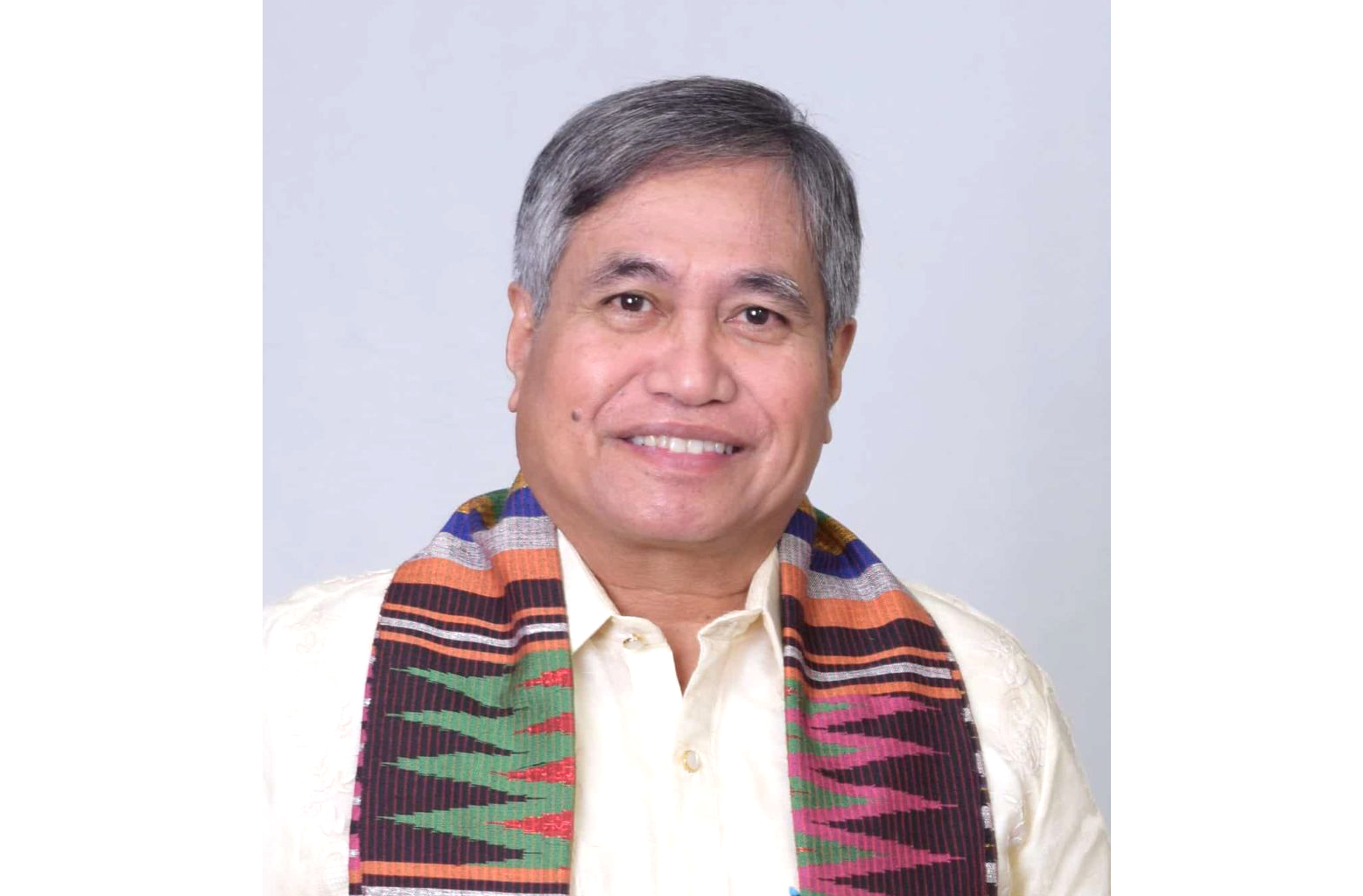
February has always been the month of love. Amid many disheartening news that we see daily, I wanted to shift our focus to something uplifting. And what could be more uplifting than love? Love is hope. In all its forms, love inspires and moves people. Like a farmer sowing seeds of hope, I offer this pre-Valentine piece as a reminder that with love, we can change the world.
Through my decades of work on poverty eradication, I have been privileged to meet remarkable individuals — ordinary Filipinos – who serve as my inspiration. I have shared many stories of microfinance clients overcoming poverty, transforming not just their lives but also those of their families and communities. The following stories, too, are of love—love that inspires not just shared joy, but hope and perseverance.
A mother’s love
Huganda Cister, 50, only finished elementary but has always dreamt of completing her education. Though she could not achieve this for herself, she was determined to give her children the opportunities she never had.
Born in Santiago Island, Bolinao, Pangasinan, she was the second of 13 siblings. To help support her family, she worked as a housemaid in Manila when she was 15, spending nearly a decade there before returning home to marry a fisherman. Together, they started selling fish, eventually shifting to dried fish production—a simple yet profitable business, given their proximity to the sea.
In 2013, with her eldest about to start college, Huganda made the difficult decision to work abroad. “I know what it’s like to have limited opportunities because of a lack of education. I didn’t want my children to go through the same struggle,” she said.
After two years, she returned home and with her husband’s help, resumed their dried fish business. Financial support from a microfinance institution played a vital role in growing this enterprise. She joined a microfinance NGO in 2009 but became inactive when she worked overseas. Upon returning, she rejoined in 2015 to get additional capital for their business. From an initial loan of ₱3,000, she gradually increased her loan to ₱95,000 to expand operations. With hard work and perseverance, she and her husband expanded their business, eventually employing their neighbors to help with production.
Thanks to their hard work, two of their children have graduated, while the remaining two are still in college. They opened a sari-sari store in 2018, as an additional source of income. They also acquired two vehicles for delivering their products. The family dreams of growing their businesses further to provide more jobs for the community.
From trash to treasure
Nestor Barraca’s journey began in 1982 with nothing but a bicycle and determination. Originally from Quezon, he moved to Batangas at 17 to work in a sari-sari store. Later, he worked as a dishwasher in a canteen, where he met his wife.
When their first child was born, Nestor toiled under the sun as a farm laborer, earning ₱75 a day. Eventually, he found a job in a restaurant but realized that his salary was not enough to support his growing family.
One day, while biking to work, he noticed the value of discarded bottles. He started collecting scraps and, seeing its potential, left his job to focus on this new venture. With his earnings, he upgraded his bicycle by adding a sidecar, enabling him to collect more scraps. In 1988, he acquired a motorcycle with a sidecar. By 2000, he had five bikes with sidecars for his junk shop business.
Nestor’s journey was not without hardship. He still remembers being imprisoned for a day after unknowingly buying stolen scraps; fortunately, the true culprits were caught and he was freed. Financial setbacks from fluctuating scrap prices also tested his resilience. Still, he persisted, turning an initial ₱500 capital into a ₱400,000 operation. He was able to do this with the support of a microfinance-oriented thrift bank, which loaned him money to grow his business.
Nestor’s work not only supports his family but also contributes to environmental sustainability, aligning with global efforts for responsible consumption and climate action. He accepts various recyclable materials—bottles, cardboard, steel, aluminum, plastic, and tin cans—helping reduce environmental waste while providing jobs to his community.
Seeds of love
Love takes many forms—romantic love, love for family, for country, or vocation. It pushes us to serve others and leave a lasting impact.
True love is selfless. It is in the sacrifices of a parent, the hard work of an entrepreneur, and the perseverance of those who refuse to give up. Love is infinite, and the more we share it, the more it grows.
May we continue to live
out love, not just in words, but in action.
Happy Valentine’s Day!
* * *
“In the end, nothing we do or say in this lifetime will matter as much as the way we have loved one another.” – Daphne Rose Kingma
(Dr. Jaime Aristotle B. Alip is a poverty eradication advocate. He is the founder of the Center for Agriculture and Rural Development Mutually-Reinforcing Institutions (CARD MRI), a group of 23 organizations that provide social development services to eight million economically-disadvantaged Filipinos and insure more than 27 million nationwide.)