






 Philippines
National
Group warns of banned chemical in perfumes as Valentine's Day nears
Philippines
National
Group warns of banned chemical in perfumes as Valentine's Day nears
Group warns of banned chemical in perfumes as Valentine's Day nears
By Jel Santos


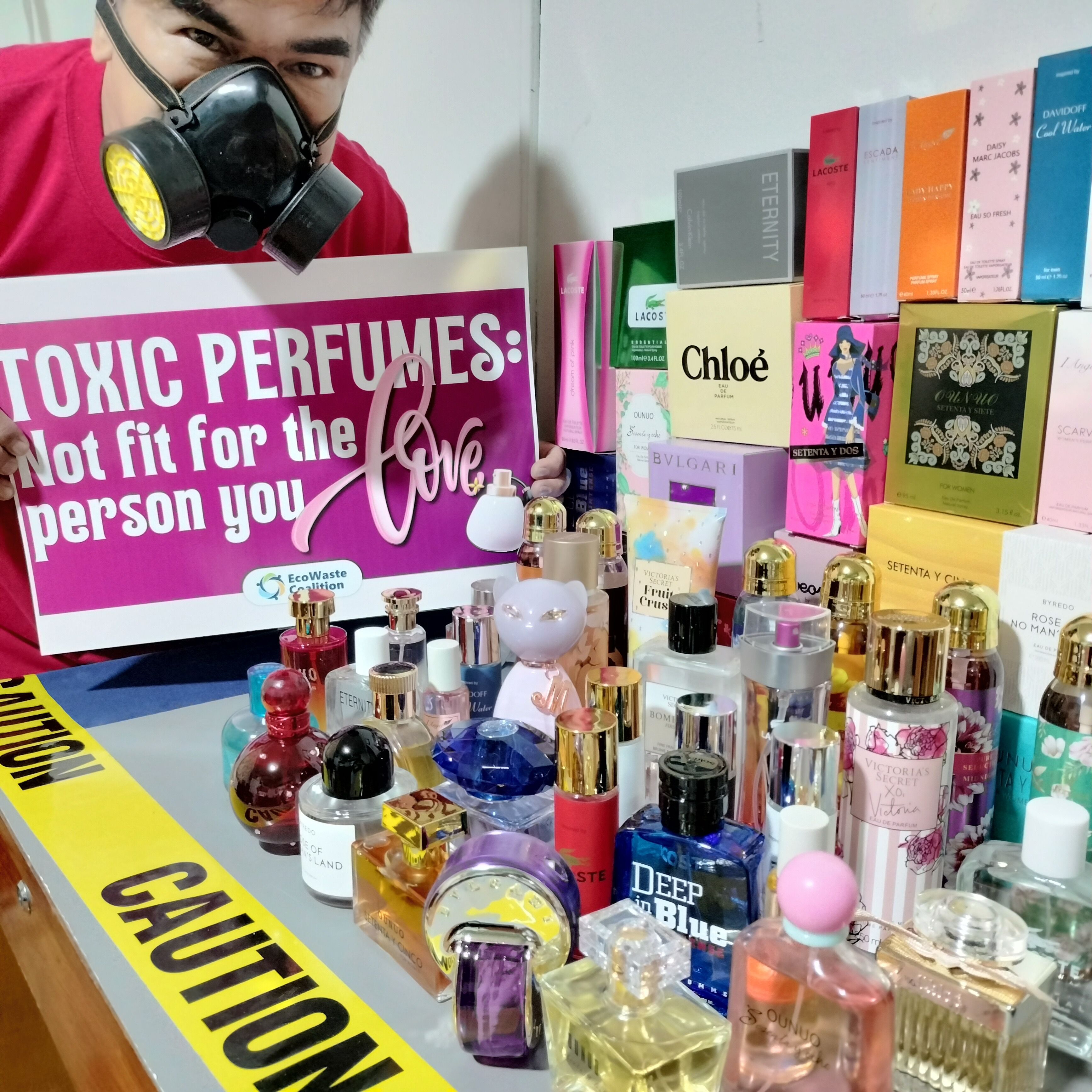
Love may be in the air, but so is danger.
Just days before Valentine’s gift shopping peaks, toxics watchdog EcoWaste Coalition has flagged the sale of perfumes, which it said, contain a banned toxic chemical.
In a market surveillance operation conducted in Makati, Manila, and Quezon City, EcoWaste Coalition found 35 perfume products across 16 brands that list butylphenyl methylpropional (BMHCA), also known as lilial or lysmeral, as an ingredient.
According to the watchdog, the sale of these products violates Food and Drug Administration (FDA) Circular No. 2023-007, which prohibits the use of BMHCA in cosmetics. The ban took effect on Nov. 21, 2024, following a 24-month transition period set by the 36th ASEAN Cosmetic Committee Meeting in 2022.
“Our investigation shows that cosmetics containing BMHCA can still be found on store shelves despite the ban and are being sold to consumers who are unaware of the health risks of being exposed to such an ingredient that can damage the reproductive process and harm the health of the baby in the womb,” Aileen Lucero, the national coordinator of EcoWaste Coalition, said in a statement.
Lucero said the group has already reported its findings to the FDA and urged authorities to take immediate action against importers, distributors, and retailers selling these banned products.
“We have duly informed the FDA about our findings and encouraged it to crack down on importers, distributors, and sellers of BMHCA-containing cosmetics, noting that law enforcement action can also help in raising consumer awareness about this lesser-known threat to public health,” she added.
Health risks
EcoWaste said experts have warned about the dangers of exposure to BMHCA, which has been linked to reproductive toxicity, endocrine disruption, and allergic reactions.
“Health product regulators in the European Union and the ASEAN banned butylphenyl methylpropional (BMHCA) in cosmetics to protect consumers from this synthetic compound that can harm the reproductive system, interfere with hormonal functions, and trigger allergic reactions,” said Dr. Geminn Louis Apostol, an environmental health specialist from the Ateneo School of Medicine and Public Health.
“Studies have linked exposure to BMHCA, a ‘reprotoxic’ chemical, to infertility, as well as causing harm to the fetus during pregnancy,” he added.
Apostol also stressed the need for stricter ingredient transparency in cosmetics.
“Banning BMHCA is indeed a step in the right direction. As there are other synthetic fragrance chemicals of concern, it’s important to require full ingredient disclosure or transparency to inform consumers and reduce potential exposure to harmful substances.”
Sold in major shopping hubs
The EcoWaste Coalition said their test buys on Feb. 2 and 3 found that the banned perfumes were being sold at prices ranging from P75 to P300 at major shopping hubs in the metropolis.
These products, consisting of eau de parfum, eau de toilette, fragrance lotion, fragrance mist, and body mist, appear to be imitation items, the group said.
Per the US-based Campaign for Safe Cosmetics, BMHCA is just one of several potentially hazardous fragrance chemicals used in cosmetics.
The organization has identified several chemicals in fragrances that are linked to cancer, birth abnormalities, endocrine disruption, and chronic health issues. These include acetaldehyde, benzophenone, butylated hydroxyanisole, diethyl phthalate, formaldehyde, oxybenzone, and synthetic musks.
To protect consumers, EcoWaste Coalition urged the public to seek FDA-authorized products, carefully read labels, and avoid items listing BMHCA or the generic term “fragrance” without further specification.
“As a general rule, consumers are advised to seek products with FDA authorization, read product labels carefully, and avoid those products listing butylphenyl methylpropional as an ingredient and when no specific information is provided other than the generic term ’fragrance,’” the group said.