







Bridging leadership (Part 2)


PEACE BY PEACE
Before the establishment of the AIM TeaM Energy Center for Bridging Leadership (AIMTEC-BL), the concept of Bridging Leadership (BL) was first introduced to pioneering Professor Ernesto Garilao during a visit made by the Synergos Institute to the Philippines in 1999.
Together with then Executive Director of AIMTEC-BL’s precursor Mirant Philippines Foundation Inc., Robert Calingo and President Edgardo Bautista they worked together to further improve the research and practical applications of Bridging Leadership, transforming the Center into the dynamic AIMTEC-BL that we know today.
Former Team Energy Center Foundation Executive Director Roderick De Castro recalls the early days of the center were marked by trouble brewing in Mindanao — from a series of high-profile kidnappings to the declaration of an all-out war in the region, AIMTEC’s founders recognized the urgent need to train leaders who can aid in efforts to de-escalate tensions and foster genuine peace in Mindanao.
This led AIMTEC-BL to recruit its first cohort who formed the core network that would collaborate to address issues in Mindanao, particularly those focusing on peace and security, Indigenous Peoples, and community organization. This pioneering group was composed of highly-respected leaders coming from different fields such as the military, local government, and civil society.
Despite coming from different fields, they were chosen by AIM because of their vast knowledge, skills and experience. They were bound by a common aspiration: To serve their fellow Filipinos. As AIM brought all these seasoned professionals together, they demonstrated the power of the Bridging Leadership framework’s key concepts of ownership, co-ownership, and co-creation.
These three tenets of the BL framework of establishing ownership of the problem as a leader, engaging other stakeholders to co-own the issue, and working together to create shared solutions, have enabled BL alumni to effectively utilize them and address challenges both at the national and grassroots level.
As a lieutenant colonel at that time, I was privileged to be included in the second cohort of the Bridging Leadership Fellowship Program. However, as I had just completed my Eisenhower Fellowship in 2006, I was initially skeptical of what the BL fellowship could offer. Little did I know this fellowship would reshape my leadership approach and open my eyes to new ways of resolving key issues our society was confronting.
As a military officer, I humbly believe that among my major achievements was embedding the BL framework into the military’s training programs. During my stint as AFP chief of staff in 2018, we established the AFP leadership development center to positively shape the minds and hearts of our soldiers not only as capable and responsible military officers but also into dynamic, visionary, and empathetic leaders with a lens for multi-stakeholder collaboration.
As the first presidential adviser on Peace, Reconciliation, and Unity, the BL framework was also my guide in our campaign to ratify the Bangsamoro Organic Law (BOL). The multi-sector network we created to Co-Own and Co-Create solutions to address challenges during this campaign were instrumental in our success. Now, our Bangsamoro brothers and sisters are reaping the benefits of this landmark piece of legislation and are set to conduct the first-ever BARMM parliamentary elections later this year.
The lessons I learned from the BL program also helped me significantly as I took on the post of Chief Implementer of the National Task Force against Covid-19 (NTF-Covid-19) and later on, as the national government’s vaccine czar during the pandemic. With the world at a standstill, performing our mandate proved to be a major challenge. The robust partnerships we fostered that focused on human-centered outcomes allowed us to overcome the pandemic’s challenges.
Using the basic tenets of the BL framework, other AIMTEC-BL fellows have also successfully introduced transformative programs into the people and communities they serve. To name a few, these are: Brigadier General Romulo “Bim” Quemado of the Philippine Marine Corps established Community Relations Training, a training program that equips soldiers with holistic skills for peace building. BGEN Quemado is now the current Marine Brigade Commander responsible in securing the peace in the province of Maguindanao del Norte and Cotabato City. He also led the creation and stewardship of the AFP Leadership Development Center (AFPLDC).
Another distinguished BL Fellow, Ariel Hernandez from BL Cohort 1 remains an instrumental partner in the OPAPRU’s accelerated implementation of the Localizing Normalization Implementation (LNI) program that empowers local governments to take on a more proactive role in peace building. Hernandez is currently the co-chair of the GPH-MILF Joint Normalization Committee (JNC) spearheading the transformation of Combatants and Bangsamoro communities in Basilan, all Maguindanao and Lanao provinces, Tawi-Tawi and Sulu.
Cielito Habito, former NEDA secretary, served as the previous chair of the board of advisers of the AIMTEC-BL in 2012.
In the book “Bridging Leadership by Example,” Habito said: “I had a firsthand view of all these divides that make it so hard for us to find a nationhood - what I define as one-ness as a nation, or the feeling of one-ness as a nation.”
Habito witnessed and worked with former BL pioneering practitioners and fellows in Mindanao such as: Gen (Ret) Raymundo Ferrer and Ariel Hernandez.
I was deeply honored that Habito visited me in Basilan when I was then the commander of the Army’s 104th Brigade in 2012.
These are just a few examples of how Bridging Leadership has become a transformative tool, not only for bringing peace and security to our Filipino people, but for fostering nation-building and the betterment of the lives of each and every Filipino.
This is why I cannot agree more with what Professor Garilao said in his speech during the AIMTEC-BL’s 20th anniversary celebration: “Bridging Leadership for its practitioners and adherents, is the leadership approach of choice.”
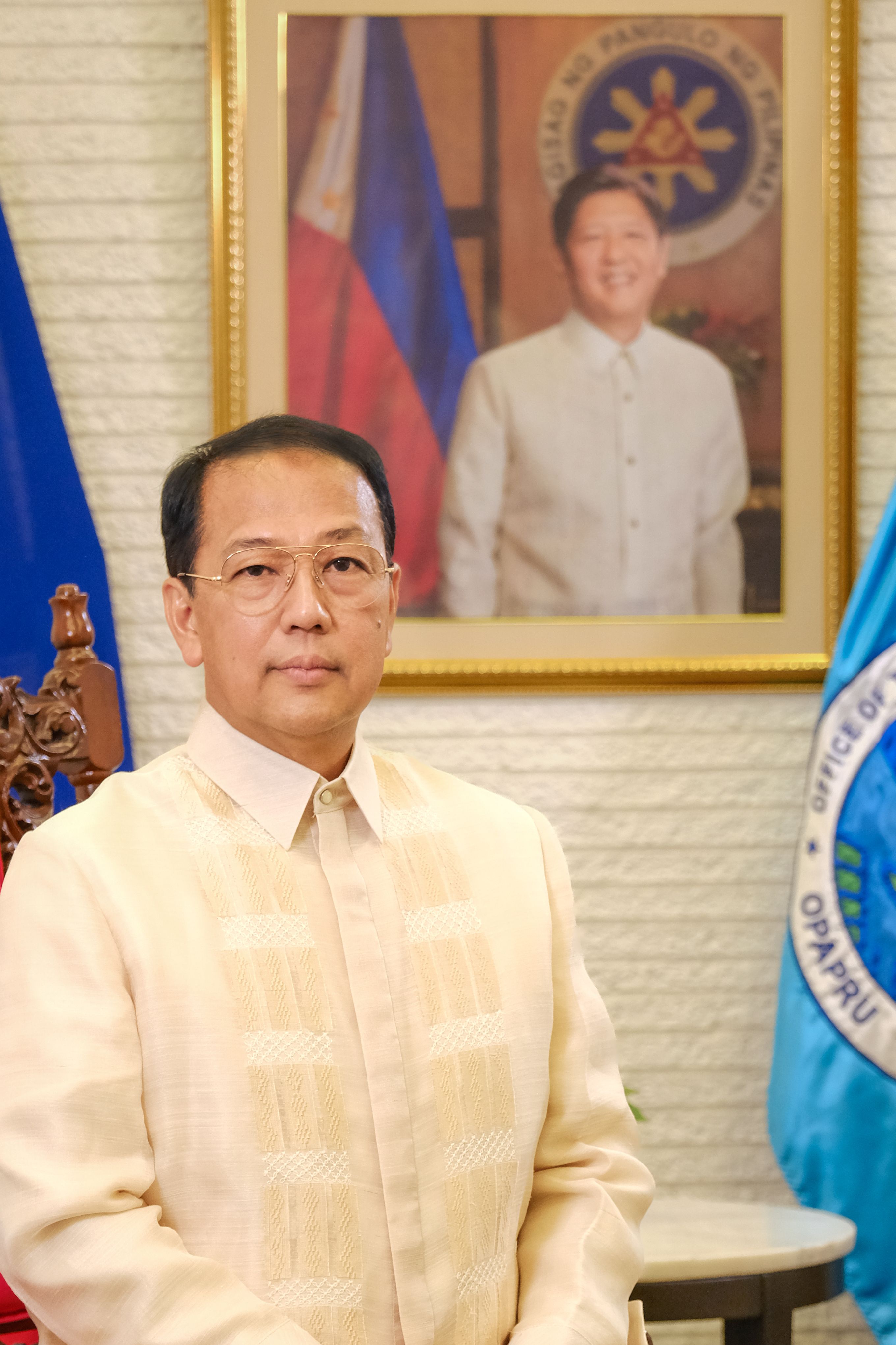
(Secretary Carlito G. Galvez, Jr., is the presidential adviser on peace, reconciliation and unity.)