ADVERTISEMENT

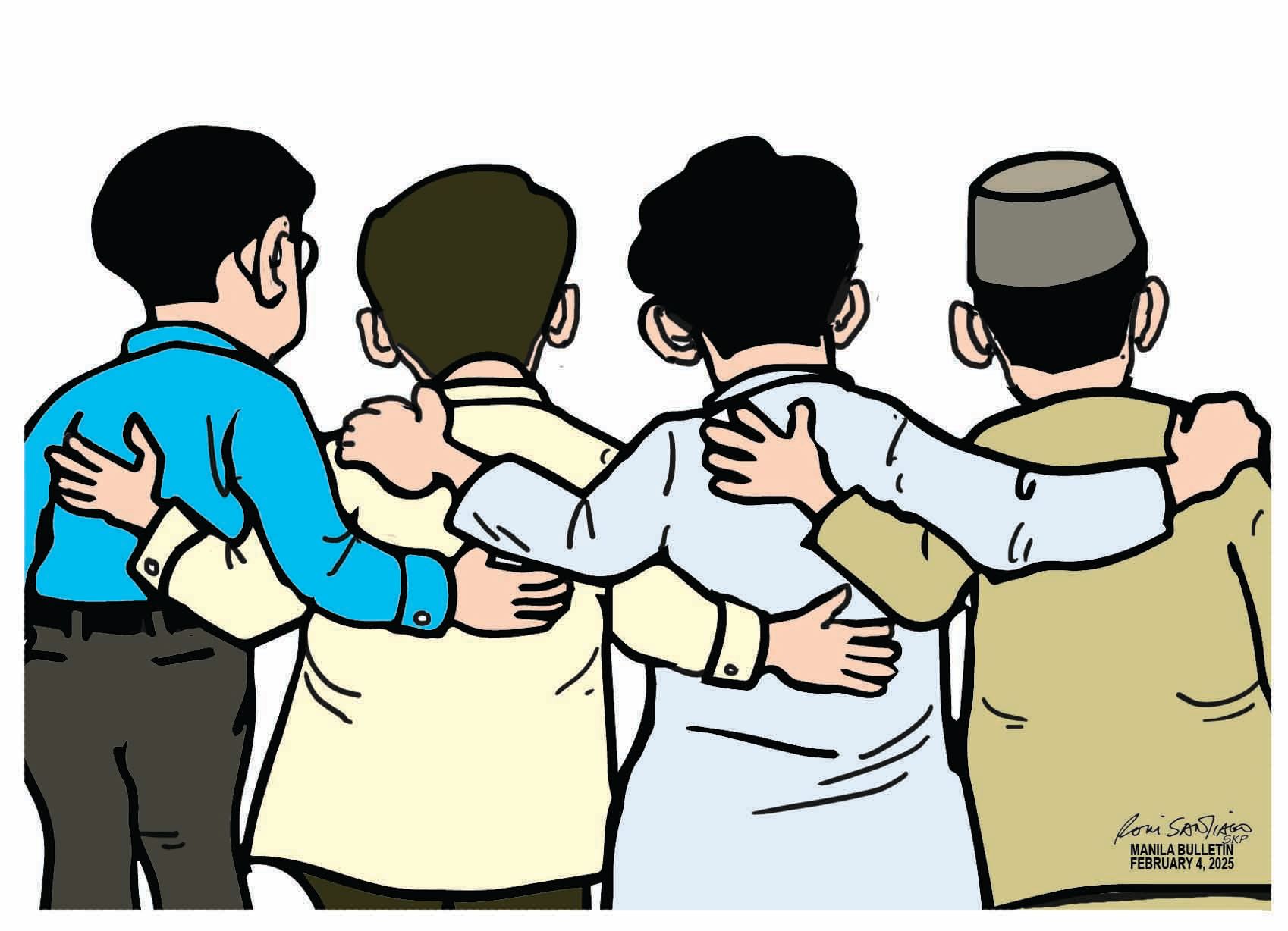
Int'l Human Fraternity Day: Unity in a fractured world

Published Feb 4, 2025 08:32 am

E CARTOON FEB 4, 2025.jpg

On Feb. 4, the world observes International Human Fraternity Day, a United Nations initiative promoting mutual respect, interfaith dialogue, and peaceful coexistence. This observance — which originated from the historic Document on Human Fraternity signed in 2019 by Pope Francis and Grand Imam Ahmed Al-Tayeb, a Sunni Islam leader — serves as a reminder of our shared humanity amid the divisions that threaten to pull us apart.


For Filipinos and Asians at large, this observance holds deep significance, not just in the context of global events but also in the fabric of daily life. As a region shaped by centuries of religious and cultural diversity, Asia has long been a crossroads of civilizations where Buddhism, Islam, Christianity, Hinduism, and indigenous beliefs have coexisted, sometimes harmoniously, sometimes with tension. The Philippines, with its own history of colonization, migration, and interfaith interactions, is a microcosm of these broader dynamics.


The world today is witnessing rising nationalism, religious extremism, and socio-political conflicts that fracture societies. Wars rage in different regions, displacing millions and deepening religious and ethnic divides. Economic inequalities, fueled by systemic injustices, create further divisions between and within nations. Filipinos, both at home and abroad, are not untouched by these realities.
In the Philippines, religious and cultural diversity is both a strength and a challenge. The country prides itself on being a predominantly Catholic nation with significant Muslim, Protestant, and indigenous communities. However, tensions persist, especially in Mindanao, where historical injustices against the Bangsamoro people continue to demand resolution. The peace process, though making strides, still requires genuine dialogue, reconciliation, and development.


Beyond domestic concerns, many Filipinos work overseas, navigating different cultures, religions, and value systems. Overseas Filipino Workers (OFWs) in the Middle East, North America, and Europe often encounter racial and religious discrimination. Their resilience in these environments makes the principles of fraternity, respect, understanding, and solidarity not just an abstract ideal but a daily necessity.


Fraternity is not a foreign concept to Filipinos. The Bayanihan spirit, which emphasizes communal unity and cooperation, mirrors the essence of human fraternity. When disasters strike, be it typhoons, earthquakes, or social upheavals, Filipinos instinctively come together to help one another, often transcending religious and ethnic boundaries.


The growing interfaith movement in the Philippines also reflects these ideals. Organizations promoting dialogue between Christians and Muslims, Catholics and Protestants, believers and non-believers are gaining ground, fostering a culture of respect and understanding. These efforts, however, need to be institutionalized, strengthened, and supported, especially by younger generations who will inherit a world more interconnected yet, paradoxically, more divided.


The observance of International Human Fraternity Day is not merely symbolic. It is a call to action. Filipinos can contribute to this global movement in several ways:


First, by fostering interfaith and intercultural dialogue in schools, communities, or workplaces, thereby creating spaces for conversation that can break stereotypes and dispel prejudice. Second, by promoting inclusive policies that engender equitable opportunities for all, regardless of faith or ethnicity, ensuring that no group feels marginalized. Third, by strengthening peace efforts in Mindanao and beyond, that address root causes of conflict, not just its symptoms. And fourth, by living out the Bayanihan spirit.


As migrants and global citizens, Filipinos can serve as ambassadors of fraternity, standing against racism, xenophobia, and intolerance wherever they go.


On this International Human Fraternity Day, let us reaffirm our commitment to a world where differences do not divide but enrich, where faiths do not clash but converge, and where fraternity is not just an observance, but a way of life.

Related Tags

EDITORIAL
ADVERTISEMENT
.most-popular .layout-ratio{ padding-bottom: 79.13%; } @media (min-width: 768px) and (max-width: 1024px) { .widget-title { font-size: 15px !important; } }

{{ articles_filter_1561_widget.title }}

.most-popular .layout-ratio{ padding-bottom: 79.13%; } @media (min-width: 768px) and (max-width: 1024px) { .widget-title { font-size: 15px !important; } }

{{ articles_filter_1562_widget.title }}

.most-popular .layout-ratio{ padding-bottom: 79.13%; } @media (min-width: 768px) and (max-width: 1024px) { .widget-title { font-size: 15px !important; } }

{{ articles_filter_1563_widget.title }}

{{ articles_filter_1564_widget.title }}

.mb-article-details { position: relative; } .mb-article-details .article-body-preview, .mb-article-details .article-body-summary{ font-size: 17px; line-height: 30px; font-family: "Libre Caslon Text", serif; color: #000; } .mb-article-details .article-body-preview iframe , .mb-article-details .article-body-summary iframe{ width: 100%; margin: auto; } .read-more-background { background: linear-gradient(180deg, color(display-p3 1.000 1.000 1.000 / 0) 13.75%, color(display-p3 1.000 1.000 1.000 / 0.8) 30.79%, color(display-p3 1.000 1.000 1.000) 72.5%); position: absolute; height: 200px; width: 100%; bottom: 0; display: flex; justify-content: center; align-items: center; padding: 0; } .read-more-background a{ color: #000; } .read-more-btn { padding: 17px 45px; font-family: Inter; font-weight: 700; font-size: 18px; line-height: 16px; text-align: center; vertical-align: middle; border: 1px solid black; background-color: white; } .hidden { display: none; }
function initializeAllSwipers() { // Get all hidden inputs with cms_article_id document.querySelectorAll('[id^="cms_article_id_"]').forEach(function (input) { const cmsArticleId = input.value; const articleSelector = '#article-' + cmsArticleId + ' .body_images'; const swiperElement = document.querySelector(articleSelector); if (swiperElement && !swiperElement.classList.contains('swiper-initialized')) { new Swiper(articleSelector, { loop: true, pagination: false, navigation: { nextEl: '#article-' + cmsArticleId + ' .swiper-button-next', prevEl: '#article-' + cmsArticleId + ' .swiper-button-prev', }, }); } }); } setTimeout(initializeAllSwipers, 3000); const intersectionObserver = new IntersectionObserver( (entries) => { entries.forEach((entry) => { if (entry.isIntersecting) { const newUrl = entry.target.getAttribute("data-url"); if (newUrl) { history.pushState(null, null, newUrl); let article = entry.target; // Extract metadata const author = article.querySelector('.author-section').textContent.replace('By', '').trim(); const section = article.querySelector('.section-info ').textContent.replace(' ', ' '); const title = article.querySelector('.article-title h1').textContent; // Parse URL for Chartbeat path format const parsedUrl = new URL(newUrl, window.location.origin); const cleanUrl = parsedUrl.host + parsedUrl.pathname; // Update Chartbeat configuration if (typeof window._sf_async_config !== 'undefined') { window._sf_async_config.path = cleanUrl; window._sf_async_config.sections = section; window._sf_async_config.authors = author; } // Track virtual page view with Chartbeat if (typeof pSUPERFLY !== 'undefined' && typeof pSUPERFLY.virtualPage === 'function') { try { pSUPERFLY.virtualPage({ path: cleanUrl, title: title, sections: section, authors: author }); } catch (error) { console.error('ping error', error); } } // Optional: Update document title if (title && title !== document.title) { document.title = title; } } } }); }, { threshold: 0.1 } ); function showArticleBody(button) { const article = button.closest("article"); const summary = article.querySelector(".article-body-summary"); const body = article.querySelector(".article-body-preview"); const readMoreSection = article.querySelector(".read-more-background"); // Hide summary and read-more section summary.style.display = "none"; readMoreSection.style.display = "none"; // Show the full article body body.classList.remove("hidden"); } document.addEventListener("DOMContentLoaded", () => { let loadCount = 0; // Track how many times articles are loaded const offset = [1, 2, 3, 4, 5, 6, 7, 8, 9, 10]; // Offset values const currentUrl = window.location.pathname.substring(1); let isLoading = false; // Prevent multiple calls if (!currentUrl) { console.log("Current URL is invalid."); return; } const sentinel = document.getElementById("load-more-sentinel"); if (!sentinel) { console.log("Sentinel element not found."); return; } function isSentinelVisible() { const rect = sentinel.getBoundingClientRect(); return ( rect.top < window.innerHeight && rect.bottom >= 0 ); } function onScroll() { if (isLoading) return; if (isSentinelVisible()) { if (loadCount >= offset.length) { console.log("Maximum load attempts reached."); window.removeEventListener("scroll", onScroll); return; } isLoading = true; const currentOffset = offset[loadCount]; window.loadMoreItems().then(() => { let article = document.querySelector('#widget_1690 > div:nth-last-of-type(2) article'); intersectionObserver.observe(article) loadCount++; }).catch(error => { console.error("Error loading more items:", error); }).finally(() => { isLoading = false; }); } } window.addEventListener("scroll", onScroll); });

Sign up by email to receive news.