







Why the Philippine education system needs urgent 'fixing'
As a 'matter of national survival,' EDCOM II Year 2 Report underscores the immediate need to 'fix the foundations' to overcome the learning crisis


The Philippine education system urgently needs reform, according to the second-year report from The Second Congressional Commission on Education (EDCOM II).
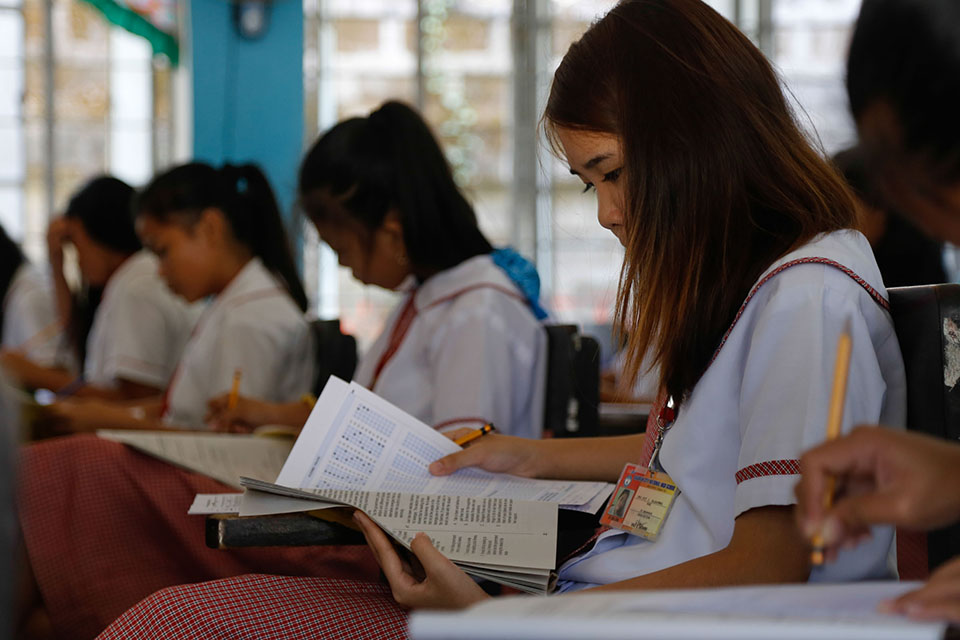
As the country grapples with a deepening learning crisis, the report emphasized the critical need to address the foundational gaps in the system.
Experts argued that without immediate intervention, the current issues—ranging from inadequate resources to ineffective teaching strategies—will continue to hinder the development of students, further stalling the country’s educational progress.
What did the report find?
Last week, EDCOM II unveiled its findings for its second year with the publication of its Year Two Report, “Fixing the Foundations.”
The report builds upon the critical issues identified in the EDCOM Year One Report, “Miseducation: The Failed System of Philippine Education.”
The latest report emphasized urgent reform needs across the Philippine education system, which are essential to ensuring the future success and stability of Filipino learners.
“As the country’s demographic window closes within a generation by 2045, the next two decades will be critical in shaping our future as a country: whether we move resolutely to address these learning gaps and thereby improve the life chances of our people, or if we allow our learning crisis to persist, resulting in a vicious cycle of lack of opportunity and poverty,” EDCOM Executive Director Karol Mark Yee said.
“Fixing the foundations of education is thus not only a social development issue but also an economic imperative,” he added.
EDCOM II’s Year Two report draws from a compilation of 97 research studies and insights gained from 45 consultations, school visits, and public hearings throughout 2024.
It presented a comprehensive overview of the profound educational challenges, from early childhood to higher education and lifelong learning.
State of Philippine education
In early childhood, the report found that only 25 percent of Filipino children receive the recommended energy intake during the first 1,000 days — reflecting a severe nutritional deficit that can impact cognitive and physical development.
This, the report noted, has led to one in four Filipino children under age five being stunted, despite laws since 2017, such as Republic Act (RA) 11148 or the Kalusugan at Nutrisyon ng Mag-Nanay Act, meant to address it.
In basic education, the report cited a forthcoming UNICEF study that finds most Grade 3 students are one to two years “behind curriculum expectations”—or Grade 3 students having Grade 1-level competencies in reading and math.
Moreover, the report highlighted the continued lack of textbooks in public schools — with only 35 out of 94 titles being fully delivered by January 2025—indicating “deeper logistical and administrative issues” within the Department of Education (DepEd) that require urgent attention.
Meanwhile, the report noted that frequent disruptions caused by natural disasters further “exacerbate these educational challenges,” with schools in the Cordillera Administrative Region losing 48 percent of all school days last year due to frequent typhoons and suspensions.
This, EDCOM II said, underscored the “vulnerability of schools and the profound learning losses students continue to suffer.”
The report also highlighted how the country’s higher education faces “significant hurdles”—with high dropout rates, especially in regions like the Bangsamoro Autonomous Region in Muslim Mindanao (BARMM), where only “one in 10 students graduate from college.”
The EDCOM II Year 2 report also pointed out how the “substantial reductions” in tertiary education subsidies under Republic Act (RA) 10931 or the Universal Access to Quality Tertiary Education Act also “threaten to exclude the poorest students from higher education opportunities, limiting their potential for future employment and economic mobility.”
Urgent calls for reform
In his privilege speech, EDCOM II Co-Chairperson Rep. Roman Romulo called on his colleagues and the DepEd leadership to address these concerns with “utmost urgency.”
Romulo pointed out that “any working education system requires that we have robust pathways not just in formal education, but also in non-formal and informal ones.”
“We need to make sure that we are not leaving any learner behind,” he added.
Romulo stressed that as EDCOM begins its third and final year, it will complete its mandate and deliver to Congress by the end of this year a national education and workforce development plan, putting in place a clear blueprint for long-term sustained reform.
This plan, he noted, will detail targets, priorities, as well as budgetary and policy needs to “once and for all avert our learning crisis.”
EDCOM II Commissioner Rep. Jude Acidre also reflected on the urgency of addressing these long-standing issues.
“These challenges are not new to us. Many of us have seen them firsthand in our own communities, but now is the time to go beyond mere recognition,” he said.
The report, Acidre noted, provided a roadmap—a “clear path to strengthen the foundations of our educational system.”
“Recognizing these issues now is paramount to fixing what has been overlooked and ensuring that every Filipino learner has a fair chance to succeed,” he added.
RELATED STORY: