ADVERTISEMENT

North Korea appears to have sent more troops to Russia to back its war against Ukraine, Seoul says

Published Feb 27, 2025 06:44 pm
AP25058164381694.jpg
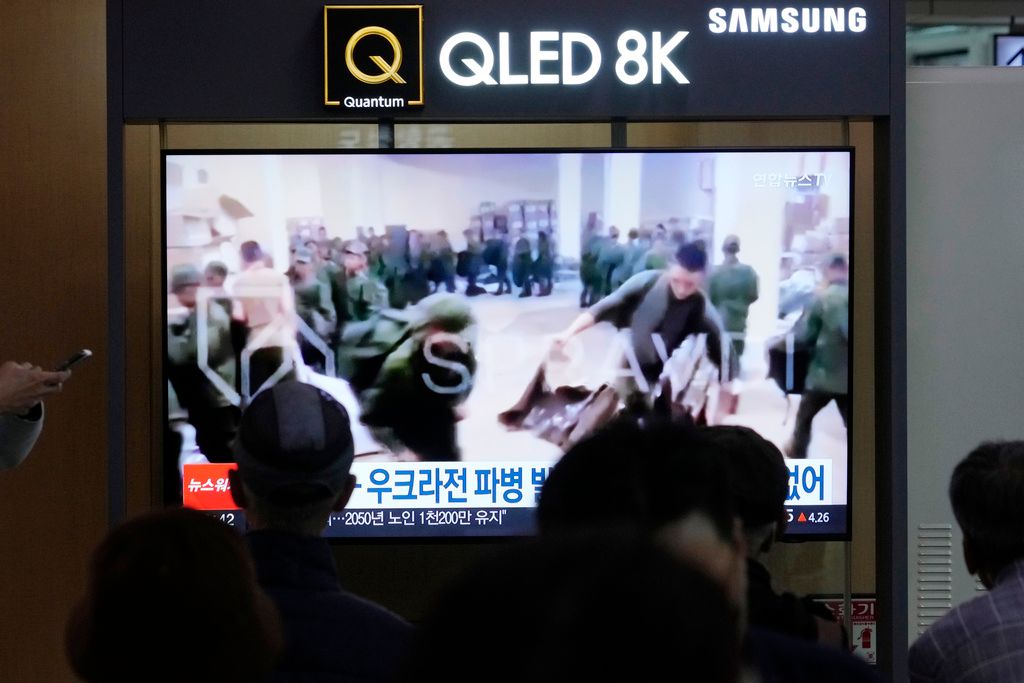
FILE - A TV screen at Seoul Railway Station in South Korea, on Oct. 21, 2024, shows an image of soldiers believed to be from North Korea standing in line to receive supplies from Russia. (AP Photo/Ahn Young-joon, File)

SEOUL, South Korea (AP) — South Korea’s spy agency said Thursday that North Korea appears to have sent additional troops to Russia, after its soldiers deployed on the Russian-Ukraine fronts suffered heavy casualties.

The National Intelligence Service said in a brief statement it was trying to determine exactly how many more troops North Korea has deployed to Russia.

The NIS also assessed that North Korean troops were redeployed at fronts in Russia’s Kursk region in the first week of February, following a reported temporary withdrawal from the area. Ukrainian President Volodymyr Zelenskyy, in an address on Feb. 7, confirmed a new Ukrainian offensive in Kursk and said North Korean troops were fighting alongside Russian forces there.

North Korea has been supplying a vast amount of conventional weapons to Russia, and last fall it sent about 10,000-12,000 troops to Russia as well, according to U.S., South Korean and Ukraine intelligence officials. North Korean soldiers are highly disciplined and well trained, but observers say they’ve become easy targets for drone and artillery attacks on Russian-Ukraine battlefields due to their lack of combat experience and unfamiliarity with the terrain.

In January, the NIS said about 300 North Korean soldiers had died and another 2,700 had been injured. Zelenskyy earlier put the number of killed or wounded North Koreans at 4,000, though U.S. estimates were lower at around 1,200.

Earlier Thursday, South Korea’s JoongAng Ilbo newspaper, citing unidentified sources, reported that an additional 1,000-3,000 North Korean soldiers were deployed to Kursk between January and February.

South Korea, the U.S. and their partners worry that Russia could reward North Korea by transferring high-tech weapons technologies that can sharply enhance its nuclear weapons program. North Korea is expected to receive economic and other assistance from Russia as well.

During talks in Saudi Arabia last week, Russia and the U.S. agreed to start working toward ending the war and improving their diplomatic and economic ties. Ukrainian officials weren’t present at the talks. That marked an extraordinary shift in U.S. foreign policy under President Donald Trump and a clear departure from U.S.-led efforts to isolate Russia over its war in Ukraine.

Observers say North Korean leader Kim Jong Un could send more troops to Russia to win further Russian assistance before the war ends.

Related Tags

WORLDNEWS
ADVERTISEMENT
.most-popular .layout-ratio{ padding-bottom: 79.13%; } @media (min-width: 768px) and (max-width: 1024px) { .widget-title { font-size: 15px !important; } }

{{ articles_filter_1561_widget.title }}

.most-popular .layout-ratio{ padding-bottom: 79.13%; } @media (min-width: 768px) and (max-width: 1024px) { .widget-title { font-size: 15px !important; } }

{{ articles_filter_1562_widget.title }}

.most-popular .layout-ratio{ padding-bottom: 79.13%; } @media (min-width: 768px) and (max-width: 1024px) { .widget-title { font-size: 15px !important; } }

{{ articles_filter_1563_widget.title }}

{{ articles_filter_1564_widget.title }}

.mb-article-details { position: relative; } .mb-article-details .article-body-preview, .mb-article-details .article-body-summary{ font-size: 17px; line-height: 30px; font-family: "Libre Caslon Text", serif; color: #000; } .mb-article-details .article-body-preview iframe , .mb-article-details .article-body-summary iframe{ width: 100%; margin: auto; } .read-more-background { background: linear-gradient(180deg, color(display-p3 1.000 1.000 1.000 / 0) 13.75%, color(display-p3 1.000 1.000 1.000 / 0.8) 30.79%, color(display-p3 1.000 1.000 1.000) 72.5%); position: absolute; height: 200px; width: 100%; bottom: 0; display: flex; justify-content: center; align-items: center; padding: 0; } .read-more-background a{ color: #000; } .read-more-btn { padding: 17px 45px; font-family: Inter; font-weight: 700; font-size: 18px; line-height: 16px; text-align: center; vertical-align: middle; border: 1px solid black; background-color: white; } .hidden { display: none; }
function initializeAllSwipers() { // Get all hidden inputs with cms_article_id document.querySelectorAll('[id^="cms_article_id_"]').forEach(function (input) { const cmsArticleId = input.value; const articleSelector = '#article-' + cmsArticleId + ' .body_images'; const swiperElement = document.querySelector(articleSelector); if (swiperElement && !swiperElement.classList.contains('swiper-initialized')) { new Swiper(articleSelector, { loop: true, pagination: false, navigation: { nextEl: '#article-' + cmsArticleId + ' .swiper-button-next', prevEl: '#article-' + cmsArticleId + ' .swiper-button-prev', }, }); } }); } setTimeout(initializeAllSwipers, 3000); const intersectionObserver = new IntersectionObserver( (entries) => { entries.forEach((entry) => { if (entry.isIntersecting) { const newUrl = entry.target.getAttribute("data-url"); if (newUrl) { history.pushState(null, null, newUrl); let article = entry.target; // Extract metadata const author = article.querySelector('.author-section').textContent.replace('By', '').trim(); const section = article.querySelector('.section-info ').textContent.replace(' ', ' '); const title = article.querySelector('.article-title h1').textContent; // Parse URL for Chartbeat path format const parsedUrl = new URL(newUrl, window.location.origin); const cleanUrl = parsedUrl.host + parsedUrl.pathname; // Update Chartbeat configuration if (typeof window._sf_async_config !== 'undefined') { window._sf_async_config.path = cleanUrl; window._sf_async_config.sections = section; window._sf_async_config.authors = author; } // Track virtual page view with Chartbeat if (typeof pSUPERFLY !== 'undefined' && typeof pSUPERFLY.virtualPage === 'function') { try { pSUPERFLY.virtualPage({ path: cleanUrl, title: title, sections: section, authors: author }); } catch (error) { console.error('ping error', error); } } // Optional: Update document title if (title && title !== document.title) { document.title = title; } } } }); }, { threshold: 0.1 } ); function showArticleBody(button) { const article = button.closest("article"); const summary = article.querySelector(".article-body-summary"); const body = article.querySelector(".article-body-preview"); const readMoreSection = article.querySelector(".read-more-background"); // Hide summary and read-more section summary.style.display = "none"; readMoreSection.style.display = "none"; // Show the full article body body.classList.remove("hidden"); } document.addEventListener("DOMContentLoaded", () => { let loadCount = 0; // Track how many times articles are loaded const offset = [1, 2, 3, 4, 5, 6, 7, 8, 9, 10]; // Offset values const currentUrl = window.location.pathname.substring(1); let isLoading = false; // Prevent multiple calls if (!currentUrl) { console.log("Current URL is invalid."); return; } const sentinel = document.getElementById("load-more-sentinel"); if (!sentinel) { console.log("Sentinel element not found."); return; } function isSentinelVisible() { const rect = sentinel.getBoundingClientRect(); return ( rect.top < window.innerHeight && rect.bottom >= 0 ); } function onScroll() { if (isLoading) return; if (isSentinelVisible()) { if (loadCount >= offset.length) { console.log("Maximum load attempts reached."); window.removeEventListener("scroll", onScroll); return; } isLoading = true; const currentOffset = offset[loadCount]; window.loadMoreItems().then(() => { let article = document.querySelector('#widget_1690 > div:nth-last-of-type(2) article'); intersectionObserver.observe(article) loadCount++; }).catch(error => { console.error("Error loading more items:", error); }).finally(() => { isLoading = false; }); } } window.addEventListener("scroll", onScroll); });

Sign up by email to receive news.