

ADVERTISEMENT

The re-virgin bride: A review of 'Nosferatu'

Published Feb 23, 2025 05:39 am

At A Glance

  • The film has garnered four nominations for the upcoming 97th Academy Awards for Best Cinematography, Best Costume Design, Best Production Design, and Best in Make-Up and Hair-Styling.
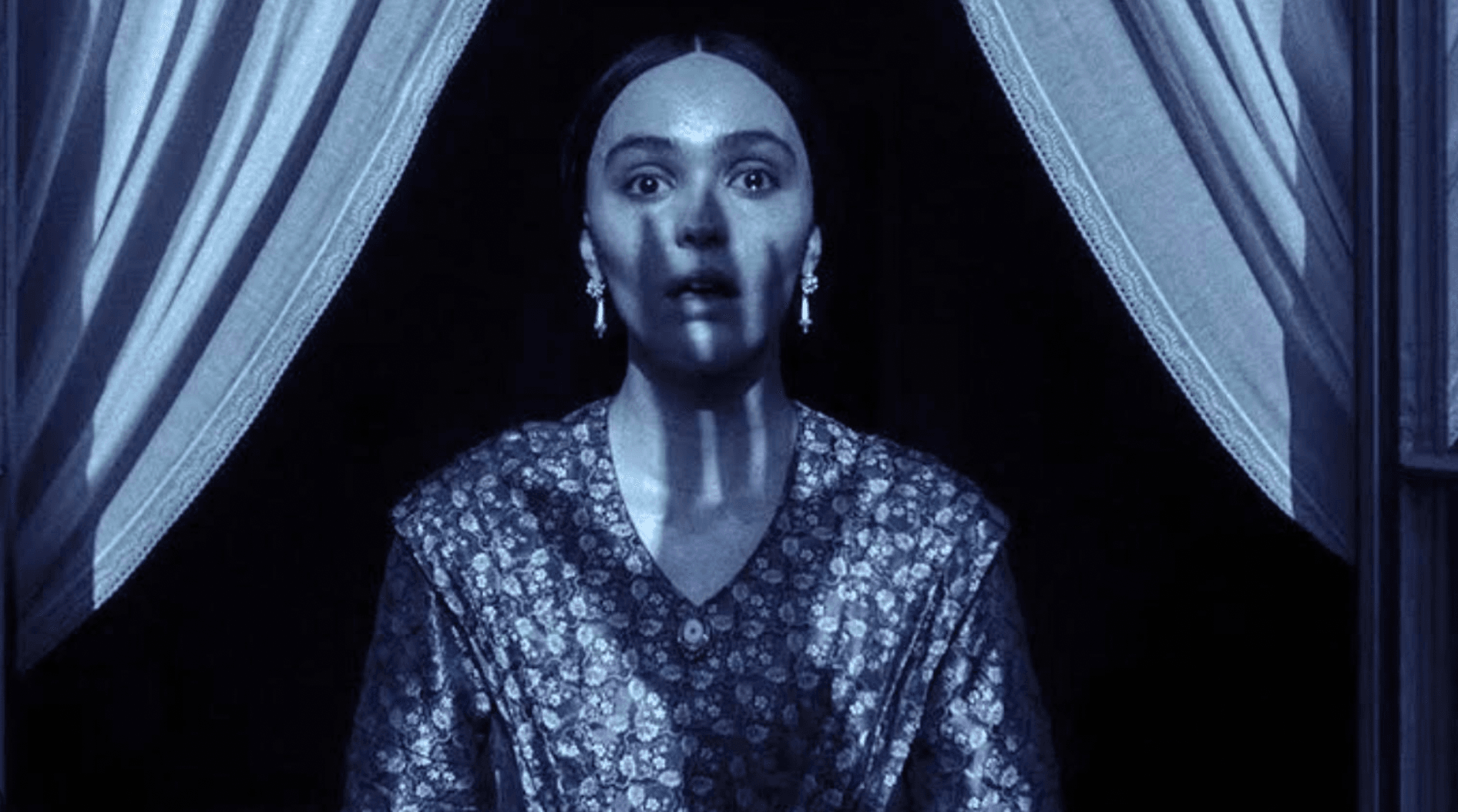
Screenshot 2025-02-23 at 1.35.05 PM.png
A scene from 'Nosferatu'

A remake of the 1922 film Nosferatu: A Symphony of Horror, directed by F. W. Murnau, this 2024 Robert Eggers’ "Nosferatu" is a passion project for the auteur director, who is known for The Witch, The Lighthouse, and The Northman. It’s a respectful remake, and for trivia, it’s worth knowing that the 1922 film was an unauthorized adaptation of Bram Stoker’s Dracula novel of 1897.

A Gothic melodrama, this 2024 Nosferatu is creepy and atmospheric. It starts strongly with a dream sequence that immediately introduces us to Ellen (Lily-Rose Depp) and the start of the bizarre and macabre relationship she has with Count Orlok/Nosferatu (Bill Skarsgärd, who was Pennywise in It). It’s a psychic connection over distance, with physical fruition promised sometime in the future when she has to give herself willingly to the Count.
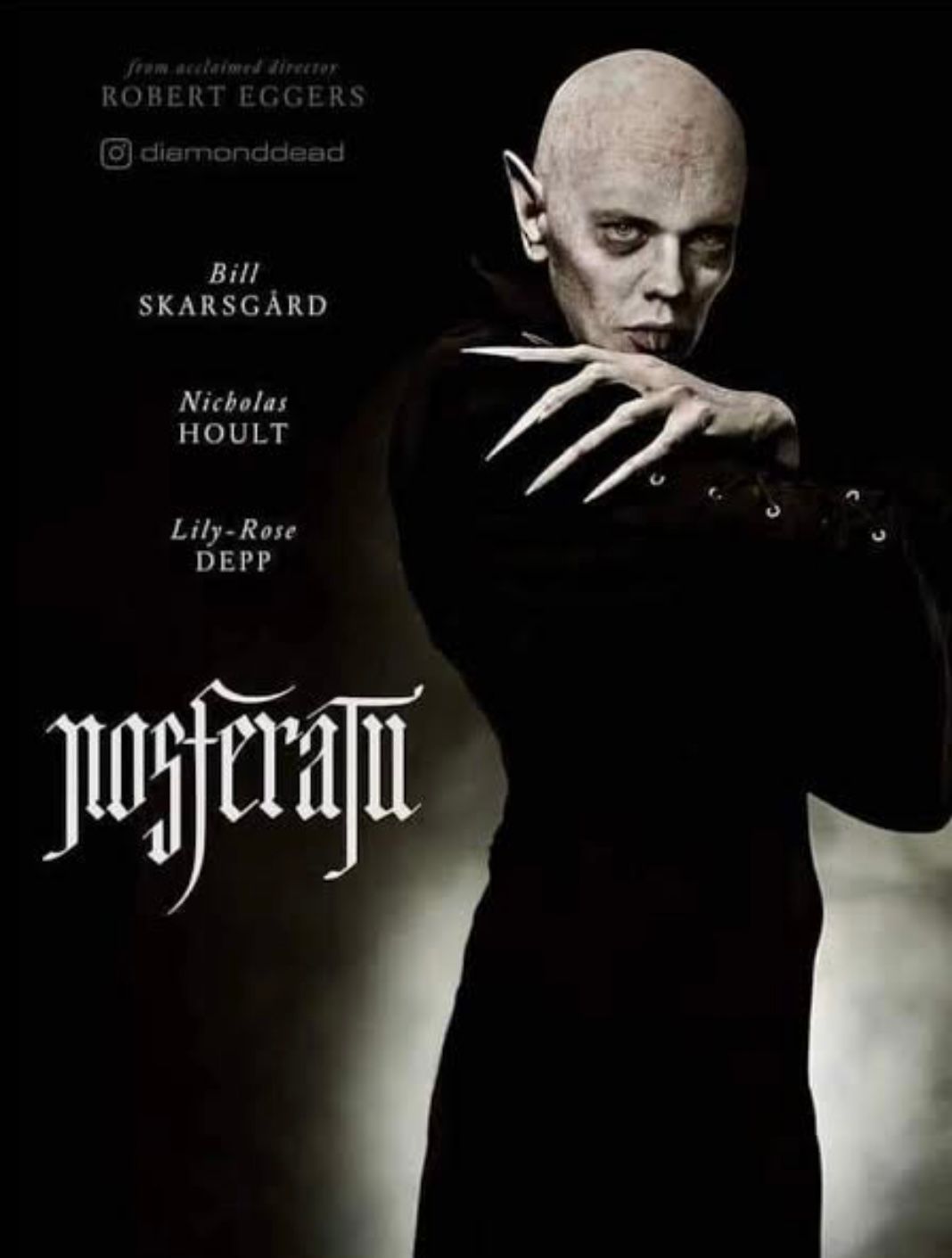
image1.jpeg

When she marries real estate agent Thomas Hutter (Nicholas Hoult), he is soon thrust into a deadly game of dominance and mind control, with Count Orlok having a distinct advantage. This is helped in no small part by the fact that Hutter’s boss, the devious Mr. Knock (Simon McBurney), is the Count’s ‘familiar.’

Willem Dafoe and Ralph Ineson also play major roles, and they’re firmly part of the Eggers family, as the two have now been cast in three of the four Eggers film credits. Dafoe portrays Dr. Von Franz, the character that would most closely resemble that of Van Helsing in Stoker’s Dracula. Ineson is Dr. Sievers, the doctor who was first called to treat Ellen but did so using conventional medicine.

The film has garnered four nominations for the upcoming 97th Academy Awards for Best Cinematography, Best Costume Design, Best Production Design, and Best in Make-Up and Hair-Styling. It has won Best Cinematography in the Critics Choice Awards, plus other award shows, with Jarin Blaschke going up to the podium.
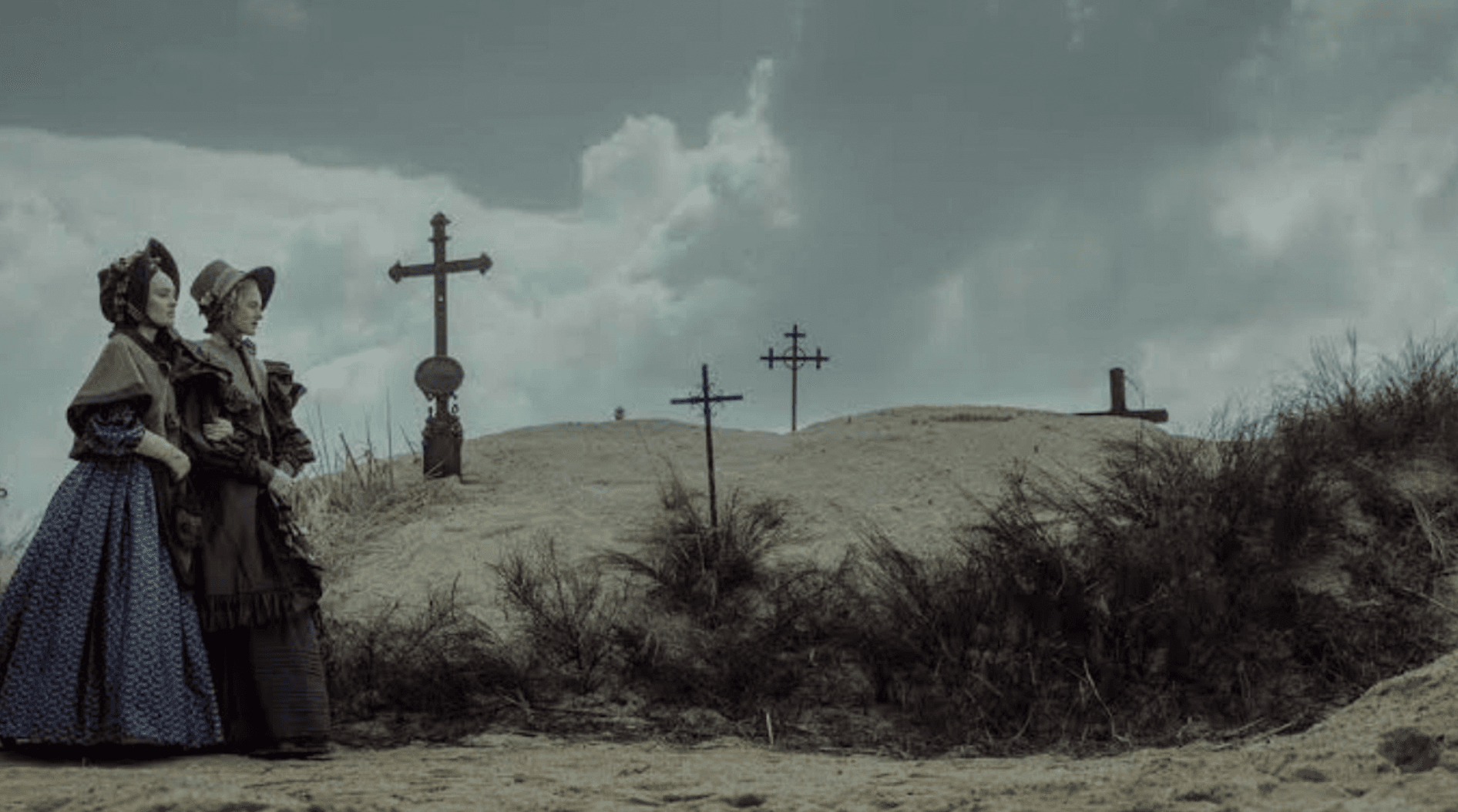
Screenshot 2025-02-23 at 1.34.53 PM.png

It runs for over two hours, but it’s paced rather well, with the scenes offering sensuous, repulsive, suspenseful, and terrifying in equal measures. Shot in Prague, trained rats were also used in the film. If there is a drawback in the narrative, it would be that we’re not given enough to care for any of the main protagonists honestly, so while we are ready to follow the events and are curious about what happens next, we’re not invested in them.

"Nosferatu" opens in cinemas on Feb. 26; the cinematography alone is worth the watch. 

ADVERTISEMENT
.most-popular .layout-ratio{ padding-bottom: 79.13%; } @media (min-width: 768px) and (max-width: 1024px) { .widget-title { font-size: 15px !important; } }

{{ articles_filter_1561_widget.title }}

.most-popular .layout-ratio{ padding-bottom: 79.13%; } @media (min-width: 768px) and (max-width: 1024px) { .widget-title { font-size: 15px !important; } }

{{ articles_filter_1562_widget.title }}

.most-popular .layout-ratio{ padding-bottom: 79.13%; } @media (min-width: 768px) and (max-width: 1024px) { .widget-title { font-size: 15px !important; } }

{{ articles_filter_1563_widget.title }}

{{ articles_filter_1564_widget.title }}

.mb-article-details { position: relative; } .mb-article-details .article-body-preview, .mb-article-details .article-body-summary{ font-size: 17px; line-height: 30px; font-family: "Libre Caslon Text", serif; color: #000; } .mb-article-details .article-body-preview iframe , .mb-article-details .article-body-summary iframe{ width: 100%; margin: auto; } .read-more-background { background: linear-gradient(180deg, color(display-p3 1.000 1.000 1.000 / 0) 13.75%, color(display-p3 1.000 1.000 1.000 / 0.8) 30.79%, color(display-p3 1.000 1.000 1.000) 72.5%); position: absolute; height: 200px; width: 100%; bottom: 0; display: flex; justify-content: center; align-items: center; padding: 0; } .read-more-background a{ color: #000; } .read-more-btn { padding: 17px 45px; font-family: Inter; font-weight: 700; font-size: 18px; line-height: 16px; text-align: center; vertical-align: middle; border: 1px solid black; background-color: white; } .hidden { display: none; }
function initializeAllSwipers() { // Get all hidden inputs with cms_article_id document.querySelectorAll('[id^="cms_article_id_"]').forEach(function (input) { const cmsArticleId = input.value; const articleSelector = '#article-' + cmsArticleId + ' .body_images'; const swiperElement = document.querySelector(articleSelector); if (swiperElement && !swiperElement.classList.contains('swiper-initialized')) { new Swiper(articleSelector, { loop: true, pagination: false, navigation: { nextEl: '#article-' + cmsArticleId + ' .swiper-button-next', prevEl: '#article-' + cmsArticleId + ' .swiper-button-prev', }, }); } }); } setTimeout(initializeAllSwipers, 3000); const intersectionObserver = new IntersectionObserver( (entries) => { entries.forEach((entry) => { if (entry.isIntersecting) { const newUrl = entry.target.getAttribute("data-url"); if (newUrl) { history.pushState(null, null, newUrl); let article = entry.target; // Extract metadata const author = article.querySelector('.author-section').textContent.replace('By', '').trim(); const section = article.querySelector('.section-info ').textContent.replace(' ', ' '); const title = article.querySelector('.article-title h1').textContent; // Parse URL for Chartbeat path format const parsedUrl = new URL(newUrl, window.location.origin); const cleanUrl = parsedUrl.host + parsedUrl.pathname; // Update Chartbeat configuration if (typeof window._sf_async_config !== 'undefined') { window._sf_async_config.path = cleanUrl; window._sf_async_config.sections = section; window._sf_async_config.authors = author; } // Track virtual page view with Chartbeat if (typeof pSUPERFLY !== 'undefined' && typeof pSUPERFLY.virtualPage === 'function') { try { pSUPERFLY.virtualPage({ path: cleanUrl, title: title, sections: section, authors: author }); } catch (error) { console.error('ping error', error); } } // Optional: Update document title if (title && title !== document.title) { document.title = title; } } } }); }, { threshold: 0.1 } ); function showArticleBody(button) { const article = button.closest("article"); const summary = article.querySelector(".article-body-summary"); const body = article.querySelector(".article-body-preview"); const readMoreSection = article.querySelector(".read-more-background"); // Hide summary and read-more section summary.style.display = "none"; readMoreSection.style.display = "none"; // Show the full article body body.classList.remove("hidden"); } document.addEventListener("DOMContentLoaded", () => { let loadCount = 0; // Track how many times articles are loaded const offset = [1, 2, 3, 4, 5, 6, 7, 8, 9, 10]; // Offset values const currentUrl = window.location.pathname.substring(1); let isLoading = false; // Prevent multiple calls if (!currentUrl) { console.log("Current URL is invalid."); return; } const sentinel = document.getElementById("load-more-sentinel"); if (!sentinel) { console.log("Sentinel element not found."); return; } function isSentinelVisible() { const rect = sentinel.getBoundingClientRect(); return ( rect.top < window.innerHeight && rect.bottom >= 0 ); } function onScroll() { if (isLoading) return; if (isSentinelVisible()) { if (loadCount >= offset.length) { console.log("Maximum load attempts reached."); window.removeEventListener("scroll", onScroll); return; } isLoading = true; const currentOffset = offset[loadCount]; window.loadMoreItems().then(() => { let article = document.querySelector('#widget_1690 > div:nth-last-of-type(2) article'); intersectionObserver.observe(article) loadCount++; }).catch(error => { console.error("Error loading more items:", error); }).finally(() => { isLoading = false; }); } } window.addEventListener("scroll", onScroll); });

Sign up by email to receive news.