ADVERTISEMENT

Measles outbreaks rise to nearly 100 cases between Texas and New Mexico. Here's what you should know

Published Feb 21, 2025 10:28 pm
IMG_7337.jpeg
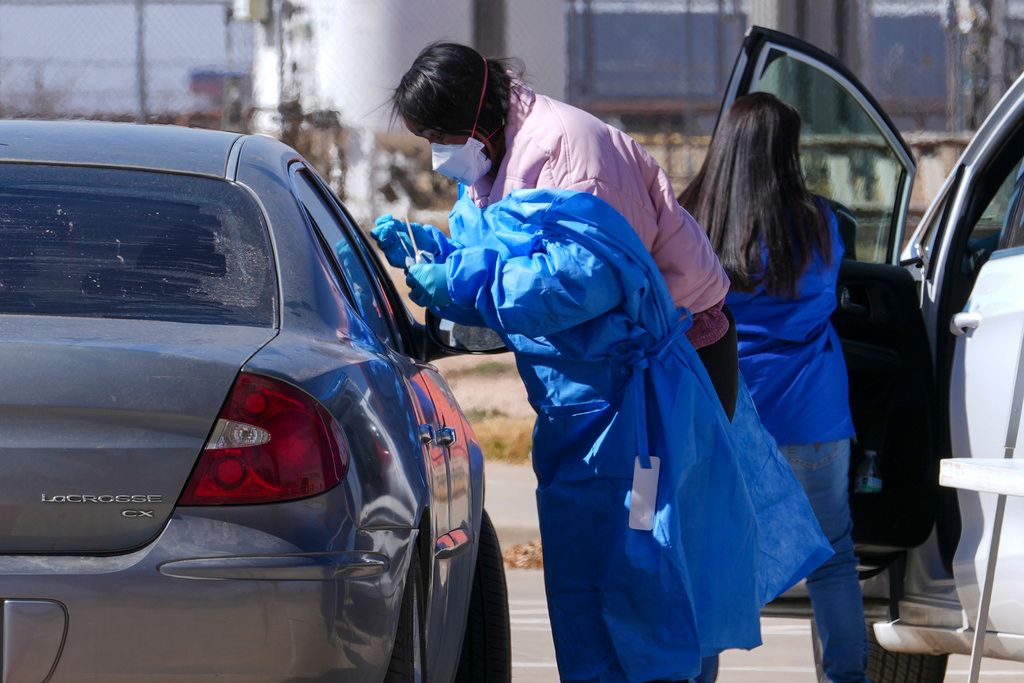
A health worker administers a measles test to a car passenger at a mobile testing site outside Seminole Hospital District Friday, Feb. 21, 2025, in Seminole, Texas. (AP Photo/Julio Cortez)

The measles outbreak in rural West Texas has grown to 90 cases across seven counties, the state health department posted online Friday, and 16 people are hospitalized.

In neighboring eastern New Mexico, the measles case count is up to nine, though state public health officials said Thursday there's still no evidence this outbreak is connected to the one in Texas.

Measles is a highly contagious disease. Here's what you should know about how to protect yourself against measles, as well as what's happening in Texas and New Mexico.

Where are measles spreading?

The West Texas cases are concentrated in Gaines County, which has 57 infections, and Terry County, north of Gaines, where there are now 20 confirmed cases.

Dawson County, to the east of Gaines, was new to the count with six. Yoakum County has four and Lubbock, Lynn and Ector counties have a case each.

Texas state health department data shows the vast majority of cases are among people younger than 18: 26 in kids younger than 4 and 51 in kids 5-17 years old. Ten adults have measles and three cases are “pending” an age determination. The Ector County Health Department told the Odessa American its case was in a child too young to be vaccinated.

State health officials have said this outbreak is Texas' largest in nearly 30 years. Health department spokeswoman Lara Anton said last week that cases have been concentrated in a “close-knit, undervaccinated” Mennonite community — especially among families who attend small private religious schools or are homeschooled.

In New Mexico, all of the cases are in Lea County, which borders Gaines County in Texas. The state health department has said people may have been exposed at a grocery store, an elementary school, a church, Nor-Lea Hospital and a Walgreens in Hobbs, New Mexico.

What is measles?

Measles is a respiratory virus that can survive in the air for up to two hours. Up to 9 out of 10 people who are susceptible will get the virus if exposed, according to the U.S. Centers for Disease Control and Prevention.

Most kids will recover from the measles if they get it, but infection can lead to dangerous complications like pneumonia, blindness, brain swelling and death.

Is the vaccine safe?

Yes, the measles, mumps and rubella (MMR) vaccine is safe and highly effective in preventing measles infection and severe cases of the disease.

The first shot is recommended for children between 12 and 15 months old and the second between 4 and 6 years old. The vaccine series is required for kids before entering kindergarten in public schools nationwide.

Before the vaccine was introduced in 1963, the U.S. saw some 3 million to 4 million cases per year. Now, it’s usually fewer than 200 in a normal year.

There is no link between the vaccine and autism, despite a now-discredited study and health disinformation.

Why do vaccination rates matter?

In communities with high vaccination rates — above 95% — diseases like measles have a harder time spreading through communities. This is called “herd immunity.”

But childhood vaccination rates have declined nationwide since the pandemic and more parents are claiming religious or personal conscience waivers to exempt their kids from required shots.

The U.S. saw a rise in measles cases in 2024, including an outbreak in Chicago that sickened more than 60. Five years earlier, measles cases were the worst in almost three decades in 2019.

Gaines County has one of the highest rates in Texas of school-aged children who opt out of at least one required vaccine, with nearly 14% of K-12 children in the 2023-24 school year. Health officials say that number is likely higher because it doesn’t include many children who are homeschooled and whose data would not be reported.

What are public health officials doing to stop the spread?

Health workers are hosting regular vaccination clinic and screening efforts in Texas, as well as working with schools to educate people about the importance of vaccination and offering shots.

New Mexico health officials are also hosting several vaccination clinics in Hobbs next week.

Related Tags

World news
ADVERTISEMENT
.most-popular .layout-ratio{ padding-bottom: 79.13%; } @media (min-width: 768px) and (max-width: 1024px) { .widget-title { font-size: 15px !important; } }

{{ articles_filter_1561_widget.title }}

.most-popular .layout-ratio{ padding-bottom: 79.13%; } @media (min-width: 768px) and (max-width: 1024px) { .widget-title { font-size: 15px !important; } }

{{ articles_filter_1562_widget.title }}

.most-popular .layout-ratio{ padding-bottom: 79.13%; } @media (min-width: 768px) and (max-width: 1024px) { .widget-title { font-size: 15px !important; } }

{{ articles_filter_1563_widget.title }}

{{ articles_filter_1564_widget.title }}

.mb-article-details { position: relative; } .mb-article-details .article-body-preview, .mb-article-details .article-body-summary{ font-size: 17px; line-height: 30px; font-family: "Libre Caslon Text", serif; color: #000; } .mb-article-details .article-body-preview iframe , .mb-article-details .article-body-summary iframe{ width: 100%; margin: auto; } .read-more-background { background: linear-gradient(180deg, color(display-p3 1.000 1.000 1.000 / 0) 13.75%, color(display-p3 1.000 1.000 1.000 / 0.8) 30.79%, color(display-p3 1.000 1.000 1.000) 72.5%); position: absolute; height: 200px; width: 100%; bottom: 0; display: flex; justify-content: center; align-items: center; padding: 0; } .read-more-background a{ color: #000; } .read-more-btn { padding: 17px 45px; font-family: Inter; font-weight: 700; font-size: 18px; line-height: 16px; text-align: center; vertical-align: middle; border: 1px solid black; background-color: white; } .hidden { display: none; }
function initializeAllSwipers() { // Get all hidden inputs with cms_article_id document.querySelectorAll('[id^="cms_article_id_"]').forEach(function (input) { const cmsArticleId = input.value; const articleSelector = '#article-' + cmsArticleId + ' .body_images'; const swiperElement = document.querySelector(articleSelector); if (swiperElement && !swiperElement.classList.contains('swiper-initialized')) { new Swiper(articleSelector, { loop: true, pagination: false, navigation: { nextEl: '#article-' + cmsArticleId + ' .swiper-button-next', prevEl: '#article-' + cmsArticleId + ' .swiper-button-prev', }, }); } }); } setTimeout(initializeAllSwipers, 3000); const intersectionObserver = new IntersectionObserver( (entries) => { entries.forEach((entry) => { if (entry.isIntersecting) { const newUrl = entry.target.getAttribute("data-url"); if (newUrl) { history.pushState(null, null, newUrl); let article = entry.target; // Extract metadata const author = article.querySelector('.author-section').textContent.replace('By', '').trim(); const section = article.querySelector('.section-info ').textContent.replace(' ', ' '); const title = article.querySelector('.article-title h1').textContent; // Parse URL for Chartbeat path format const parsedUrl = new URL(newUrl, window.location.origin); const cleanUrl = parsedUrl.host + parsedUrl.pathname; // Update Chartbeat configuration if (typeof window._sf_async_config !== 'undefined') { window._sf_async_config.path = cleanUrl; window._sf_async_config.sections = section; window._sf_async_config.authors = author; } // Track virtual page view with Chartbeat if (typeof pSUPERFLY !== 'undefined' && typeof pSUPERFLY.virtualPage === 'function') { try { pSUPERFLY.virtualPage({ path: cleanUrl, title: title, sections: section, authors: author }); } catch (error) { console.error('ping error', error); } } // Optional: Update document title if (title && title !== document.title) { document.title = title; } } } }); }, { threshold: 0.1 } ); function showArticleBody(button) { const article = button.closest("article"); const summary = article.querySelector(".article-body-summary"); const body = article.querySelector(".article-body-preview"); const readMoreSection = article.querySelector(".read-more-background"); // Hide summary and read-more section summary.style.display = "none"; readMoreSection.style.display = "none"; // Show the full article body body.classList.remove("hidden"); } document.addEventListener("DOMContentLoaded", () => { let loadCount = 0; // Track how many times articles are loaded const offset = [1, 2, 3, 4, 5, 6, 7, 8, 9, 10]; // Offset values const currentUrl = window.location.pathname.substring(1); let isLoading = false; // Prevent multiple calls if (!currentUrl) { console.log("Current URL is invalid."); return; } const sentinel = document.getElementById("load-more-sentinel"); if (!sentinel) { console.log("Sentinel element not found."); return; } function isSentinelVisible() { const rect = sentinel.getBoundingClientRect(); return ( rect.top < window.innerHeight && rect.bottom >= 0 ); } function onScroll() { if (isLoading) return; if (isSentinelVisible()) { if (loadCount >= offset.length) { console.log("Maximum load attempts reached."); window.removeEventListener("scroll", onScroll); return; } isLoading = true; const currentOffset = offset[loadCount]; window.loadMoreItems().then(() => { let article = document.querySelector('#widget_1690 > div:nth-last-of-type(2) article'); intersectionObserver.observe(article) loadCount++; }).catch(error => { console.error("Error loading more items:", error); }).finally(() => { isLoading = false; }); } } window.addEventListener("scroll", onScroll); });

Sign up by email to receive news.