ADVERTISEMENT

No egg shortage this year, contrary to DA's warning, says PEBA

Published Feb 2, 2025 06:50 am


IMG_9486.jpeg
(MB FILE PHOTO)


Contrary to Agriculture Secretary Francisco Tiu Laurel Jr.’s statement about a potential egg shortage in April, the Philippine Egg Board Association (PEBA) has guaranteed a stable supply throughout the year.


In an ambush interview, PEBA President Francis Uyehara dismissed concerns about a looming shortage, emphasizing that egg production is expected to be higher this year compared to 2024.


“Wala pong projected shortage when it comes to table eggs. ‘Yun pong sinasabi na maraming nalugi last year, yun po ay totoo, nalugi po sila summer of last year kaya po ang nangyari, nagbawas sila ng kanilang alagang manok noong summer season (There is no projected shortage when it comes to table eggs. What is being said about many farmers suffering losses last year is true—they incurred losses during the summer of last year, which led them to reduce the number of chickens they raised during the summer season),” Uyehara explained.


According to him, the reduction in flock sizes during the summer months led to increased egg prices in the following months. 


However, the PEBA president said that producers have since repopulated their flocks, stabilizing supply by the end of 2024.


“Ang ating kasamahan, nagsimula na po silang magrepopulate. Kaya pangako naming, pagdating ng December, hindi po ganoon kataas ang presyo (Our fellow members have already started repopulating. That’s why we promised that by December, prices would not be too high),” Uyehera said.


“Noong November, December, nagstabilize na po ang presyo ng itlog. Mayroon na po tayong sufficient production supply ng table eggs during the months of November and December last year (In November and December, egg prices stabilized. We had a sufficient production supply of table eggs during those months last year),” he went on.


Uyehara questioned the basis of Laurel’s warning, stating that PEBA has not observed any indicators of a forthcoming shortage.


He stated that he was unsure of the source of Laurel’s information, explaining that although they hold regular meetings and consultations with the PCAFI group, he wasn’t aware of who had supplied the details on this matter.


Price fluctuations, warnings vs misinformation 


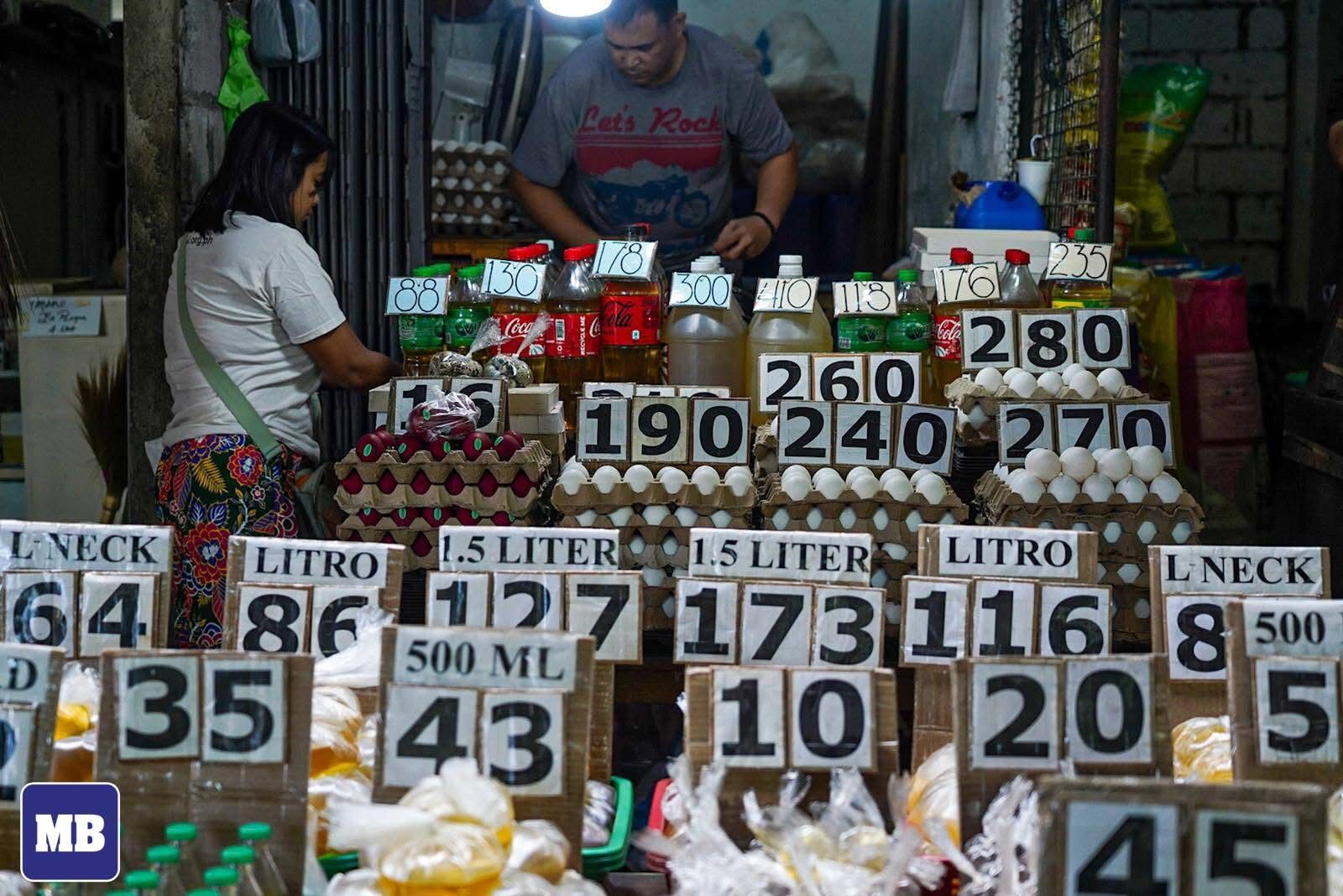
The PEBA president noted that while demand for eggs significantly dropped after the holiday season, farmgate prices have already decreased and should be reflected in retail prices.


“Now after ng New Year because of the holiday season, pagpasok ng January, ‘yun po ang pinoproblema natin. Ang problema natin yung extreme fluctuation ng demand. Malaki po ang ibinaba ng table eggs after ng New Year (Now, after the New Year and due to the holiday season, the problem we’re facing is the extreme fluctuation in demand. The price of table eggs dropped significantly after the New Year),” he said.


Uyehara cautioned retailers against increasing prices due to misinformation, urging them to follow farmgate rates.


“Because of inaccurate information, baka retailers natin magkanya-kanyang taas dahil nag-assume sila. Sa amin po dapat ang maging reference natin yung farmgate price. Ang farmgate price P5.60 to P6. P6.30, ‘yun po ang farmgate, which is tolerable (Due to inaccurate information, retailers might raise prices on their own because they’re making assumptions. For us, the reference should be the farmgate price, which is between P5.60 to P6.30—this is a tolerable farmgate price),” he stressed.


No bird flu impact 


Uyehara also downplayed the impact of bird flu outbreaks in Europe and America, saying that the country’s parent stock supply was secured last year, ensuring that production remains unaffected.


“Right now, mayroon po tayong issue sa bird flu sa European countries. Ano po ang epekto nito? Iyong importation ng PS (Parent Stock) for this year, wala pong epekto ang bird flu issue sa Europe at Amerika, dahil parent stock na inaasahan natin this year ay dumating na po last year ;Right now, we have an issue with bird flu in European countries. What is its effect? The importation of parent stock (PS) for this year is not affected by the bird flu issue in Europe and America because the parent stock expected for this year already arrived last year),” he explained.


Laurel had earlier warned of a potential egg shortage by April, blaming an oversupply and low demand in 2024 that led many local producers to cull their hens, reducing the egg-laying population.


To address this, the DA is reportedly taking steps to stabilize egg supply and prices, including closely monitoring production trends and ensuring market stability. 

ADVERTISEMENT
.most-popular .layout-ratio{ padding-bottom: 79.13%; } @media (min-width: 768px) and (max-width: 1024px) { .widget-title { font-size: 15px !important; } }

{{ articles_filter_1561_widget.title }}

.most-popular .layout-ratio{ padding-bottom: 79.13%; } @media (min-width: 768px) and (max-width: 1024px) { .widget-title { font-size: 15px !important; } }

{{ articles_filter_1562_widget.title }}

.most-popular .layout-ratio{ padding-bottom: 79.13%; } @media (min-width: 768px) and (max-width: 1024px) { .widget-title { font-size: 15px !important; } }

{{ articles_filter_1563_widget.title }}

{{ articles_filter_1564_widget.title }}

.mb-article-details { position: relative; } .mb-article-details .article-body-preview, .mb-article-details .article-body-summary{ font-size: 17px; line-height: 30px; font-family: "Libre Caslon Text", serif; color: #000; } .mb-article-details .article-body-preview iframe , .mb-article-details .article-body-summary iframe{ width: 100%; margin: auto; } .read-more-background { background: linear-gradient(180deg, color(display-p3 1.000 1.000 1.000 / 0) 13.75%, color(display-p3 1.000 1.000 1.000 / 0.8) 30.79%, color(display-p3 1.000 1.000 1.000) 72.5%); position: absolute; height: 200px; width: 100%; bottom: 0; display: flex; justify-content: center; align-items: center; padding: 0; } .read-more-background a{ color: #000; } .read-more-btn { padding: 17px 45px; font-family: Inter; font-weight: 700; font-size: 18px; line-height: 16px; text-align: center; vertical-align: middle; border: 1px solid black; background-color: white; } .hidden { display: none; }
function initializeAllSwipers() { // Get all hidden inputs with cms_article_id document.querySelectorAll('[id^="cms_article_id_"]').forEach(function (input) { const cmsArticleId = input.value; const articleSelector = '#article-' + cmsArticleId + ' .body_images'; const swiperElement = document.querySelector(articleSelector); if (swiperElement && !swiperElement.classList.contains('swiper-initialized')) { new Swiper(articleSelector, { loop: true, pagination: false, navigation: { nextEl: '#article-' + cmsArticleId + ' .swiper-button-next', prevEl: '#article-' + cmsArticleId + ' .swiper-button-prev', }, }); } }); } setTimeout(initializeAllSwipers, 3000); const intersectionObserver = new IntersectionObserver( (entries) => { entries.forEach((entry) => { if (entry.isIntersecting) { const newUrl = entry.target.getAttribute("data-url"); if (newUrl) { history.pushState(null, null, newUrl); let article = entry.target; // Extract metadata const author = article.querySelector('.author-section').textContent.replace('By', '').trim(); const section = article.querySelector('.section-info ').textContent.replace(' ', ' '); const title = article.querySelector('.article-title h1').textContent; // Parse URL for Chartbeat path format const parsedUrl = new URL(newUrl, window.location.origin); const cleanUrl = parsedUrl.host + parsedUrl.pathname; // Update Chartbeat configuration if (typeof window._sf_async_config !== 'undefined') { window._sf_async_config.path = cleanUrl; window._sf_async_config.sections = section; window._sf_async_config.authors = author; } // Track virtual page view with Chartbeat if (typeof pSUPERFLY !== 'undefined' && typeof pSUPERFLY.virtualPage === 'function') { try { pSUPERFLY.virtualPage({ path: cleanUrl, title: title, sections: section, authors: author }); } catch (error) { console.error('ping error', error); } } // Optional: Update document title if (title && title !== document.title) { document.title = title; } } } }); }, { threshold: 0.1 } ); function showArticleBody(button) { const article = button.closest("article"); const summary = article.querySelector(".article-body-summary"); const body = article.querySelector(".article-body-preview"); const readMoreSection = article.querySelector(".read-more-background"); // Hide summary and read-more section summary.style.display = "none"; readMoreSection.style.display = "none"; // Show the full article body body.classList.remove("hidden"); } document.addEventListener("DOMContentLoaded", () => { let loadCount = 0; // Track how many times articles are loaded const offset = [1, 2, 3, 4, 5, 6, 7, 8, 9, 10]; // Offset values const currentUrl = window.location.pathname.substring(1); let isLoading = false; // Prevent multiple calls if (!currentUrl) { console.log("Current URL is invalid."); return; } const sentinel = document.getElementById("load-more-sentinel"); if (!sentinel) { console.log("Sentinel element not found."); return; } function isSentinelVisible() { const rect = sentinel.getBoundingClientRect(); return ( rect.top < window.innerHeight && rect.bottom >= 0 ); } function onScroll() { if (isLoading) return; if (isSentinelVisible()) { if (loadCount >= offset.length) { console.log("Maximum load attempts reached."); window.removeEventListener("scroll", onScroll); return; } isLoading = true; const currentOffset = offset[loadCount]; window.loadMoreItems().then(() => { let article = document.querySelector('#widget_1690 > div:nth-last-of-type(2) article'); intersectionObserver.observe(article) loadCount++; }).catch(error => { console.error("Error loading more items:", error); }).finally(() => { isLoading = false; }); } } window.addEventListener("scroll", onScroll); });

Sign up by email to receive news.