

ADVERTISEMENT

The pope slept peacefully, got up and had breakfast after diagnosis of pneumonia, Vatican says

Published Feb 19, 2025 09:48 am

ROME (AP) — Pope Francis slept well, got out of bed and ate breakfast Wednesday, the Vatican said, after tests confirmed the 88-year-old pontiff had developed pneumonia in both lungs in a further complication that raised concerns about his ability to fight off the infection.
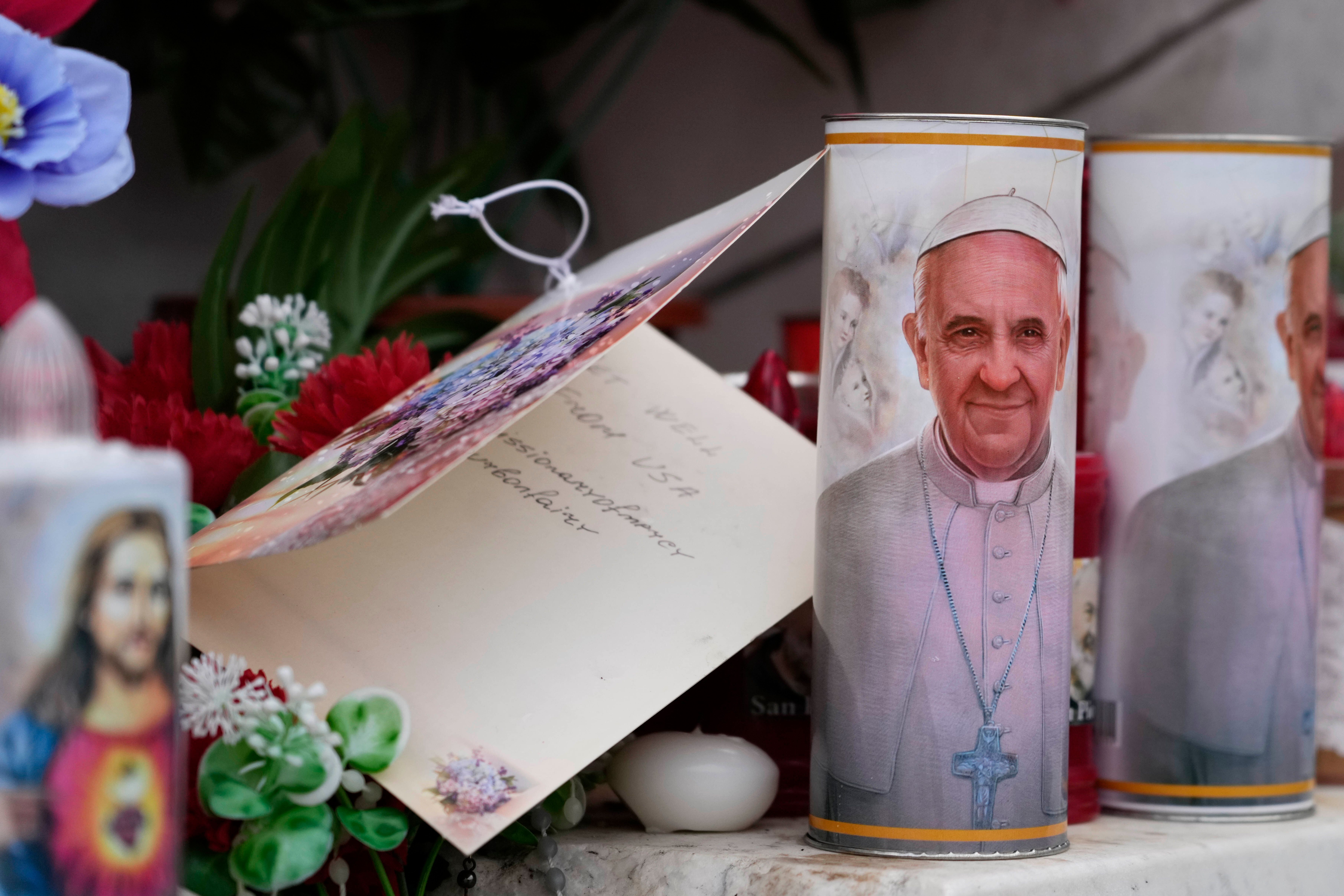
AP25050304066691.jpgCandles with the pictures of Pope Francis are the laid under the statue of late Pope John Paul II outside Agostino Gemelli Polyclinic in Rome, Wednesday, Feb. 19, 2025, where the Pontiff is hospitalized since Friday, Feb. 14. (AP Photo/Gregorio Borgia)

In an early update Wednesday morning, the Vatican said Francis spent his fifth night in Rome's Gemelli hospital peacefully. “He had a tranquil night, woke up and had breakfast,” spokesman Matteo Bruni said.

The Vatican on Tuesday said tests confirmed the pneumonia in both lungs and that respiratory infection also involves asthmatic bronchitis, which requires the use of cortisone antibiotic treatment. “Laboratory tests, chest X-ray, and the Holy Father’s clinical condition continue to present a complex picture,” the Vatican said.

Nevertheless the pope, who had the upper lobe of his right lung removed as a young man, is in good spirits and is grateful for the prayers for his recovery, Bruni said. On Wednesday, Francis' vicar for Rome urged all the faithful to devote an hour of silent prayer before evening vespers services.

Francis was admitted to the Gemelli hospital in a “fair” condition on Friday after a weeklong bout of bronchitis worsened. On Monday, medical personnel determined that he was suffering from a polymicrobial respiratory tract infection, meaning a mix of viruses, bacteria and possibly other organisms had colonized in his respiratory tract.

“The follow-up chest CT scan which the Holy Father underwent this afternoon ... demonstrated the onset of bilateral pneumonia, which required additional drug therapy,” Bruni said Tuesday.

Bronchitis can lead to pneumonia, which is a deeper and far more serious infection of the lungs’ air sacs. Pneumonia can develop in part of one lung or an entire lung or both lungs. It tends to be more serious when both lungs are affected because there isn’t healthy lung tissue to compensate.

Treatment varies by severity but can include providing oxygen through a nasal tube or mask, intravenous fluids — and treatment of the underlying cause of the infection. To date, Francis is breathing on his own, has eaten breakfast every day, gotten out of bed, read the newspapers and done some work from his hospital room.

The Vatican hasn't provided any information about how Francis is responding to any of the drugs he has been given other than to say he isn't running a fever.

Dr. Carmelo D’Asero, an infectious disease and geriatric disease expert in Rome, said Francis' lack of a fever was not necessarily a positive thing, given the seriousness of his infection.

“A high fever is a sign of an immune response to a pathogen,” he said. “Having a low fever and having a serious bronchial infection ... is a sign of a decreased immune response and that makes us worry a little bit more, let’s say. Maybe if he had a fever, it would have been better.”

The Vatican has given no indication of how long the pope might remain hospitalized, only saying that the treatment of such a “complex clinical picture,” which has already required several changes in his drug regimen, would require an “adequate” stay.

Despite the less than positive news about Francis' condition, a rainbow appeared over the Gemelli hospital on Tuesday afternoon and Francis received get-well drawings and cards from children being treated in the hospital's oncology ward.


Related Tags

World news Pope Francis
ADVERTISEMENT
.most-popular .layout-ratio{ padding-bottom: 79.13%; } @media (min-width: 768px) and (max-width: 1024px) { .widget-title { font-size: 15px !important; } }

{{ articles_filter_1561_widget.title }}

.most-popular .layout-ratio{ padding-bottom: 79.13%; } @media (min-width: 768px) and (max-width: 1024px) { .widget-title { font-size: 15px !important; } }

{{ articles_filter_1562_widget.title }}

.most-popular .layout-ratio{ padding-bottom: 79.13%; } @media (min-width: 768px) and (max-width: 1024px) { .widget-title { font-size: 15px !important; } }

{{ articles_filter_1563_widget.title }}

{{ articles_filter_1564_widget.title }}

.mb-article-details { position: relative; } .mb-article-details .article-body-preview, .mb-article-details .article-body-summary{ font-size: 17px; line-height: 30px; font-family: "Libre Caslon Text", serif; color: #000; } .mb-article-details .article-body-preview iframe , .mb-article-details .article-body-summary iframe{ width: 100%; margin: auto; } .read-more-background { background: linear-gradient(180deg, color(display-p3 1.000 1.000 1.000 / 0) 13.75%, color(display-p3 1.000 1.000 1.000 / 0.8) 30.79%, color(display-p3 1.000 1.000 1.000) 72.5%); position: absolute; height: 200px; width: 100%; bottom: 0; display: flex; justify-content: center; align-items: center; padding: 0; } .read-more-background a{ color: #000; } .read-more-btn { padding: 17px 45px; font-family: Inter; font-weight: 700; font-size: 18px; line-height: 16px; text-align: center; vertical-align: middle; border: 1px solid black; background-color: white; } .hidden { display: none; }
function initializeAllSwipers() { // Get all hidden inputs with cms_article_id document.querySelectorAll('[id^="cms_article_id_"]').forEach(function (input) { const cmsArticleId = input.value; const articleSelector = '#article-' + cmsArticleId + ' .body_images'; const swiperElement = document.querySelector(articleSelector); if (swiperElement && !swiperElement.classList.contains('swiper-initialized')) { new Swiper(articleSelector, { loop: true, pagination: false, navigation: { nextEl: '#article-' + cmsArticleId + ' .swiper-button-next', prevEl: '#article-' + cmsArticleId + ' .swiper-button-prev', }, }); } }); } setTimeout(initializeAllSwipers, 3000); const intersectionObserver = new IntersectionObserver( (entries) => { entries.forEach((entry) => { if (entry.isIntersecting) { const newUrl = entry.target.getAttribute("data-url"); if (newUrl) { history.pushState(null, null, newUrl); let article = entry.target; // Extract metadata const author = article.querySelector('.author-section').textContent.replace('By', '').trim(); const section = article.querySelector('.section-info ').textContent.replace(' ', ' '); const title = article.querySelector('.article-title h1').textContent; // Parse URL for Chartbeat path format const parsedUrl = new URL(newUrl, window.location.origin); const cleanUrl = parsedUrl.host + parsedUrl.pathname; // Update Chartbeat configuration if (typeof window._sf_async_config !== 'undefined') { window._sf_async_config.path = cleanUrl; window._sf_async_config.sections = section; window._sf_async_config.authors = author; } // Track virtual page view with Chartbeat if (typeof pSUPERFLY !== 'undefined' && typeof pSUPERFLY.virtualPage === 'function') { try { pSUPERFLY.virtualPage({ path: cleanUrl, title: title, sections: section, authors: author }); } catch (error) { console.error('ping error', error); } } // Optional: Update document title if (title && title !== document.title) { document.title = title; } } } }); }, { threshold: 0.1 } ); function showArticleBody(button) { const article = button.closest("article"); const summary = article.querySelector(".article-body-summary"); const body = article.querySelector(".article-body-preview"); const readMoreSection = article.querySelector(".read-more-background"); // Hide summary and read-more section summary.style.display = "none"; readMoreSection.style.display = "none"; // Show the full article body body.classList.remove("hidden"); } document.addEventListener("DOMContentLoaded", () => { let loadCount = 0; // Track how many times articles are loaded const offset = [1, 2, 3, 4, 5, 6, 7, 8, 9, 10]; // Offset values const currentUrl = window.location.pathname.substring(1); let isLoading = false; // Prevent multiple calls if (!currentUrl) { console.log("Current URL is invalid."); return; } const sentinel = document.getElementById("load-more-sentinel"); if (!sentinel) { console.log("Sentinel element not found."); return; } function isSentinelVisible() { const rect = sentinel.getBoundingClientRect(); return ( rect.top < window.innerHeight && rect.bottom >= 0 ); } function onScroll() { if (isLoading) return; if (isSentinelVisible()) { if (loadCount >= offset.length) { console.log("Maximum load attempts reached."); window.removeEventListener("scroll", onScroll); return; } isLoading = true; const currentOffset = offset[loadCount]; window.loadMoreItems().then(() => { let article = document.querySelector('#widget_1690 > div:nth-last-of-type(2) article'); intersectionObserver.observe(article) loadCount++; }).catch(error => { console.error("Error loading more items:", error); }).finally(() => { isLoading = false; }); } } window.addEventListener("scroll", onScroll); });

Sign up by email to receive news.