ADVERTISEMENT

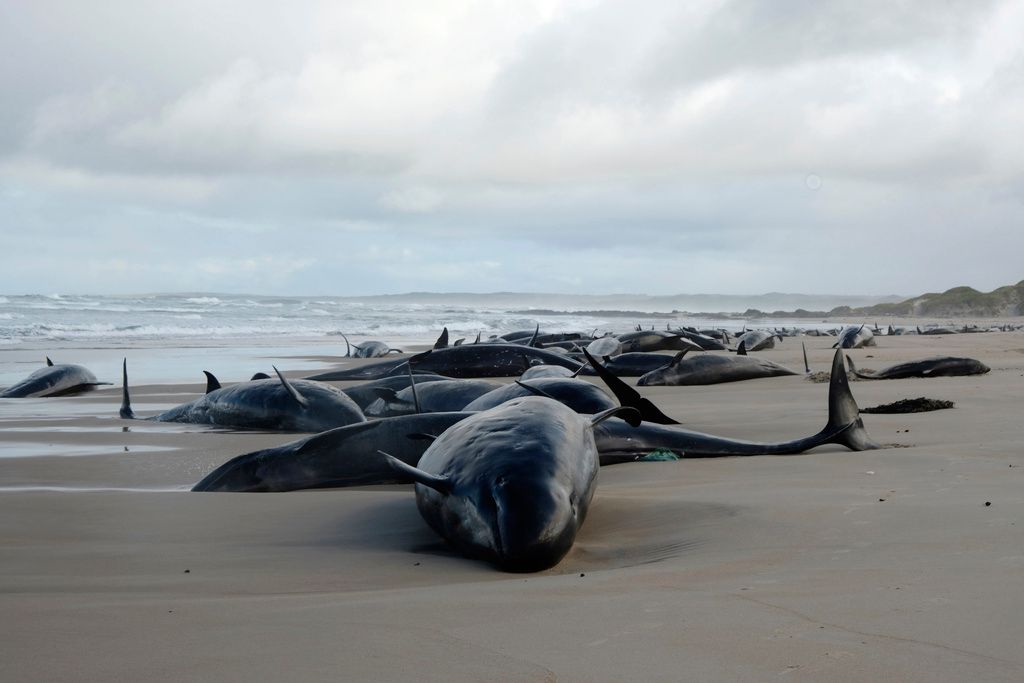
More than 150 false killer whales stranded on a beach in Australia's Tasmania state

Published Feb 19, 2025 03:17 am

STRANDED PHOTO.jpg

STRANDED – In this photo provided by the Department of Natural Resources and Environment Tasmania, false killer whales are seen stranded, Wednesday, Feb. 19, 2025, on a remote beach on near Arthur River in Australia's island state of Tasmania. (NRE via AP)

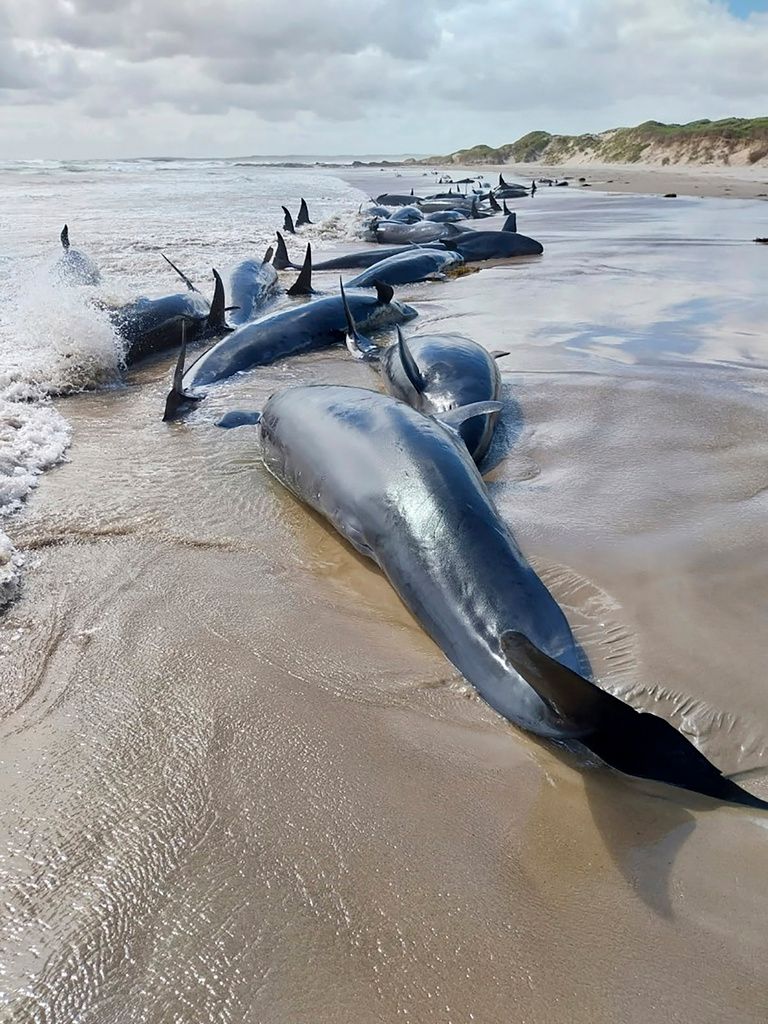
MELBOURNE, Australia (AP) — More than 150 false killer whales are stranded on a remote beach on Australia's island state of Tasmania, officials said on Wednesday.

Marine experts including veterinarians were at the scene near Arthur River on Tasmania's northwest coast, a Department of Natural Resources and Environment statement said.

Of the 157 beached whales, only 90 appeared to still be alive, department liaison officer Brendon Clark said. A few hours earlier, the department had said 136 had survived.

The inaccessibility of the beach, ocean conditions and challenges to getting specialist equipment to the remote area were complicating a response.

Authorities had yet to determine on Wednesday if any of the whales — which can weigh from 500 kilograms (1,100 pounds) to 3 metric tons (3.3 U.S. tons) — can be refloated from the exposed surf beach, Clark said.

"To try to refloat the animals directly back into that surf would be challenging and then of course that would also present some enormous safety risks for our staff and personnel," Clark told reporters.

"We've got our experts on site now that are doing ... all that they can to determine what methodology will be implemented to try and find a suitable and a humane response to this particular very challenging incident," Clark added.

He said the stranding was the first by false killer whales in Tasmania in since 1974. That was a pod of more than 160 whales that landed on a beach near Stanley on the northwest coast. Strandings in Tasmania are usually pilot whales.
STRANDED PHOTO2.jpg

This photo provided by the Department of Natural Resources and Environment Tasmania shows false killer whales which became stranded, Wednesday, Feb. 19, 2025, on a remote beach on near Arthur River in Australia's island state of Tasmania. (NRE via AP)

Clark declined to speculate on why the latest pod might have stranded. Carcasses of dead whales would be examined for clues, he said.

The whales were discovered on Tuesday afternoon and a helicopter reconnaissance determined that there were no other whales within 10 kilometers (6 miles) of the stranded pod, he said.

Some could have been stranded for as long as 48 hours by early Wednesday.

Arthur River local resident Jocelyn Flint said her son had discovered the stranded whales around midnight while fishing for shark.

She said she had gone to the scene in the dark hours of the morning and returned after dawn but the whales were too big to attempt to refloat them.

"The water was surging right up and they were thrashing. They're just dying, they've sunk down in the sand," Flint said. "I think it's too late."

"There are little babies. Up one end, there's a lot of big ones. It's sad," she added.

In 2022, 230 pilot whales stranded further south on the west coast at Macquarie Harbor.

The largest mass-stranding in Australian history occurred in the same harbor in 2020 when 470 long-finned pilot whales became stuck on sandbars. Most of the beached whales died on both occasions.

The reasons for the beachings are unclear. Reasons could include disorientation caused by loud noises, illness, old age, injury, fleeing predators and severe weather.

Related Tags

beached stranded WORLDNEWS
ADVERTISEMENT
.most-popular .layout-ratio{ padding-bottom: 79.13%; } @media (min-width: 768px) and (max-width: 1024px) { .widget-title { font-size: 15px !important; } }

{{ articles_filter_1561_widget.title }}

.most-popular .layout-ratio{ padding-bottom: 79.13%; } @media (min-width: 768px) and (max-width: 1024px) { .widget-title { font-size: 15px !important; } }

{{ articles_filter_1562_widget.title }}

.most-popular .layout-ratio{ padding-bottom: 79.13%; } @media (min-width: 768px) and (max-width: 1024px) { .widget-title { font-size: 15px !important; } }

{{ articles_filter_1563_widget.title }}

{{ articles_filter_1564_widget.title }}

.mb-article-details { position: relative; } .mb-article-details .article-body-preview, .mb-article-details .article-body-summary{ font-size: 17px; line-height: 30px; font-family: "Libre Caslon Text", serif; color: #000; } .mb-article-details .article-body-preview iframe , .mb-article-details .article-body-summary iframe{ width: 100%; margin: auto; } .read-more-background { background: linear-gradient(180deg, color(display-p3 1.000 1.000 1.000 / 0) 13.75%, color(display-p3 1.000 1.000 1.000 / 0.8) 30.79%, color(display-p3 1.000 1.000 1.000) 72.5%); position: absolute; height: 200px; width: 100%; bottom: 0; display: flex; justify-content: center; align-items: center; padding: 0; } .read-more-background a{ color: #000; } .read-more-btn { padding: 17px 45px; font-family: Inter; font-weight: 700; font-size: 18px; line-height: 16px; text-align: center; vertical-align: middle; border: 1px solid black; background-color: white; } .hidden { display: none; }
function initializeAllSwipers() { // Get all hidden inputs with cms_article_id document.querySelectorAll('[id^="cms_article_id_"]').forEach(function (input) { const cmsArticleId = input.value; const articleSelector = '#article-' + cmsArticleId + ' .body_images'; const swiperElement = document.querySelector(articleSelector); if (swiperElement && !swiperElement.classList.contains('swiper-initialized')) { new Swiper(articleSelector, { loop: true, pagination: false, navigation: { nextEl: '#article-' + cmsArticleId + ' .swiper-button-next', prevEl: '#article-' + cmsArticleId + ' .swiper-button-prev', }, }); } }); } setTimeout(initializeAllSwipers, 3000); const intersectionObserver = new IntersectionObserver( (entries) => { entries.forEach((entry) => { if (entry.isIntersecting) { const newUrl = entry.target.getAttribute("data-url"); if (newUrl) { history.pushState(null, null, newUrl); let article = entry.target; // Extract metadata const author = article.querySelector('.author-section').textContent.replace('By', '').trim(); const section = article.querySelector('.section-info ').textContent.replace(' ', ' '); const title = article.querySelector('.article-title h1').textContent; // Parse URL for Chartbeat path format const parsedUrl = new URL(newUrl, window.location.origin); const cleanUrl = parsedUrl.host + parsedUrl.pathname; // Update Chartbeat configuration if (typeof window._sf_async_config !== 'undefined') { window._sf_async_config.path = cleanUrl; window._sf_async_config.sections = section; window._sf_async_config.authors = author; } // Track virtual page view with Chartbeat if (typeof pSUPERFLY !== 'undefined' && typeof pSUPERFLY.virtualPage === 'function') { try { pSUPERFLY.virtualPage({ path: cleanUrl, title: title, sections: section, authors: author }); } catch (error) { console.error('ping error', error); } } // Optional: Update document title if (title && title !== document.title) { document.title = title; } } } }); }, { threshold: 0.1 } ); function showArticleBody(button) { const article = button.closest("article"); const summary = article.querySelector(".article-body-summary"); const body = article.querySelector(".article-body-preview"); const readMoreSection = article.querySelector(".read-more-background"); // Hide summary and read-more section summary.style.display = "none"; readMoreSection.style.display = "none"; // Show the full article body body.classList.remove("hidden"); } document.addEventListener("DOMContentLoaded", () => { let loadCount = 0; // Track how many times articles are loaded const offset = [1, 2, 3, 4, 5, 6, 7, 8, 9, 10]; // Offset values const currentUrl = window.location.pathname.substring(1); let isLoading = false; // Prevent multiple calls if (!currentUrl) { console.log("Current URL is invalid."); return; } const sentinel = document.getElementById("load-more-sentinel"); if (!sentinel) { console.log("Sentinel element not found."); return; } function isSentinelVisible() { const rect = sentinel.getBoundingClientRect(); return ( rect.top < window.innerHeight && rect.bottom >= 0 ); } function onScroll() { if (isLoading) return; if (isSentinelVisible()) { if (loadCount >= offset.length) { console.log("Maximum load attempts reached."); window.removeEventListener("scroll", onScroll); return; } isLoading = true; const currentOffset = offset[loadCount]; window.loadMoreItems().then(() => { let article = document.querySelector('#widget_1690 > div:nth-last-of-type(2) article'); intersectionObserver.observe(article) loadCount++; }).catch(error => { console.error("Error loading more items:", error); }).finally(() => { isLoading = false; }); } } window.addEventListener("scroll", onScroll); });

Sign up by email to receive news.