

ADVERTISEMENT

Migrant groups say racist attacks increase in German city after deadly Christmas market violence

Published Feb 19, 2025 12:52 pm

MAGDEBURG, Germany (AP) — When Haben Gebregergish first immigrated to the German city of Magdeburg seven years ago, the Eritrean immigrant was walking to the supermarket with her child when an intoxicated woman approached her on the street.
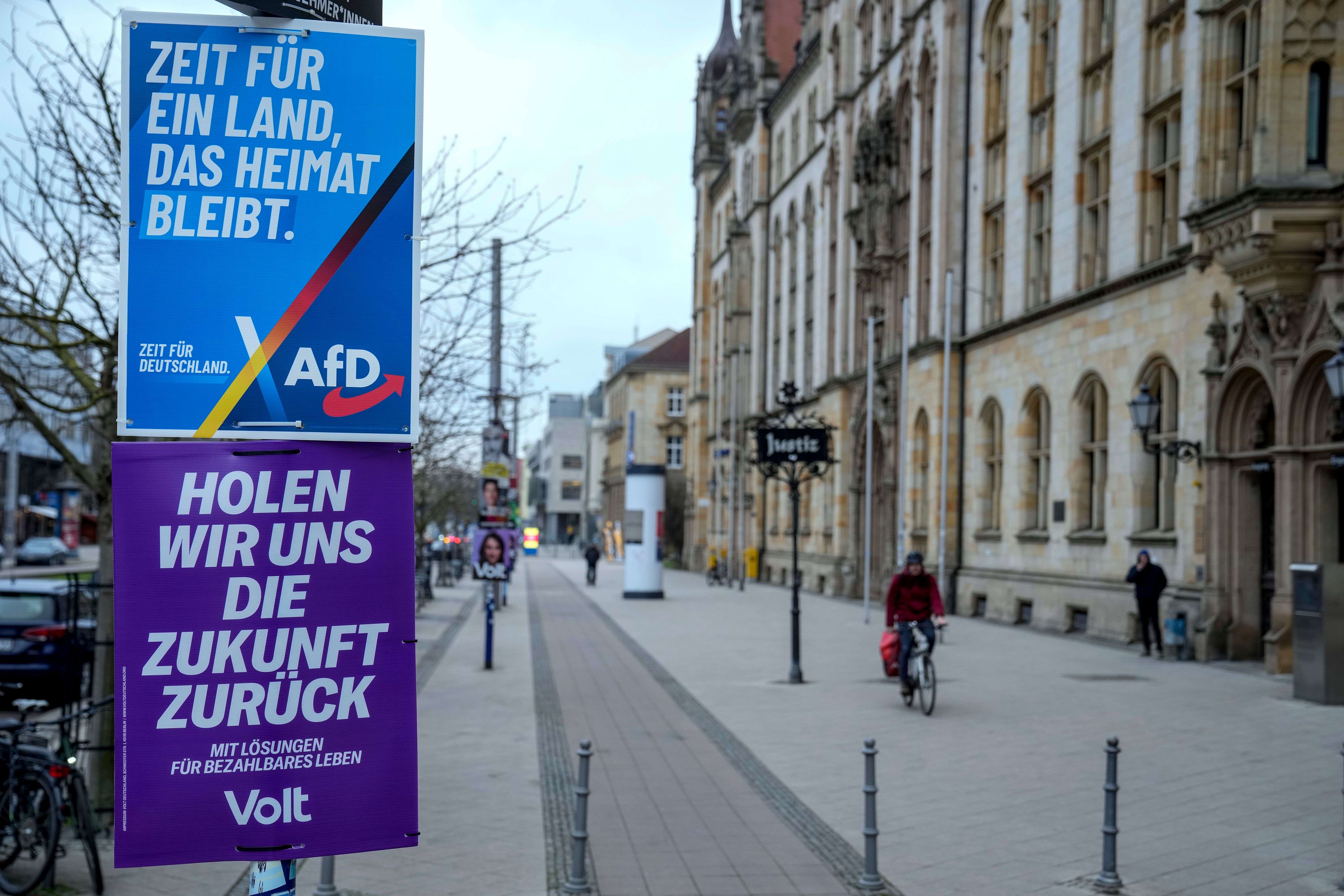
AP25049539708178.jpgAn election poster of the far-right anti-immigrant party Alternative For Germany party AfD, with with the slogan reading "It's time for a country that is still a home country", is displayed in a street, in Magdeburg, Germany, Friday, Feb. 7, 2025. (AP Photo/Ebrahim Noroozi)

At the time, Gebregergish did not speak German well enough to comprehend what the woman was saying. But Gebregergish says that when the woman threw a beer bottle at her head, she immediately understood.

It was one of her first encounters with racism, but certainly not the last. In the aftermath of a deadly attack at a Christmas market in Magdeburg late last year, Gebregergish and other migrants who have settled in the city say they have experienced a sharp increase in racism and anti-immigration sentiments.

“We are the same as you,” Gebregergish said earlier this month. "We are not different. Just like you, we have feelings. Sometimes we are sad, sometimes we are happy, just like everyone else.”

The Christmas market violence was one of five high-profile attacks committed by immigrants in the past nine months that have made migration a key issue as the country heads toward an early election on Sunday. The suspect, a Saudi doctor, drove into the holiday market teeming with shoppers and left five women and a 9-year-old boy dead and 200 people injured.

The suspect arrived in Germany in 2006 and had received permanent residency, and authorities say the suspect does not fit the usual profile of perpetrators of extremist attacks. He is being held in custody as authorities investigate him.

Just one day after Dec. 20 violence, there was a large right-wing demonstration in Magdeburg, and verbal and physical attacks on people with a migrant background have increased significantly in the city since then, according to the German-Syrian Cultural Association in Magdeburg.

“The migrant community and the advice centers report that attacks have increased by more than 70% here in the city," said Saeeid Saeeid, who came to Germany from Syria seven years ago and is a member of the association. "Racism already exists here and everywhere. But it has increased enormously since the attack.”

Ketevan Asatiani-Hermann, newly elected chair of the board for the Advisory Council for Integration and Migration in Magdeburg, said victims of racist attacks in the city often do not feel support from politicians or police.

“The hatred has always been there, people just didn’t dare to say it so clearly before,” said Asatiani-Hermann, who came to Magdeburg in 2011 from Georgia.

Officers sometimes target or search the victims first before the perpetrator, she alleged, and they also worry reporting an attack could have a negative impact on their residence status.

The Magdeburg Police Department did not respond to multiple requests for comment.

Mayor Simone Borris, in a statement, said: “Cohesion and community are fundamental values of a city that are inviolable." The mayor also referred media to online services for migrants, and said the city's Cooperation with the Advisory Council for Integration and Migration will be expanded.

Magdeburg is located in the former communist east, an area where the far-right and anti-immigrant Alternative for Germany (AfD) party has its highest support. The party is polling in second place going into the upcoming election with about 20% support and is fielding its first candidate to lead the country.

Even though it’s highly unlikely to take a share of power soon, it has become a factor that other politicians can’t ignore and has helped shape Germany’s debate on migration.

The election's outcome — and a potential gain in influence for AfD — could have a large impact on Magdeburg's politics and everyday life, Asatiani-Hermann said.

Saeeid said the city's migrants feel alone, and want to hear directly from their elected officials to address their concerns.

"We will not allow Magdeburg to become a playing field for racism and hatred,” he said.


Related Tags

World news
ADVERTISEMENT
.most-popular .layout-ratio{ padding-bottom: 79.13%; } @media (min-width: 768px) and (max-width: 1024px) { .widget-title { font-size: 15px !important; } }

{{ articles_filter_1561_widget.title }}

.most-popular .layout-ratio{ padding-bottom: 79.13%; } @media (min-width: 768px) and (max-width: 1024px) { .widget-title { font-size: 15px !important; } }

{{ articles_filter_1562_widget.title }}

.most-popular .layout-ratio{ padding-bottom: 79.13%; } @media (min-width: 768px) and (max-width: 1024px) { .widget-title { font-size: 15px !important; } }

{{ articles_filter_1563_widget.title }}

{{ articles_filter_1564_widget.title }}

.mb-article-details { position: relative; } .mb-article-details .article-body-preview, .mb-article-details .article-body-summary{ font-size: 17px; line-height: 30px; font-family: "Libre Caslon Text", serif; color: #000; } .mb-article-details .article-body-preview iframe , .mb-article-details .article-body-summary iframe{ width: 100%; margin: auto; } .read-more-background { background: linear-gradient(180deg, color(display-p3 1.000 1.000 1.000 / 0) 13.75%, color(display-p3 1.000 1.000 1.000 / 0.8) 30.79%, color(display-p3 1.000 1.000 1.000) 72.5%); position: absolute; height: 200px; width: 100%; bottom: 0; display: flex; justify-content: center; align-items: center; padding: 0; } .read-more-background a{ color: #000; } .read-more-btn { padding: 17px 45px; font-family: Inter; font-weight: 700; font-size: 18px; line-height: 16px; text-align: center; vertical-align: middle; border: 1px solid black; background-color: white; } .hidden { display: none; }
function initializeAllSwipers() { // Get all hidden inputs with cms_article_id document.querySelectorAll('[id^="cms_article_id_"]').forEach(function (input) { const cmsArticleId = input.value; const articleSelector = '#article-' + cmsArticleId + ' .body_images'; const swiperElement = document.querySelector(articleSelector); if (swiperElement && !swiperElement.classList.contains('swiper-initialized')) { new Swiper(articleSelector, { loop: true, pagination: false, navigation: { nextEl: '#article-' + cmsArticleId + ' .swiper-button-next', prevEl: '#article-' + cmsArticleId + ' .swiper-button-prev', }, }); } }); } setTimeout(initializeAllSwipers, 3000); const intersectionObserver = new IntersectionObserver( (entries) => { entries.forEach((entry) => { if (entry.isIntersecting) { const newUrl = entry.target.getAttribute("data-url"); if (newUrl) { history.pushState(null, null, newUrl); let article = entry.target; // Extract metadata const author = article.querySelector('.author-section').textContent.replace('By', '').trim(); const section = article.querySelector('.section-info ').textContent.replace(' ', ' '); const title = article.querySelector('.article-title h1').textContent; // Parse URL for Chartbeat path format const parsedUrl = new URL(newUrl, window.location.origin); const cleanUrl = parsedUrl.host + parsedUrl.pathname; // Update Chartbeat configuration if (typeof window._sf_async_config !== 'undefined') { window._sf_async_config.path = cleanUrl; window._sf_async_config.sections = section; window._sf_async_config.authors = author; } // Track virtual page view with Chartbeat if (typeof pSUPERFLY !== 'undefined' && typeof pSUPERFLY.virtualPage === 'function') { try { pSUPERFLY.virtualPage({ path: cleanUrl, title: title, sections: section, authors: author }); } catch (error) { console.error('ping error', error); } } // Optional: Update document title if (title && title !== document.title) { document.title = title; } } } }); }, { threshold: 0.1 } ); function showArticleBody(button) { const article = button.closest("article"); const summary = article.querySelector(".article-body-summary"); const body = article.querySelector(".article-body-preview"); const readMoreSection = article.querySelector(".read-more-background"); // Hide summary and read-more section summary.style.display = "none"; readMoreSection.style.display = "none"; // Show the full article body body.classList.remove("hidden"); } document.addEventListener("DOMContentLoaded", () => { let loadCount = 0; // Track how many times articles are loaded const offset = [1, 2, 3, 4, 5, 6, 7, 8, 9, 10]; // Offset values const currentUrl = window.location.pathname.substring(1); let isLoading = false; // Prevent multiple calls if (!currentUrl) { console.log("Current URL is invalid."); return; } const sentinel = document.getElementById("load-more-sentinel"); if (!sentinel) { console.log("Sentinel element not found."); return; } function isSentinelVisible() { const rect = sentinel.getBoundingClientRect(); return ( rect.top < window.innerHeight && rect.bottom >= 0 ); } function onScroll() { if (isLoading) return; if (isSentinelVisible()) { if (loadCount >= offset.length) { console.log("Maximum load attempts reached."); window.removeEventListener("scroll", onScroll); return; } isLoading = true; const currentOffset = offset[loadCount]; window.loadMoreItems().then(() => { let article = document.querySelector('#widget_1690 > div:nth-last-of-type(2) article'); intersectionObserver.observe(article) loadCount++; }).catch(error => { console.error("Error loading more items:", error); }).finally(() => { isLoading = false; }); } } window.addEventListener("scroll", onScroll); });

Sign up by email to receive news.