







Financial integrity


PEACE BY PEACE
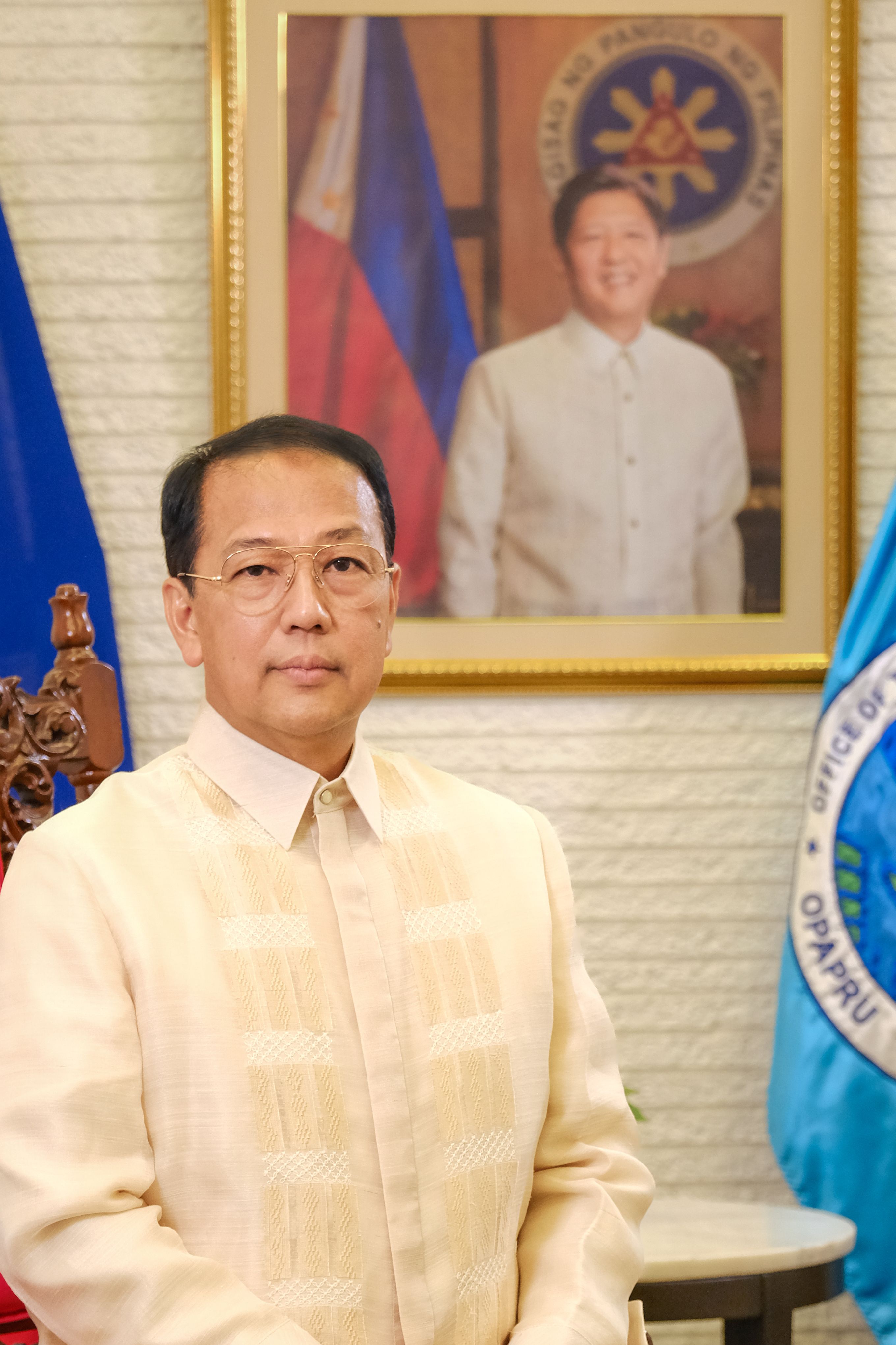
Over the past few weeks, the recently signed 2025 General Appropriations Act (GAA) of the Marcos Jr. administration has been one of the hottest topics on the news and social media. From alleged blank items in the GAA —which turned out to be untrue— to accusations of corruption thrown left and right, the exchanges surrounding the national budget due to the bicameral report have been muddled with speculation, criticism, and controversy.
Despite the negative perceptions we may have seen or heard, the Budget Department has stressed that the 2025 GAA in fact is the most transparent budget to be released by the national government.
Not known to many are the extensive processes, robust systems, and safeguards in place that guide the crafting of the national budget for every fiscal year.
In fact, President Ferdinand Marcos Jr.’s anti-corruption drive is to overhaul the old system and introduce steps to streamline our processes.
Open Governance
The Philippines together with seven other founding governments established the Open Government Partnership (OGP), an international movement for openness in 2011. This multilateral initiative aims to make governments more open and transparent, combat corruption, and harness the power of new technologies to strengthen governance.
Through the initiative of the Department of Budget and Management (DBM), under the competent leadership of Secretary Amenah Pangandaman, the Marcos Jr. administration institutionalized Open Government Partnerships through the issuance of Executive Order No. 31. As Secretary Amenah put it, institutionalizing Open Governance “paved the way for the Executive, Legislative and Judicial branches, despite being independent of each other, including our constitutional offices, to synchronize and implement open government initiatives.”
Last week, the Philippines hosted the Open Government Partnership Asia and the Pacific Regional Meeting. At the said forum, President Ferdinand Marcos Jr. expressed that “Open Governance is fundamental to prosperity, to stability, and to security in a rapidly transforming world.”
This is the first time we have an administration that, in aggressively embracIng Open Governance as an integral part of our national identity and continuously, has worked to institutionalize its principles into the government's systems and processes —and actively seek the partnership of civil society, stakeholders and the public towards a shared goal of good governance.
Through institutionalizing Open Governance into our systems and processes, the national government practices and upholds the principles of transparency, accountability, and whole-of-government, whole-of-society participation for the good of our people.
Digitalization
Digitalization remains a top priority of the Marcos Jr. administration to support the government’s planning and decision-making, streamline procurement of resources, and combat the many forms of graft and corruption.
These are well reflected in revenue agencies. For the Bureau of Customs (BOC), digitalization has been a critical change in their organization that has allowed them to increase their revenue collection and beat corruption allegations. Since the beginning of the Marcos Jr. administration, 161 out of 166 customs processes have been digitalized, giving the BOC a 96.99 percent digitalization rate. The President said: “In 2024, the BOC collected P931 billion —around P40 billion higher than its P890 billion collection in 2023.”
The Bureau of Internal Revenue (BIR) has also taken steps to adapt to ever-evolving technologies. Under its 10-year digital roadmap, the BIR has several digitalization projects planned that aim to modernize tax administration and reduce human interventions and red tape that generate corruption risks.
Most recently, the Procurement Service of the Department of Budget and Management (DBM) officially introduced the government’s first-ever e-marketplace, platform that is expected to reduce the procurement timeline, improve bureaucratic efficiency and transparency, and further ensure the judicious use of our people’s money.
New Government Procurement Act
In July 2024, RA 12009 or the New Government Procurement Act was enacted to enhance the procurement system that is currently in place. This game-changing piece of legislation, noted to be one of the best anti-corruption measures in place today, is governed by the principles of transparency, efficiency, enhanced accountability, and participatory procurement and modernizes the government procurement process with the use of emerging innovations and technologies.
In the Office of the Presidential Adviser on Peace, Reconciliation, and Unity (OPAPRU), we have institutionalized the Open Governance principles through many initiatives, one of which is the conduct of Citizen Led Monitoring (CLM). CLM, an initiative under the OPAPRU’s PAMANA program that caters to isolated, hard-to-reach, and conflict-affected communities, capacitates communities to develop ownership and accountability of high-impact infrastructure projects implemented in their localities.
Through institutionalizing CLM, identified citizen monitors support the OPAPRU in monitoring project development beginning from the procurement process up until the completion and turnover of these projects to their identified beneficiaries.
During my master's studies in Australia on Corporate and Public Governance Systems, we studied Australia’s 1997 Financial Management Reform. Similar to the reform we are undergoing today in the Philippines, Australia also underwent similar reforms to modernize its government’s financial management and procurement processes. Australia’s success in this regard shows us that our country is on the right track to ensure financial integrity across all our government agencies.
With these reforms in place, our country has seen and enjoyed vast economic growth. The Philippines’ unemployment rate as of December 2024 is 3.1% which is the lowest it has been in almost twenty years and a vast improvement from our pre-pandemic rating. Our country is also nearing an ‘A’ credit rating. According to global debt watcher S&P Global, this increased rating is thanks to effective policy-making and management of revenue and expenditures on the part of the national government.
Moreover, shortly after the signing of the 2025 GAA, the Executive Secretary and all Cabinet Secretaries were instructed by the President to hold the 2025 Budget Implementation Conference and FY 2026 Budget Call sponsored by the Department of Budget and Management (DBM). These two major events were the first in history and provided all cabinet members and undersecretaries with in-depth explanations regarding the President’s vetoed guidelines in the 2025 GAA, as well as frameworks, parameters, policy guidance and guidelines on budget execution and budget preparation. This level of engagement is a testament to the Marcos Jr. administration’s commitment in ensuring all agencies’ budget will be utilized efficiently and diligently.
And that is why I must urge my fellow countrymen, regardless of profession, to work with and check on our government as we strive to uphold these principles in all our endeavors. DBM Secretary Amenah Pangandaman in the recently held Open Government Partnership Asia and the Pacific Regional Meeting recognized the “OGP principles of transparency, accountability, inclusivity and participation as a cornerstone of democracy.”
In a democracy, it is only fundamental that our citizens can scrutinize and freely express their criticism of the government. However, there is a fine line between criticism and destabilization that must not be crossed.
And just as President Ferdinand Marcos Jr. said at the same event, “Our shared vision is clear-cut: we want every budget allocation, policy decision, and program implementation to involve public participation — all in pursuit to the empowerment and to the upliftment of our people.”
Indeed, each and every one of us has an important role to play in scrutinizing our processes, demanding accountability, and fostering credibility in order to realize the ideals of Bagong Pilipinas.
(Secretary Carlito G. Galvez, Jr., is the presidential adviser on peace, reconciliation and unity.)