

ADVERTISEMENT

Exploring grief in the digital age: 'Love Eternal' premieres at Boston Sci-Fi Film Festival

When almost every aspect of life can be augmented or achieved through technology, how does a person grieve a loss of a loved one?

Published Feb 13, 2025 03:18 am

At A Glance

  • Known as the longest-running genre festival in the U.S., the annual Boston Sci-Fi will celebrate its 50th anniversary, featuring over 30 features, 80 shorts, and 10 workshops/panels as a hybrid event from Feb. 12 to 17, 2025.
Love Eternal 03.jpg
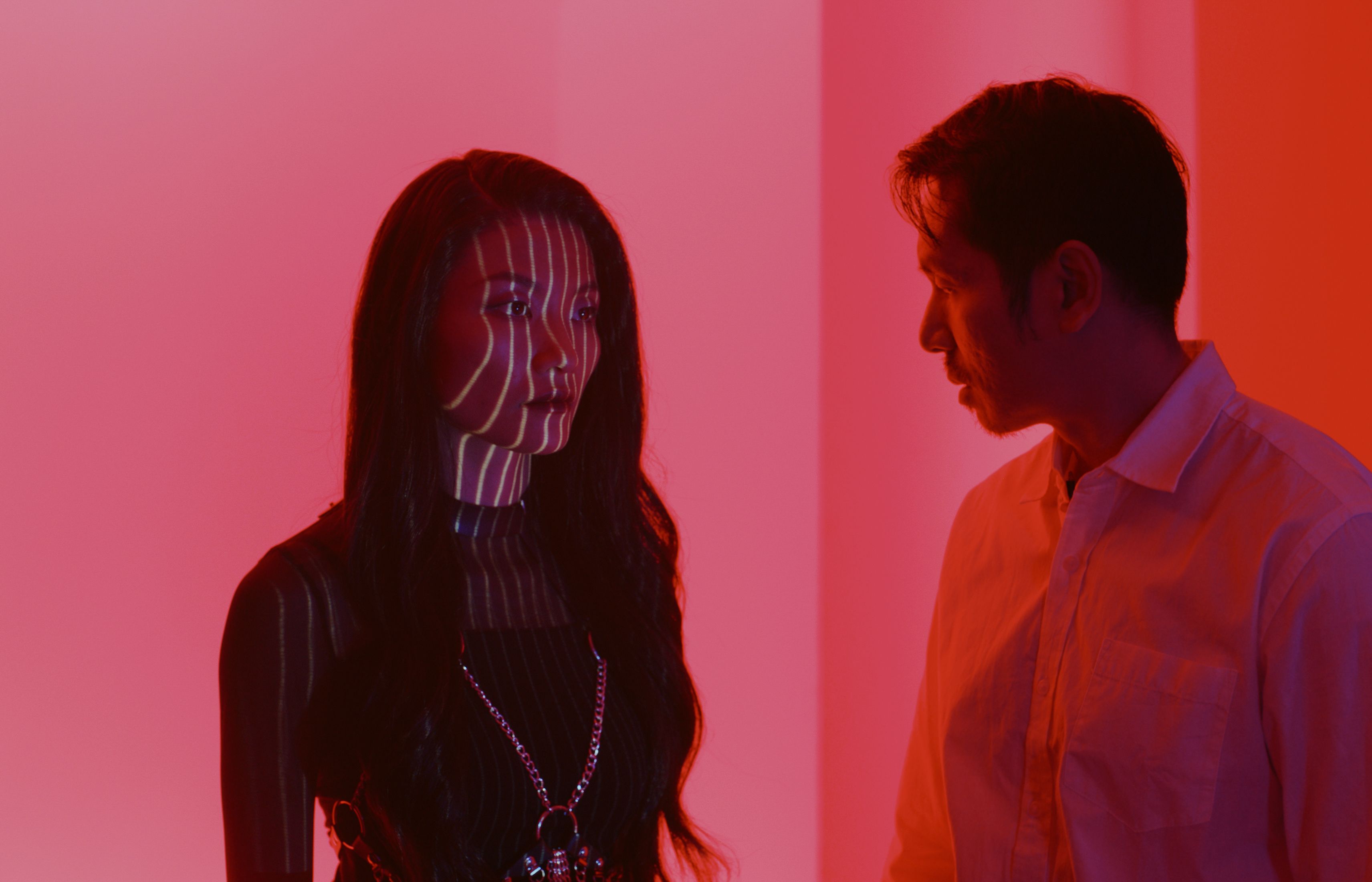
A scene from 'Love Eternal'

In a haunting exploration of digital afterlife, Dominic Czarnota's latest short film "Love Eternal" confronts the most human of experiences—grief—through an unprecedented technological lens.

Premiering at the prestigious Boston Sci-Fi Film Festival on Feb. 16, 2025, one of the coveted Genre Film Festivals in the world, the film delves into a near-future world where virtual reality serves as a
conduit of human emotion.

Directed and written by Czarnota, the film centers on Paul who becomes entangled in a morally complex journey after losing his wife Sophie. When traditional mourning proves insufficient, Paul turns to a cutting-edge VR simulation that recreates his deceased wife as a digital avatar.

Craftily depicted in an introspective way, Czarnota’s work strikes a delicate balance between the potential of technology and the irreplaceable elements of human emotion and connection bringing a unique perspective on how technology, specifically virtual reality and artificial intelligence in the sci-fi genre can reimagine human loss and memory – true to the film’s main purpose.

"The most challenging aspect of creating 'Love Eternal' was ensuring that technology remained a mere vessel for exploring genuine human emotion," Czarnota explains. "We crafted a unique narrative that we hope the audiences can relate with and I’m really excited for the audience to experience this emotional journey and witness my team’s hard work come to life on screen.”
Love Eternal 01 (1).jpg

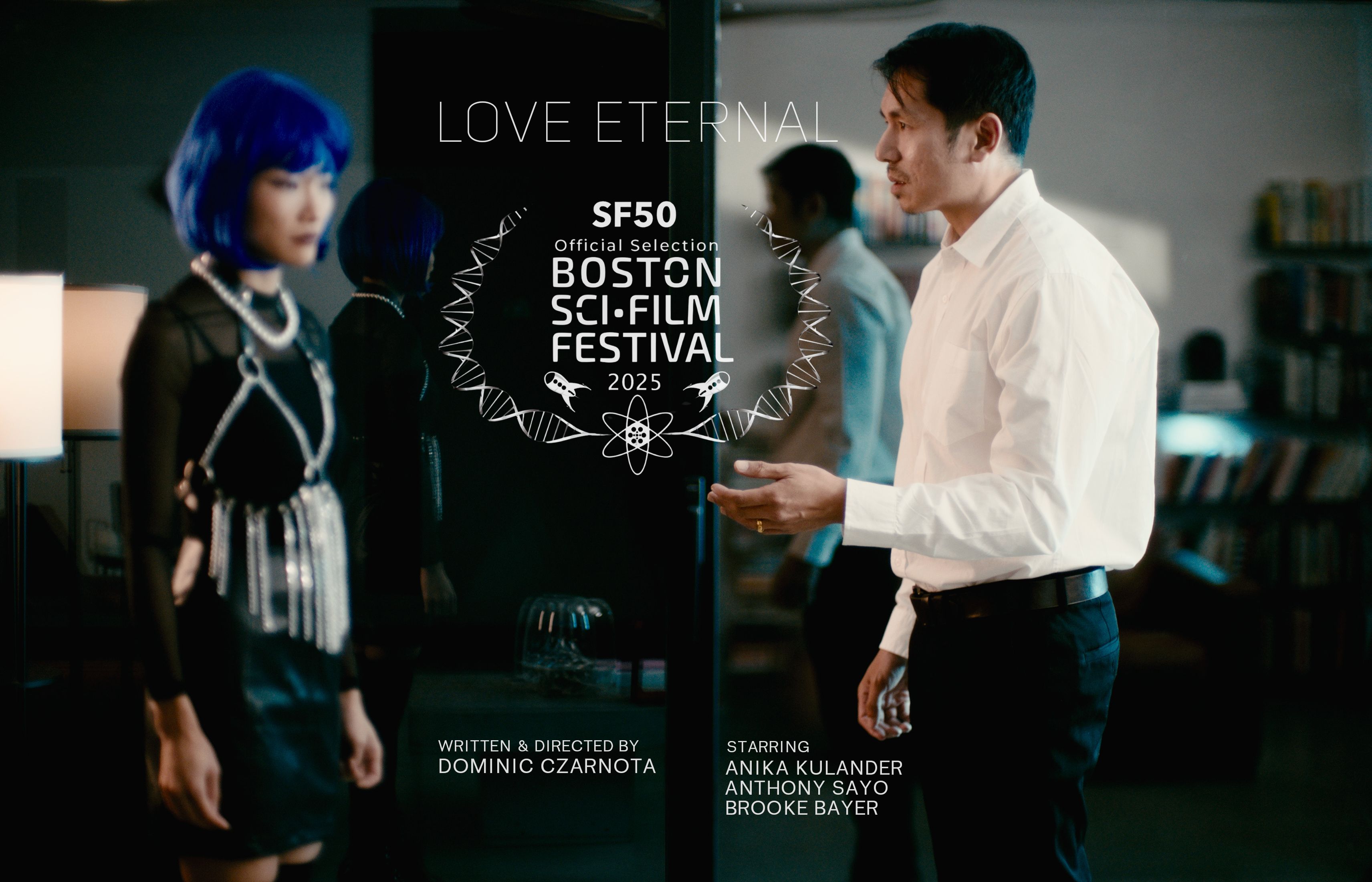
To bring this vision to life, Czarnota assembled a powerful cast that gracefully brings life to thecharacte rs. Anthony Sayo, who plays the role of Paul, brings a deeply personal perspective to his performance.

"I've experienced love and loss in my own life, which allows me to access a profound emotional depth. There's a truth to Paul's grief that resonates with my own experiences of heartbreak and loss. As artists, we feel emotions with an intensity that allows us to transform personal pain into universal storytelling." Sayo reveals.

Sayo hopes the film will create a moment of genuine human connection. "My greatest wish is that audiences will see themselves in Paul's journey," he says. "Grief is a universal language, and this film speaks to our fundamental human desire to hold onto love, in the face of technology, even when it seems
impossible."

Along with Sayo, stars Anika Kulander who plays the role of Sophie and Brooke Bayer who portrays Ada.

Known as the longest-running genre festival in the U.S., the annual Boston Sci-Fi will celebrate its 50th anniversary, featuring over 30 features, 80 shorts, and 10 workshops/panels as a hybrid event from Feb. 12 to 17, 2025. (Contributed by Ronette Tibay)

ADVERTISEMENT
.most-popular .layout-ratio{ padding-bottom: 79.13%; } @media (min-width: 768px) and (max-width: 1024px) { .widget-title { font-size: 15px !important; } }

{{ articles_filter_1561_widget.title }}

.most-popular .layout-ratio{ padding-bottom: 79.13%; } @media (min-width: 768px) and (max-width: 1024px) { .widget-title { font-size: 15px !important; } }

{{ articles_filter_1562_widget.title }}

.most-popular .layout-ratio{ padding-bottom: 79.13%; } @media (min-width: 768px) and (max-width: 1024px) { .widget-title { font-size: 15px !important; } }

{{ articles_filter_1563_widget.title }}

{{ articles_filter_1564_widget.title }}

.mb-article-details { position: relative; } .mb-article-details .article-body-preview, .mb-article-details .article-body-summary{ font-size: 17px; line-height: 30px; font-family: "Libre Caslon Text", serif; color: #000; } .mb-article-details .article-body-preview iframe , .mb-article-details .article-body-summary iframe{ width: 100%; margin: auto; } .read-more-background { background: linear-gradient(180deg, color(display-p3 1.000 1.000 1.000 / 0) 13.75%, color(display-p3 1.000 1.000 1.000 / 0.8) 30.79%, color(display-p3 1.000 1.000 1.000) 72.5%); position: absolute; height: 200px; width: 100%; bottom: 0; display: flex; justify-content: center; align-items: center; padding: 0; } .read-more-background a{ color: #000; } .read-more-btn { padding: 17px 45px; font-family: Inter; font-weight: 700; font-size: 18px; line-height: 16px; text-align: center; vertical-align: middle; border: 1px solid black; background-color: white; } .hidden { display: none; }
function initializeAllSwipers() { // Get all hidden inputs with cms_article_id document.querySelectorAll('[id^="cms_article_id_"]').forEach(function (input) { const cmsArticleId = input.value; const articleSelector = '#article-' + cmsArticleId + ' .body_images'; const swiperElement = document.querySelector(articleSelector); if (swiperElement && !swiperElement.classList.contains('swiper-initialized')) { new Swiper(articleSelector, { loop: true, pagination: false, navigation: { nextEl: '#article-' + cmsArticleId + ' .swiper-button-next', prevEl: '#article-' + cmsArticleId + ' .swiper-button-prev', }, }); } }); } setTimeout(initializeAllSwipers, 3000); const intersectionObserver = new IntersectionObserver( (entries) => { entries.forEach((entry) => { if (entry.isIntersecting) { const newUrl = entry.target.getAttribute("data-url"); if (newUrl) { history.pushState(null, null, newUrl); let article = entry.target; // Extract metadata const author = article.querySelector('.author-section').textContent.replace('By', '').trim(); const section = article.querySelector('.section-info ').textContent.replace(' ', ' '); const title = article.querySelector('.article-title h1').textContent; // Parse URL for Chartbeat path format const parsedUrl = new URL(newUrl, window.location.origin); const cleanUrl = parsedUrl.host + parsedUrl.pathname; // Update Chartbeat configuration if (typeof window._sf_async_config !== 'undefined') { window._sf_async_config.path = cleanUrl; window._sf_async_config.sections = section; window._sf_async_config.authors = author; } // Track virtual page view with Chartbeat if (typeof pSUPERFLY !== 'undefined' && typeof pSUPERFLY.virtualPage === 'function') { try { pSUPERFLY.virtualPage({ path: cleanUrl, title: title, sections: section, authors: author }); } catch (error) { console.error('ping error', error); } } // Optional: Update document title if (title && title !== document.title) { document.title = title; } } } }); }, { threshold: 0.1 } ); function showArticleBody(button) { const article = button.closest("article"); const summary = article.querySelector(".article-body-summary"); const body = article.querySelector(".article-body-preview"); const readMoreSection = article.querySelector(".read-more-background"); // Hide summary and read-more section summary.style.display = "none"; readMoreSection.style.display = "none"; // Show the full article body body.classList.remove("hidden"); } document.addEventListener("DOMContentLoaded", () => { let loadCount = 0; // Track how many times articles are loaded const offset = [1, 2, 3, 4, 5, 6, 7, 8, 9, 10]; // Offset values const currentUrl = window.location.pathname.substring(1); let isLoading = false; // Prevent multiple calls if (!currentUrl) { console.log("Current URL is invalid."); return; } const sentinel = document.getElementById("load-more-sentinel"); if (!sentinel) { console.log("Sentinel element not found."); return; } function isSentinelVisible() { const rect = sentinel.getBoundingClientRect(); return ( rect.top < window.innerHeight && rect.bottom >= 0 ); } function onScroll() { if (isLoading) return; if (isSentinelVisible()) { if (loadCount >= offset.length) { console.log("Maximum load attempts reached."); window.removeEventListener("scroll", onScroll); return; } isLoading = true; const currentOffset = offset[loadCount]; window.loadMoreItems().then(() => { let article = document.querySelector('#widget_1690 > div:nth-last-of-type(2) article'); intersectionObserver.observe(article) loadCount++; }).catch(error => { console.error("Error loading more items:", error); }).finally(() => { isLoading = false; }); } } window.addEventListener("scroll", onScroll); });

Sign up by email to receive news.