ADVERTISEMENT

Ukraine offers rare earth deal to Trump for more US military aid

Published Feb 11, 2025 12:31 pm
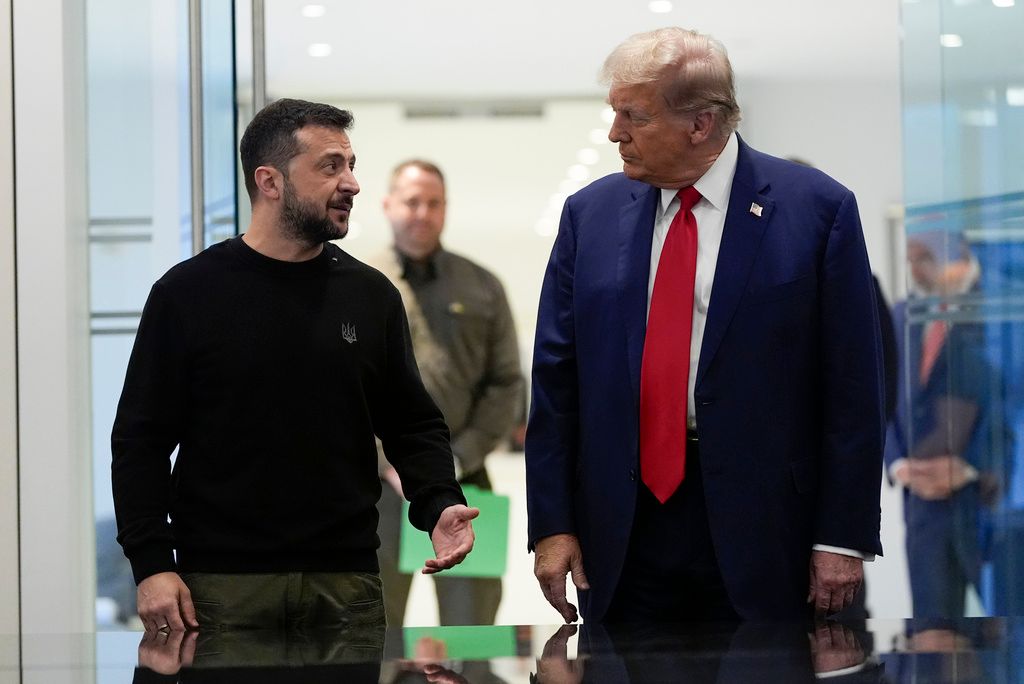
AP25041600504052.jpg
KYIV, Ukraine (AP) — Ukraine has offered to strike a deal with U.S. President Donald Trump for continued American military aid in exchange for developing Ukraine’s mineral industry, which could provide a valuable source of the rare earth elements that are essential for many kinds of technology.

KYIV, Ukraine (AP) — Ukraine has offered to strike a deal with U.S. President Donald Trump for continued American military aid in exchange for developing Ukraine’s mineral industry, which could provide a valuable source of the rare earth elements that are essential for many kinds of technology.

Trump said that he wanted such a deal earlier this month, and it was initially proposed last fall by Ukrainian President Volodymyr Zelenskyy as part of his plan to strengthen Kyiv’s hand in future negotiations with Moscow.

“We really have this big potential in the territory which we control,” Andrii Yermak, chief of staff to the Ukrainian president, said in an exclusive interview with The Associated Press. “We are interested to work, to develop, with our partners, first of all, with the United States.”

Here is a look at Ukraine’s rare earth industry and how a deal might come together:

What are rare earth elements?

Rare earth elements are a set of 17 elements that are essential to many kinds of consumer technology, including cellphones, hard drives and electric and hybrid vehicles.

It's unclear if Trump is seeking specific elements in Ukraine, which also has other minerals to offer.

“It can be lithium. It can be titanium, uranium, many others,” Yermak said. “It’s a lot.”

China, Trump’s chief geopolitical adversary, is the world’s largest producer of rare earth elements. Both the U.S and Europe have sought to reduce their dependence on Beijing.

For Ukraine, such a deal would ensure that its biggest and most consequential ally doesn't freeze military support. That would be devastating for the country, which has been at war for nearly three years after Russia's full-scale invasion on Feb. 24, 2022.

The idea also comes at a time when reliable and uninterrupted access to critical minerals is increasingly hard to come by globally.

What is the state of the Ukrainian minerals industry?

Ukraine’s rare earth elements are largely untapped because of the war and because of state policies regulating the mineral industry. The country also lacks good information to guide the development of rare earth mining.

Geological data is thin because mineral reserves are scattered across Ukraine, and existing studies are considered largely inadequate. The industry's true potential is clouded by insufficient research, according to businessmen and analysts.

In general, the outlook for Ukrainian natural resources is promising. The country's reserves of titanium, a key component for the aerospace, medical and automotive industries, are believed to be among Europe’s largest. Ukraine also holds some of Europe’s largest known reserves of lithium, which is required to produce batteries, ceramics and glass.

In 2021, the Ukrainian mineral industry accounted for 6.1% of the country’s gross domestic product and 30% of exports.

An estimated 40% of Ukraine's metallic mineral resources are inaccessible because of Russian occupation, according to data from We Build Ukraine, a Kyiv-based think tank. Ukraine has argued that it's in Trump’s interest to develop the remainder before Russian advances capture more.

The European Commission, the executive branch of the European Union, identified Ukraine as a potential supplier for more than 20 critical raw materials and concluded that if the country joins the 27-nation EU, it could strengthen the European economy.

What happens next?

Details of any deal will likely develop in meetings between U.S. and Ukrainian officials. Zelenskyy and Trump will probably discuss the subject when they meet.

U.S. companies have expressed interest, according to Ukrainian business officials. But striking a formal deal would likely require legislation, geological surveys and negotiation of specific terms.

It's unclear what kind of security guarantees companies would require to risk working in Ukraine, even in the event of a ceasefire. And no one knows for sure what kind of financing agreements would underpin contracts between Ukraine and U.S companies.

Related Tags

WORLDNEWS
ADVERTISEMENT
.most-popular .layout-ratio{ padding-bottom: 79.13%; } @media (min-width: 768px) and (max-width: 1024px) { .widget-title { font-size: 15px !important; } }

{{ articles_filter_1561_widget.title }}

.most-popular .layout-ratio{ padding-bottom: 79.13%; } @media (min-width: 768px) and (max-width: 1024px) { .widget-title { font-size: 15px !important; } }

{{ articles_filter_1562_widget.title }}

.most-popular .layout-ratio{ padding-bottom: 79.13%; } @media (min-width: 768px) and (max-width: 1024px) { .widget-title { font-size: 15px !important; } }

{{ articles_filter_1563_widget.title }}

{{ articles_filter_1564_widget.title }}

.mb-article-details { position: relative; } .mb-article-details .article-body-preview, .mb-article-details .article-body-summary{ font-size: 17px; line-height: 30px; font-family: "Libre Caslon Text", serif; color: #000; } .mb-article-details .article-body-preview iframe , .mb-article-details .article-body-summary iframe{ width: 100%; margin: auto; } .read-more-background { background: linear-gradient(180deg, color(display-p3 1.000 1.000 1.000 / 0) 13.75%, color(display-p3 1.000 1.000 1.000 / 0.8) 30.79%, color(display-p3 1.000 1.000 1.000) 72.5%); position: absolute; height: 200px; width: 100%; bottom: 0; display: flex; justify-content: center; align-items: center; padding: 0; } .read-more-background a{ color: #000; } .read-more-btn { padding: 17px 45px; font-family: Inter; font-weight: 700; font-size: 18px; line-height: 16px; text-align: center; vertical-align: middle; border: 1px solid black; background-color: white; } .hidden { display: none; }
function initializeAllSwipers() { // Get all hidden inputs with cms_article_id document.querySelectorAll('[id^="cms_article_id_"]').forEach(function (input) { const cmsArticleId = input.value; const articleSelector = '#article-' + cmsArticleId + ' .body_images'; const swiperElement = document.querySelector(articleSelector); if (swiperElement && !swiperElement.classList.contains('swiper-initialized')) { new Swiper(articleSelector, { loop: true, pagination: false, navigation: { nextEl: '#article-' + cmsArticleId + ' .swiper-button-next', prevEl: '#article-' + cmsArticleId + ' .swiper-button-prev', }, }); } }); } setTimeout(initializeAllSwipers, 3000); const intersectionObserver = new IntersectionObserver( (entries) => { entries.forEach((entry) => { if (entry.isIntersecting) { const newUrl = entry.target.getAttribute("data-url"); if (newUrl) { history.pushState(null, null, newUrl); let article = entry.target; // Extract metadata const author = article.querySelector('.author-section').textContent.replace('By', '').trim(); const section = article.querySelector('.section-info ').textContent.replace(' ', ' '); const title = article.querySelector('.article-title h1').textContent; // Parse URL for Chartbeat path format const parsedUrl = new URL(newUrl, window.location.origin); const cleanUrl = parsedUrl.host + parsedUrl.pathname; // Update Chartbeat configuration if (typeof window._sf_async_config !== 'undefined') { window._sf_async_config.path = cleanUrl; window._sf_async_config.sections = section; window._sf_async_config.authors = author; } // Track virtual page view with Chartbeat if (typeof pSUPERFLY !== 'undefined' && typeof pSUPERFLY.virtualPage === 'function') { try { pSUPERFLY.virtualPage({ path: cleanUrl, title: title, sections: section, authors: author }); } catch (error) { console.error('ping error', error); } } // Optional: Update document title if (title && title !== document.title) { document.title = title; } } } }); }, { threshold: 0.1 } ); function showArticleBody(button) { const article = button.closest("article"); const summary = article.querySelector(".article-body-summary"); const body = article.querySelector(".article-body-preview"); const readMoreSection = article.querySelector(".read-more-background"); // Hide summary and read-more section summary.style.display = "none"; readMoreSection.style.display = "none"; // Show the full article body body.classList.remove("hidden"); } document.addEventListener("DOMContentLoaded", () => { let loadCount = 0; // Track how many times articles are loaded const offset = [1, 2, 3, 4, 5, 6, 7, 8, 9, 10]; // Offset values const currentUrl = window.location.pathname.substring(1); let isLoading = false; // Prevent multiple calls if (!currentUrl) { console.log("Current URL is invalid."); return; } const sentinel = document.getElementById("load-more-sentinel"); if (!sentinel) { console.log("Sentinel element not found."); return; } function isSentinelVisible() { const rect = sentinel.getBoundingClientRect(); return ( rect.top < window.innerHeight && rect.bottom >= 0 ); } function onScroll() { if (isLoading) return; if (isSentinelVisible()) { if (loadCount >= offset.length) { console.log("Maximum load attempts reached."); window.removeEventListener("scroll", onScroll); return; } isLoading = true; const currentOffset = offset[loadCount]; window.loadMoreItems().then(() => { let article = document.querySelector('#widget_1690 > div:nth-last-of-type(2) article'); intersectionObserver.observe(article) loadCount++; }).catch(error => { console.error("Error loading more items:", error); }).finally(() => { isLoading = false; }); } } window.addEventListener("scroll", onScroll); });

Sign up by email to receive news.