






 Philippines
National
Chua shares House prosecution team's strategy: We want VP Duterte's bank records
Philippines
National
Chua shares House prosecution team's strategy: We want VP Duterte's bank records
Chua shares House prosecution team's strategy: We want VP Duterte's bank records


At A Glance
- The House prosecution team in Vice President Sara Duterte's upcoming impeachment trial intends to subpoena her bank records as part of its strategy to secure the ouster of the controversial lady official.
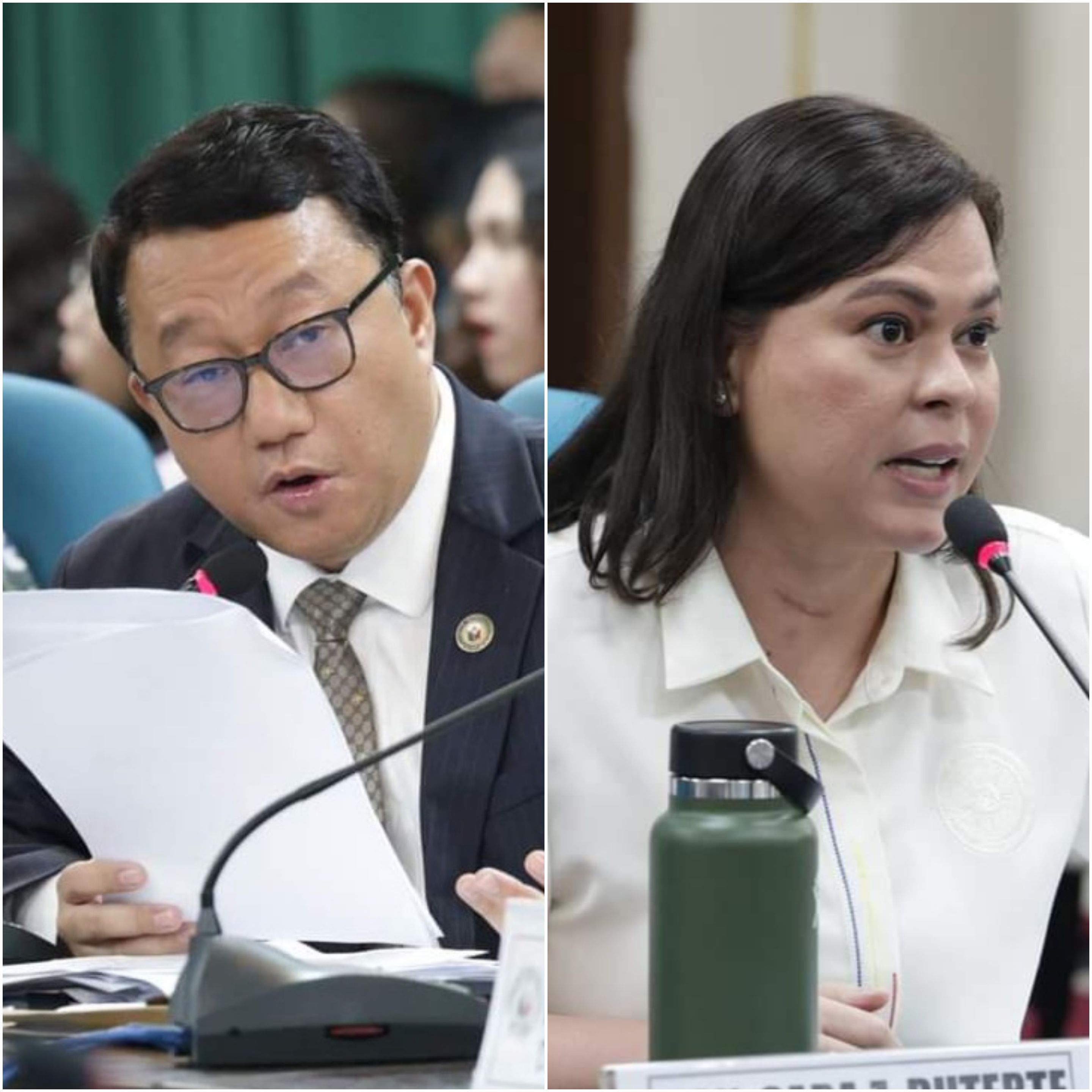 Manila 3rd district Rep. Joel Chua (left), Vice President Sara Duterte (Facebook)
The House prosecution team in Vice President Sara Duterte's upcoming impeachment trial intends to subpoena her bank records as part of its strategy to secure the ouster of the controversial lady official.
Manila 3rd district Rep. Joel Chua, one of the 11 hand-picked prosecutors for the case, confirmed on Monday, Feb. 10 that they are exploring legal options to obtain financial records that could be relevant to particular articles of impeachment levelled against the Vice President.
This follows the Senate’s pronouncement that it will convene as an impeachment court on June 2. This will have been nearly four months after the impeachment complaint that contained the seven articles of impeachment against Vice President Duterte was transmitted to the Senate.
“The impeachment process allows us to complete the evidence to support our case, and that includes subpoenaing financial records if necessary through the Senate impeachment court,” Chua said in a statement.
“The Bank Secrecy Law provides an exception for impeachment cases, and we intend to use all legal means to secure relevant documents, in addition to the evidence already present, that will aid in the trial,” he pointed out.
Despite receiving the duly endorsed and verified impeachmemt complaint last Feb. 5, the upper chamber has yet to formally convene the Senate impeachment court.
House prosecutors emphasize that they will be ready to present evidence once proceedings begin.
With bith chambers of Congress currently on recess for the election campaign, Chua says that the House prosecution team is not waiting idly and is actively preparing for the eventual trial.
“This will not prevent us from doing our job. We will ensure that when the trial begins, and as we proceed, we have the necessary documents, testimonies and financial records to present. We have a strong case against the Vice President,” Chua explained.
Chua noted that under Article XI, Section 3(6) of the 1987 Constitution, once the House transmits the articles of impeachment, the Senate has the exclusive power to try and decide the case.
The bank accounts of Duterte, as well as her father, former president Rodrigo Duterte, have been the subject of scrutiny in the past. Most notably, former senator Antonio Trillanes has been vocal in his allegation regarding massive wealth being in these accounts, with the latest allegations being made during the hearings of the quad-committee (quad-comm)
Former president Duterte, the father of the Vice President, has staunchly refused any inquiry into these accounts, which led to his public outburst against Trillanes when the latter dared him to sign a waiver of bank secrecy.
Under Republic Act No. 1405 (Bank Secrecy Law), bank records are generally confidential, but one of the explicit exceptions under Section 2 thereof is in cases of impeachment.
Thus, with the impeachment of the younger Duterte by the House of Representatives, the prosecution team may now consider the possibility of invoking this exception to look into these records.
MUST READ:
This legal principle was affirmed in the 2012 impeachment trial of Chief Justice Renato Corona, where his bank records were subpoenaed and used as evidence in proving allegations of ill-gotten wealth and failure to fully disclose assets in his Statement of Assets, Liabilities, and Net Worth (SALN). This ultimately resulted in his conviction and removal from office.
In a similar vein, the articles of impeachment against the Vice President include allegations regarding ill-gotten wealth.
“If public funds were misappropriated, the Filipino people have the right to know, and as prosecutors, we have the duty to uncover any such misappropriation. We will consider requesting subpoenas for bank records and, if necessary, seek judicial enforcement to ensure compliance,” Chua said.
House prosecutors are also exploring coordination with the Anti-Money Laundering Council (AMLC) and the Commission on Audit (COA) to track financial transactions that may be linked to alleged irregularities involving public funds.