








Campaigning for those running for senator and party-list group representatives officially begins Tuesday, Feb. 11, 2025.
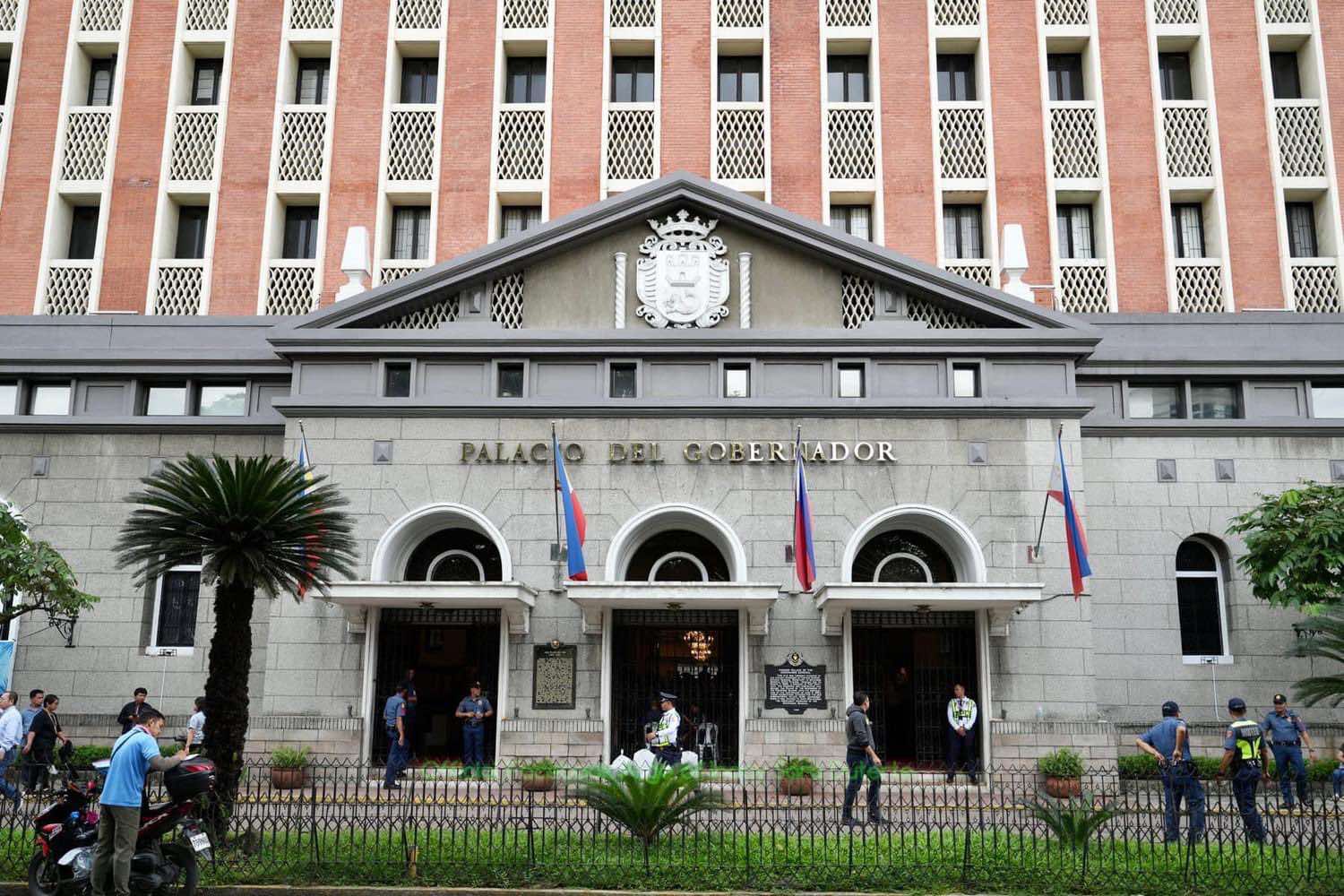
In preparation for the posting of election materials, Comelec Chairman George Erwin Garcia stressed the need to adhere to the usage of common poster areas. He also emphasized the need to use biodegradable and recyclable campaign materials.
"Hindi po garantiya ang kampanya natin para i-violate ang environmental laws natin. Hindi garantiya at lisensya ang pangangampanya para dumihan ang ating mga kalsada...dapat po responsible campaigning po tayo (The campaign period is not a guarantee to violate our environmental laws. Campaigning is not a guarantee or a license to litter our streets... we must engage in responsible campaigning)," Garcia said.
"We will not hesitate to disqualify a candidate. We will not hesitate to file cases against candidates, the poll chief added.
With the campaign period's start, candidates can now be held liable should they violate any existing election law.
Shortly after certificates of candidacy (COCs) have been filed, some aspirants had already began to woo voters by means of TV advertisements as well as oversized tarpaulins along major thoroughfares.
Still, the Commission on Elections (Comelec) remains helpless in this regard since Under Republic Act 9369 or the Poll Automation Law, “Any person who files his certificate of candidacy shall only be considered as a candidate at the start of the campaign period” and “unlawful acts applicable to a candidate shall be in effect only upon that start of the campaign period.”
Unlike in the previous poll exercises, Artificial Intelligence (AI) would prove to be a game-changer in this year's campaign period. For this reason, Comelec made preparations of its own.
AI in campaigning
Under Resolution 11064, all election propaganda and campaign materials of candidates and political parties, that utilize artificial intelligence technology shall be required to disclose the fact of its use and appropriate technology is employed to identify its authenticity and legitimate source.
It also states that disclosures or disclaimers, which shall be clear, conspicuous, and not easily removed or altered, must remain visible or audible for a sufficient duration both before and after the campaign material is presented.
This rule applies to visual media, audio-visual media (video or animated content), and audio-only media.
Those who will utilize this are also reminded that once an online and digital platform that hosts election-related content has been notified by the Task Force KKK sa Halalan that media has been manipulated with artificial intelligence technology, they shall be required to implement reasonable mechanisms that disclose the same.
If the the poll body, through the Task Force KKK sa Halalan, detects the use of artificiat intelligence technology in any campaign material disseminated or published through the social media accounts without any
proper disclosures or use of watermark technology as required by the Comelec, the concerned candidate or party, and their respective social media campaign managers, shall be required to explain why a complaint for violation of these guidelines should not be filed against them.
The following are prohibited under the same resolution:
-Use of "false amplifiers", such as fake accounts, bots, and astroturf groups filled with fake users to propagate disinformation and misinformation in endorsing or campaigning against a candidate, a political party/coalition, or party-list organizations, or to propagate disinformation, and misinformation targeting the Philippine election system, the COMELEC, and electoral processes during the election and campaign period;
-Coordinated inauthentic behavior and utilization of hyperactive users for the aforementioned purposes;
-Creation and dissemination of deepfakes, cheapfakes, and soft fakes for the aforementioned purposes;
-Use of fake and unregistered social media accounts during the election and campaign period for the same purposes; and
-Creation and dissemination of fake news in furtherance of the aforementioned purposes.
-Use of content produced through AI technology but without compliance to the transparency and disclosure requirements under these guidelines.
Lawful election propaganda
Under Resolution 11086, election propaganda, whether on television or cable television, radio, newspaper, the intemet or any other medium, including outdoor static and light-emitting diode (LED) billboards
and mobile or transit advertisement is hereby allowed for a1l bona fide candidates seeking national and local elective positions, subject to the limitation on authorized expenses of candidates and parties, observation of truth in advertising, and to the supervision and regulation by the Comelec.
This includes the following:
-Pamphlets, leaflets, cards, decals, stickers, or other written or printed materials the size of which does not exceed eight and one-half inches (8 1/2") in width and fourteen inches (14") in length;
-Handwritten or printed letters urging voters to vote for or against any particular party or candidate for public office;
-Posters or standing displays ("standees") made of cloth,papet, cardboard, or an], recyclable material, whether framed or posted, with an area not exceeding two (2) feet by three (3) feet;
(Streamers not exceeding three (3) feet by eight (8) feet in size, displayed at the site, and on the occasion of a public meeting or rally. Said streamers may be displayed five (5) days before the date of flre meeting or rally and shall be removed within twenty-four (24) hours after said meethg or rally;
Mobile units, vehicles, motorcades of all types, whether engine or manpower driven or artmal drawn, with or without sound systems or loud speakers and with or without lights; Pamphlets, leaJlets, cards/ decals, stickers, or other written or printed materials posted on mobile units, vehicles/ or motorcades sha1l be subject to the size limitations provided for in this Section;
-Paid advertisements in print or broadcast media subject to the requirements set forth in Section 11 hereof and the Fair Election Act
-Outdoor and static or LED billboards owned by private entities or persons;
-Mobile or transit advertisement on public utility vehicles provided that the advertisement is consistent with tl-re guidelines of the Land Transportation and Franchising Regulatory Board (LTFRB) for commercial
advertisements;
-Signboard displayed in the headquartels subject to the limitation provided in Section 24 hereof;
-All other forms of election propaganda not prohibited by the Omnibus Election Code or these rules.
For national candidates, they are allowed more than a total of one hundred twenty (120) minutes of television advertisement, on a per station basis, whether appearing on national, regional or local free or cable television and one hundred eighty (180) minutes of radio advertising, on a per station basis,
whether airing on national regional, or local radio, whether by purchase or donation.
Environmentally-sustainable election propaganda
Just last week on Feb. 5, the poll body issued for the first time Resolution No. 11111 which states guidelines on the use of environmentally-sustainable election propaganda.
Under it, it prohibits the use of election propaganda in the form of posters or standing displays ("standees") that are not made of cloth, paper, cardboard, or any recyclable materials, as expressly provided under Section 6(c) of COMELEC Resolution No. 11086, shall not be allowed.
Single-use plastics, as well as styrofores and other flex, non-biodegradable materials and hazardous substances used in election campaign, services or events, prohibited under applicable laws, rules, and relevant issuances, including, but not limited to, those prohibited under ordinances and resolutions issued by local government units shall also be prohibited.
As for the other election propaganda enumerated in section 6 of said resolution the Commission encourages parties and candidates to use recyclable and environmentally friendly materials and avoid those that
contain hazardous chemicals and substances in the production of their campaign and election propaganda.
Authorized expenses
Meanwhile, authorized expenses of candidates and parties are as follow:
For candidates with political parties, they are allowed to spend P3 for every registered voter; while independent bets may spend P5 for every voter.
For political parties and party-list groups, they shall be allowed to spend P5 for every registered voter.
Other campaign regulations
Under the Omnibus Election Code, no candidate, his or her spouse or any relative within the second civil degree of consanguinity or affinity, or his campaign manager, agent or representative shall during the campaign period, on the day before and on the day of the election, directly or indirectly, make any donation, contribution or gift in cash or in kind, or undertake or contribute to the construction or repair of roads, bridges, school buses, puericulture centers, medical clinics and hospitals, churches or chapels cement pavements, or any structure for public use or for the use of any religious or civic organization.
Provided, that normal and customary religious dues or contributions, such as religious stipends, tithes or collections on Sundays or other designated collection days, as well as periodic payments for legitimate scholarships established and school contributions habitually made before the prohibited period, are excluded from the prohibition.
Comelec prohibits campaigning on April 17, 2025 (Maundy Thursday) and April 18, 2025 (Good Friday) in accordance with Republic Act No. 7166.
The campaign period for national candidates will run from February 11 to May 10.