ADVERTISEMENT

US military conducts airstrikes against Islamic State operatives in Somalia

Published Feb 1, 2025 11:19 pm

WASHINGTON (AP) — The U.S. military has conducted airstrikes against Islamic State operatives in Somalia, the first attacks in the African nation during President Donald Trump’s second term.

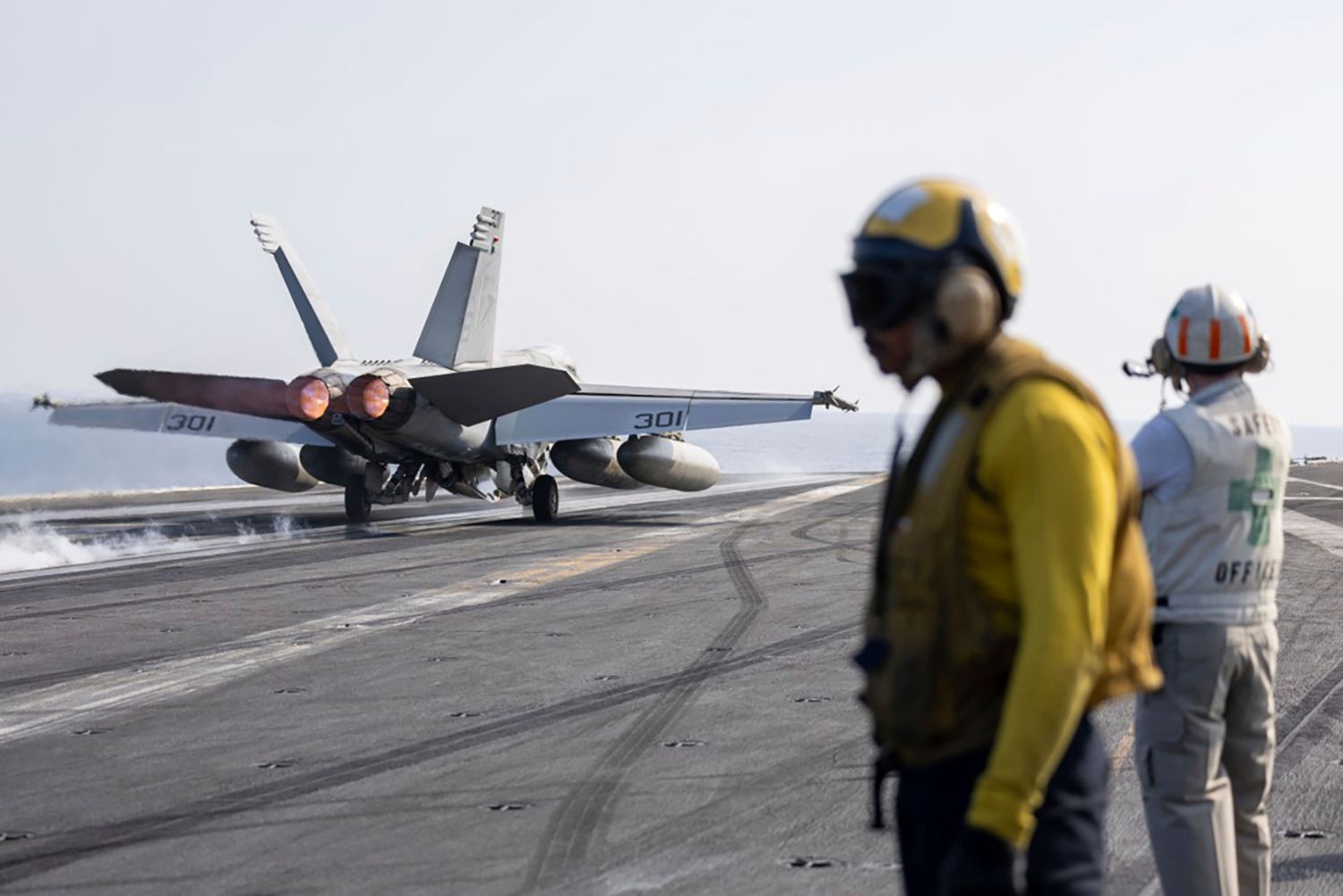
AP25032668889182.jpg
This photo provided by U.S. Africa Command, the U.S. military conducts coordinated airstrikes against Islamic State operatives in Somalia on Saturday, Feb. 1, 2025. (U.S. Africa Command via AP).

Defense Secretary Pete Hegseth said Saturday that the strikes by U.S. Africa Command were directed by Trump and coordinated with Somalia's government.

An initial assessment by the Pentagon indicated that “multiple” operatives were killed. The Pentagon said it assessed that no civilians were harmed in the strikes.

Trump, in a post on social media, said a senior IS planner and recruits were targeted in the operation.

“The strikes destroyed the caves they live in, and killed many terrorists without, in any way, harming civilians. Our Military has targeted this ISIS Attack Planner for years, but Biden and his cronies wouldn’t act quickly enough to get the job done. I did!” Trump said. “The message to ISIS and all others who would attack Americans is that “WE WILL FIND YOU, AND WE WILL KILL YOU!”

Trump did not identify the IS planner or say whether that person was killed in the strike. White House officials did not immediately respond to requests for comment.

The office of Somalia's president, Hassan Sheikh Mohamud, said the operation “reinforces the strong security partnership” between the two countries in “combating extremist threats.” In a post on X, it said Somalia “remains resolute in working with its allies to eliminate international terrorism and ensure regional stability.”

The Pentagon's counterterrorism strategy in Africa has been strained as two key partners, Chad and Niger, ousted U.S. forces last year and took over key bases that the U.S. military had used to train and conduct missions against terrorist groups across the Sahel, the vast arid expanse south of the Sahara Desert.

U.S. military officials have warned that IS cells have received increasing direction from the group’s leadership that relocated to northern Somalia. That has included how to kidnap Westerners for ransom, how to learn better military tactics, how to hide from drones and how to build their own small quadcopters.

The IS affiliate in Somalia emerged in 2015 as a breakaway faction from al-Shabab, al-Qaida’s East African link, and is most active in Puntland, particularly in the Galgala Mountains, where it has established hideouts and training camps and is led by Abdulkadir Mumin.

While its influence is relatively limited compared to Al-Shabaab, IS in Somalia has been involved in attacks in southern and central Somalia. The group funds its activities through extortion, smuggling, and illicit taxation, particularly in some coastal areas where it has attempted to control local businesses.

Despite facing counterterrorism pressure from Somali security forces, U.S. airstrikes and al-Shabab rivalries, it continues to operate in remote and urban areas, seeking to expand its influence through recruitment and propaganda.

The number of IS militants in the country are estimated to be in the hundreds, mostly scattered in the Cal Miskaat mountains in Puntland’s Bari region, according to the International Crisis Group.

Saturday’s operation followed military airstrikes on Jan. 30 in northwest Syria, killing a senior operative in Hurras al-Din, an al-Qaeda affiliate, U.S. Central Command said.

Related Tags

World news
ADVERTISEMENT
.most-popular .layout-ratio{ padding-bottom: 79.13%; } @media (min-width: 768px) and (max-width: 1024px) { .widget-title { font-size: 15px !important; } }

{{ articles_filter_1561_widget.title }}

.most-popular .layout-ratio{ padding-bottom: 79.13%; } @media (min-width: 768px) and (max-width: 1024px) { .widget-title { font-size: 15px !important; } }

{{ articles_filter_1562_widget.title }}

.most-popular .layout-ratio{ padding-bottom: 79.13%; } @media (min-width: 768px) and (max-width: 1024px) { .widget-title { font-size: 15px !important; } }

{{ articles_filter_1563_widget.title }}

{{ articles_filter_1564_widget.title }}

.mb-article-details { position: relative; } .mb-article-details .article-body-preview, .mb-article-details .article-body-summary{ font-size: 17px; line-height: 30px; font-family: "Libre Caslon Text", serif; color: #000; } .mb-article-details .article-body-preview iframe , .mb-article-details .article-body-summary iframe{ width: 100%; margin: auto; } .read-more-background { background: linear-gradient(180deg, color(display-p3 1.000 1.000 1.000 / 0) 13.75%, color(display-p3 1.000 1.000 1.000 / 0.8) 30.79%, color(display-p3 1.000 1.000 1.000) 72.5%); position: absolute; height: 200px; width: 100%; bottom: 0; display: flex; justify-content: center; align-items: center; padding: 0; } .read-more-background a{ color: #000; } .read-more-btn { padding: 17px 45px; font-family: Inter; font-weight: 700; font-size: 18px; line-height: 16px; text-align: center; vertical-align: middle; border: 1px solid black; background-color: white; } .hidden { display: none; }
function initializeAllSwipers() { // Get all hidden inputs with cms_article_id document.querySelectorAll('[id^="cms_article_id_"]').forEach(function (input) { const cmsArticleId = input.value; const articleSelector = '#article-' + cmsArticleId + ' .body_images'; const swiperElement = document.querySelector(articleSelector); if (swiperElement && !swiperElement.classList.contains('swiper-initialized')) { new Swiper(articleSelector, { loop: true, pagination: false, navigation: { nextEl: '#article-' + cmsArticleId + ' .swiper-button-next', prevEl: '#article-' + cmsArticleId + ' .swiper-button-prev', }, }); } }); } setTimeout(initializeAllSwipers, 3000); const intersectionObserver = new IntersectionObserver( (entries) => { entries.forEach((entry) => { if (entry.isIntersecting) { const newUrl = entry.target.getAttribute("data-url"); if (newUrl) { history.pushState(null, null, newUrl); let article = entry.target; // Extract metadata const author = article.querySelector('.author-section').textContent.replace('By', '').trim(); const section = article.querySelector('.section-info ').textContent.replace(' ', ' '); const title = article.querySelector('.article-title h1').textContent; // Parse URL for Chartbeat path format const parsedUrl = new URL(newUrl, window.location.origin); const cleanUrl = parsedUrl.host + parsedUrl.pathname; // Update Chartbeat configuration if (typeof window._sf_async_config !== 'undefined') { window._sf_async_config.path = cleanUrl; window._sf_async_config.sections = section; window._sf_async_config.authors = author; } // Track virtual page view with Chartbeat if (typeof pSUPERFLY !== 'undefined' && typeof pSUPERFLY.virtualPage === 'function') { try { pSUPERFLY.virtualPage({ path: cleanUrl, title: title, sections: section, authors: author }); } catch (error) { console.error('ping error', error); } } // Optional: Update document title if (title && title !== document.title) { document.title = title; } } } }); }, { threshold: 0.1 } ); function showArticleBody(button) { const article = button.closest("article"); const summary = article.querySelector(".article-body-summary"); const body = article.querySelector(".article-body-preview"); const readMoreSection = article.querySelector(".read-more-background"); // Hide summary and read-more section summary.style.display = "none"; readMoreSection.style.display = "none"; // Show the full article body body.classList.remove("hidden"); } document.addEventListener("DOMContentLoaded", () => { let loadCount = 0; // Track how many times articles are loaded const offset = [1, 2, 3, 4, 5, 6, 7, 8, 9, 10]; // Offset values const currentUrl = window.location.pathname.substring(1); let isLoading = false; // Prevent multiple calls if (!currentUrl) { console.log("Current URL is invalid."); return; } const sentinel = document.getElementById("load-more-sentinel"); if (!sentinel) { console.log("Sentinel element not found."); return; } function isSentinelVisible() { const rect = sentinel.getBoundingClientRect(); return ( rect.top < window.innerHeight && rect.bottom >= 0 ); } function onScroll() { if (isLoading) return; if (isSentinelVisible()) { if (loadCount >= offset.length) { console.log("Maximum load attempts reached."); window.removeEventListener("scroll", onScroll); return; } isLoading = true; const currentOffset = offset[loadCount]; window.loadMoreItems().then(() => { let article = document.querySelector('#widget_1690 > div:nth-last-of-type(2) article'); intersectionObserver.observe(article) loadCount++; }).catch(error => { console.error("Error loading more items:", error); }).finally(() => { isLoading = false; }); } } window.addEventListener("scroll", onScroll); });

Sign up by email to receive news.