







Due process before disclosure
Published Dec 31, 2025 12:05 am
|
Updated Dec 30, 2025 03:53 pm


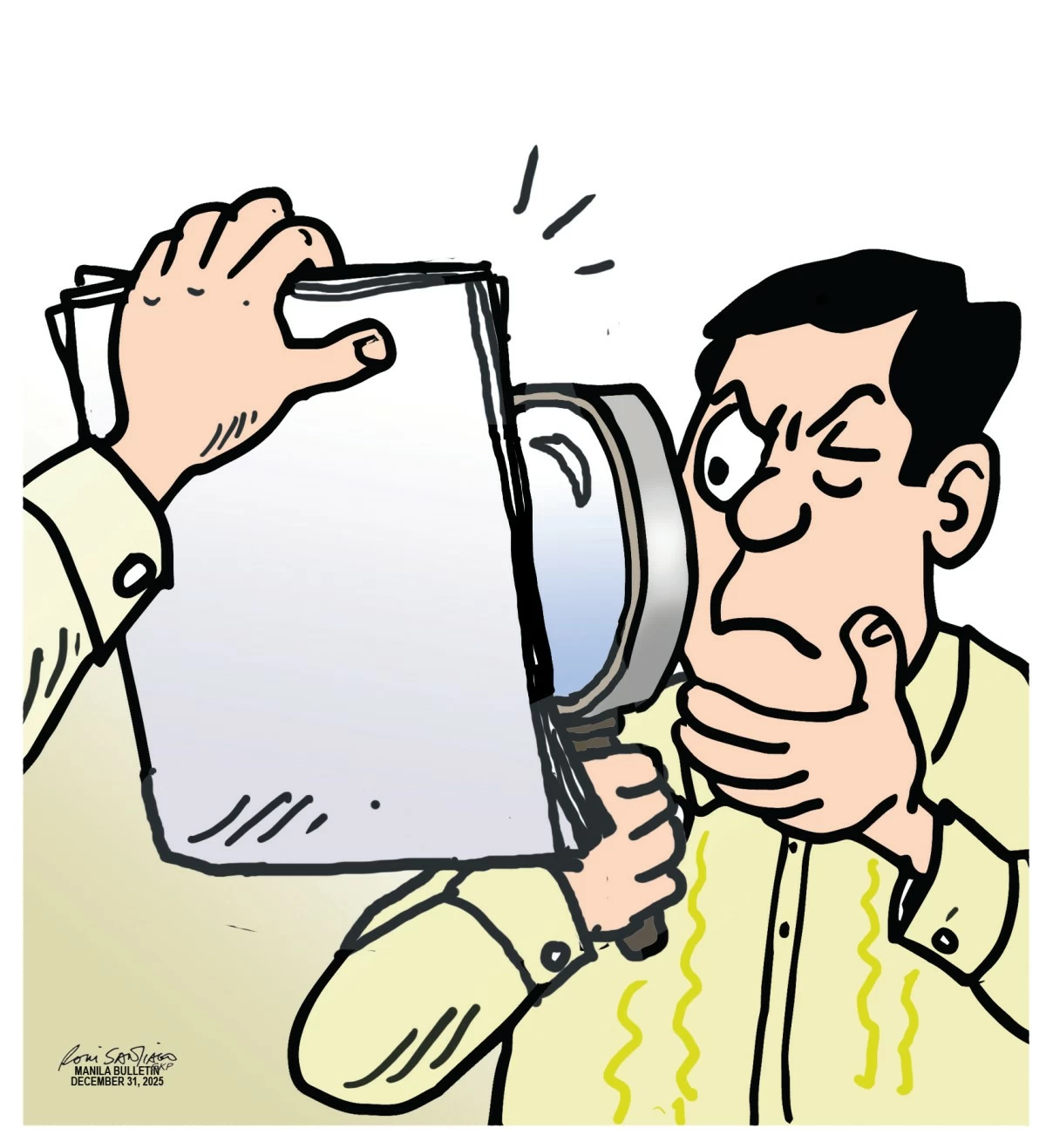
The uproar over the so-called Cabral list reveals less about one document than about how easily public trust is shaken when normal processes are ignored. In controversies involving alleged anomalies in the national budget—especially one as contentious as the 2025 General Appropriations Act (GAA)—truth is not established by virality but by evidence tested against law. The confusion and doubts that now surround the list could have been avoided had basic legal and time-honored processes been observed from the very start.
Documents presented do not necessarily speak for themselves. Under several court rulings, a private document must first be authenticated—shown to be what its proponent claims it to be—before it can carry probative weight. Authentication may be done by the testimony of a witness with personal knowledge, by proof of original document, by admission of the adverse party, or by circumstantial indicia or indications of trustworthiness. Without these, courts treat documents as hearsay or, at best, as unproven allegations. This is not legal nitpicking; it is the minimum safeguard against fabrication and misunderstanding.
From this premise, what should the person who obtained the list have done? Jurisprudence teaches prudence. A finder or recipient of sensitive records—especially those purporting to show official acts—has a duty to verify provenance, preserve the document’s integrity, and establish a credible chain of custody. Premature public disclosure without these steps risks poisoning the well: once exposed, the document becomes vulnerable to claims of alteration, selective quotation, or outright invention. Courts have repeatedly warned that evidence must be handled in a manner that inspires confidence, not suspicion.
Should the list be exposed immediately? Not if the aim was truth rather than spectacle. Philippine cases on whistleblowing and evidence emphasize good faith and responsible disclosure. Responsible disclosure means first securing corroboration, identifying custodians of the original records, and—where appropriate—bringing the matter to institutions with the mandate to investigate, such as the Commission on Audit or Congress, before turning to the court of public opinion. Immediate exposure may galvanize attention, but it also forecloses careful verification.
With the death of former Department of Public Works and Highways (DPWH) undersecretary Maria Catalina Cabral, one reality cannot be ignored: No one may be able to prove now that the list came from her. That gap is fatal to its evidentiary value unless cured by independent proof. Here, the burden does not fall solely on the document’s bearer. If the records reflected in the list are inaccurate, the DPWH must say so plainly and specifically. A vague statement that it has “not authenticated” the list evades the issue. Agencies are custodians of public records; jurisprudence expects them to clarify, correct, or deny categorically when confronted with alleged extracts of their own data.
Conversely, the government should not dismiss the list outright as having “no probative value”. Probative value is determined after examination, not before it. Given the anomalies that have already characterized the 2025 budget process, the State must be duty-bound to investigate—independently, transparently, and without prejudice. To do otherwise fuels the very doubts it seeks to quell.
The lesson is simple. Due process is not an obstacle to accountability; it is its precondition. When evidence is handled with rigor and institutions respond with candor, truth has a fighting chance. And public trust, for that matter, will be a path to recovery.