







Year-ender: Philippine growth momentum fades as 2025 closes
As corruption-battered economy slows sharply, full-year GDP target likely missed
Published Dec 30, 2025 11:15 am
|
Updated Dec 30, 2025 11:12 am


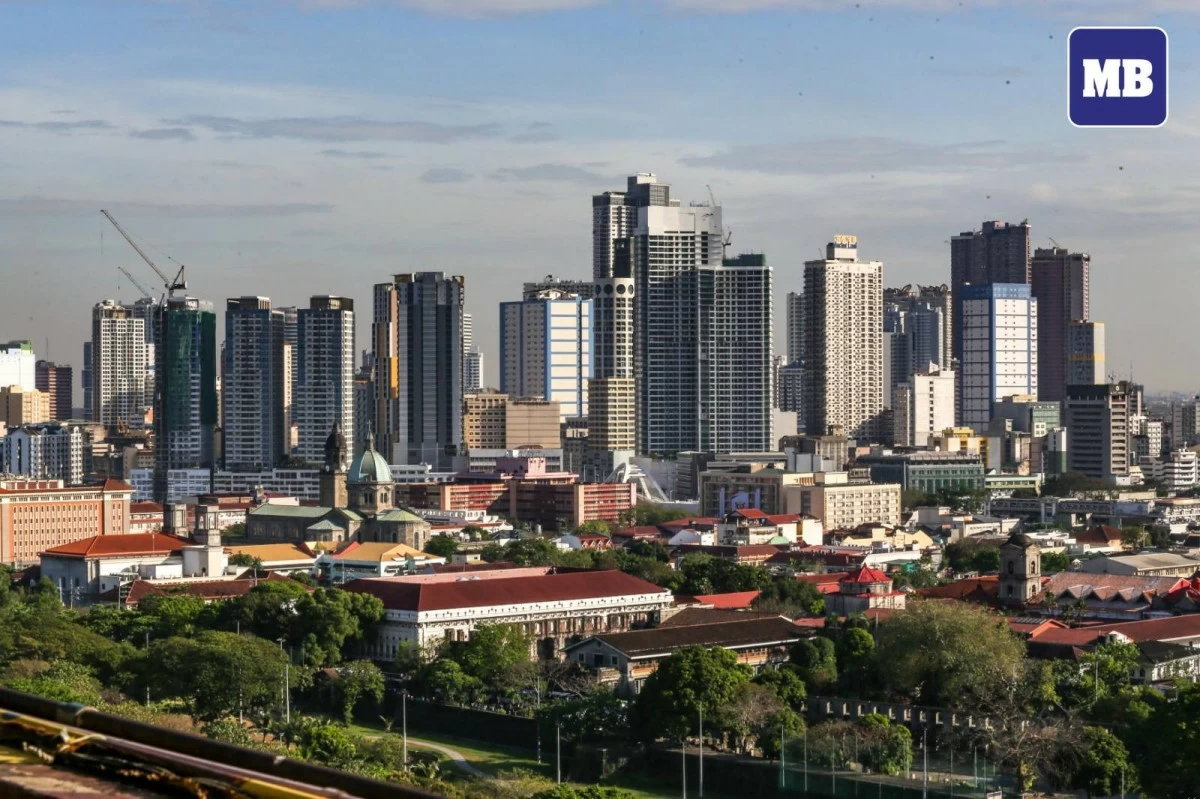
In 2025, the Philippine economy experienced its deepest slowdown in years and is poised to miss its full-year growth target, battered by its sharpest deceleration after posting just four percent growth in the third quarter—the weakest pace in 4.5 years, or since the 3.8-percent contraction in the first quarter of 2021 during the Covid-19 lockdown.
In a year-end press briefing, Department of Economy, Planning, and Development (DEPDev) Secretary Arsenio Balisacan, the country’s chief economist, conceded that even reaching the lower end of the government’s 2025 growth target is “very unlikely.”
With growth faltering, gross domestic product (GDP) is now on track to miss the government’s full-year target for a third consecutive year, extending the Marcos Jr. administration’s run of below-target performance following similar shortfalls in 2023 and 2024. The official growth goal for the year is set at an already downscaled 5.5 to 6.5 percent
According to the Philippine Statistics Authority (PSA), the economy grew by 5.4 percent in the first quarter, 5.5 percent in the second quarter, and four percent in the third quarter—bringing year-to-date growth to five percent.
Looking ahead, the government, through the Cabinet-level, interagency Development Budget Coordination Committee (DBCC), has set its annual GDP growth target at six to seven percent for 2026 to 2028.
The 2025 slowdown has been aggravated by domestic disruptions, including flood-control issues and a corruption scandal, prompting several institutions, including multilateral development banks (MDBs), to revise down their growth forecasts for the Philippines.
Growth forecasts scaled back
The Manila-based Asian Development Bank (ADB) now projects the economy to grow five percent in 2025 and 5.3 percent in 2026, citing reduced public infrastructure spending amid the flood-control corruption scandal and natural hazards.
The Washington-based World Bank (WB) revised its 2025 forecast to 5.1 percent, attributing the slowdown to domestic shocks, weaker investment, and soft global demand, with growth projected at 5.3 percent in 2026 and 5.4 percent in 2027.
The also Washington-based International Monetary Fund (IMF) sees growth of 5.1 percent in 2025, noting that mounting tariffs are expected to hurt investment and exports, with an anticipated acceleration to 5.6 percent in 2026.
The Singapore-based Association of Southeast Asian Nations (ASEAN)+3 Macroeconomic Research Office (AMRO) lowered its forecast to 5.2 percent in 2025 and 5.3 percent in 2026, citing dampened public and private investment from United States (US) tariff policies and local corruption controversies.
Following the steep slowdown in the third quarter, the Paris-based Organization for Economic Cooperation and Development (OECD) now projects growth of 4.7 percent in 2025, 5.1 percent in 2026, and 5.8 percent in 2027.
Other forecasters, including the Economist Intelligence Unit (EIU), lowered their 2026 growth projections to below 4.6 percent, highlighting headwinds to household consumption and government spending that outweigh gains in investment and exports. Sun Life Philippines expects growth to settle at around four to five percent in 2026, while University of Asia and the Pacific (UA&P) projects 4.6-percent GDP expansion in the fourth quarter of 2025, reflecting the “worse-than-expected” four-percent third-quarter growth.
Longer road to trend growth
Economic think tanks also expect growth to remain below government targets. State-run policy think tank Philippine Institute for Development Studies (PIDS) forecasts five percent GDP growth in 2025 and 5.3 percent in 2026, citing internal and external headwinds.
London-based Capital Economics cut its projections to four percent for 2025, 4.5 percent for 2026, and five percent for 2027, reflecting the impact of the corruption scandal.
Another London-based think tank, Oxford Economics, revised its GDP growth forecast downward to 4.9 percent for 2025 and 5.5 percent for 2026, noting that third-quarter data showed a sharp slowdown in momentum.
Modest gains expected beyond 2025
Looking forward, private-sector economists expect a modest recovery in 2026 to 2027, though growth is likely to remain below government targets.
Michael L. Ricafort, chief economist at Yuchengco-led Rizal Commercial Banking Corp. (RCBC), estimates 5.5- to six-percent GDP growth in 2026, citing lower base effects and the government’s planned catch-up spending on priority reforms to strengthen governance.
Jonathan L. Ravelas, senior adviser at Reyes Tacandong & Co., projects growth of 5.6 percent in 2026 and 5.8 percent in 2027, describing it as “rising to the challenge in 2026.”
Victor A. Abola, senior economist at UA&P, forecasts 5.3 percent growth in 2026, noting that the improvement is modest, while De La Salle University (DLSU) economists expect growth of 4.8 percent in 2026 before rising to 5.9 percent in 2027.
Constrained by infrastructure bottlenecks, governance challenges, and global headwinds, the Philippine economy is expected to post only a measured recovery beyond 2025, with growth likely to remain below official ambitions.