







Rizal as exemplar and role model for young Filipinos
Published Dec 30, 2025 12:05 am
|
Updated Dec 29, 2025 04:27 pm


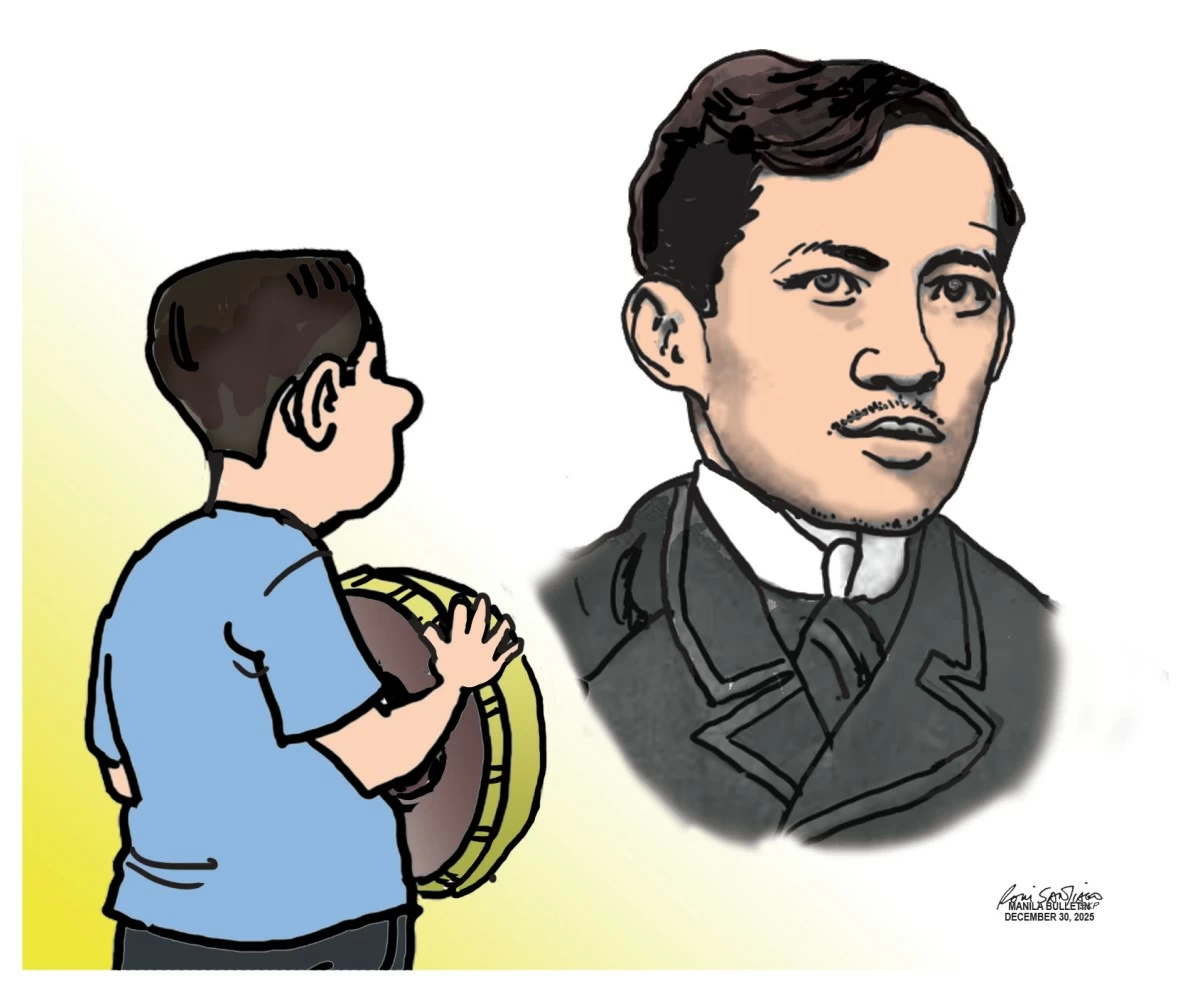
For the 2025 observance of the 129th anniversary of Jose Rizal’s martyrdom, the National Historical Commission of the Philippines (NHCP) has set the theme, “Rizal: Sa Pagbangon ng mga mamamayan, aral at diwa mo ang tunay na gabay.” In English, this translates into — “Rizal: As our people rise, your teachings and wisdom guide our way.”
Commemorative ceremonies will be held at the Museo ni Jose Rizal in Fort Santiago, Intramuros; Calamba, Laguna; and Dapitan, Zamboanga del Norte. A lecture titled “The practical hero: Jose Rizal as expert surveyor, assessor and farmer” will be held today at Fort Santiago, from where Rizal walked to the Luneta where he was executed.
This year’s theme reminds Filipinos about Rizal's enduring lessons for national renewal amidst modern challenges. It emphasizes that Filipinos’ ascent to greater heights of achievement would be facilitated by understanding, appreciating, and putting into practice Rizal’s tenets and principles.
Rizal excelled in all the significant fields of endeavor where he devoted his talents and energies.
Before he began formal schooling, he was taught by private tutors in Calamba and Biñan, Laguna. He went on to graduate with honors from Ateneo de Municipal, then at the University of Santo Tomas (UST) for medicine before moving to Spain, where he earned degrees in Philosophy, Letters and Medicine from the Universidad Central de Madrid. He specialized in ophthalmology in Paris and Heidelberg, Germany, to treat his mother's eyes, making him a true polymath doctor and writer.
This year’s commemorative lecture beams the spotlight on his additional qualifications as Perito Agrimensor, or expert surveyor and assessor, that he earned at the age of 17, while waiting to obtain a license for the practice of medicine upon turning 20 in 1881. These skills served him in good stead during his exile in Dapitan from 1892 to 1896, the year of his martyrdom.
His surveying work at Dapitan included town planning, public works and education. He was involved in marking property boundaries and designing the street layout for the town. He also supervised the construction of the town's first water system with the use of local materials like bamboo pipes and brick piers to channel clear water from a mountain stream. Hence, he was recognized with the title Perito Agrimensor, the historical equivalent of a present-day geodetic engineer. He was also known to have created a relief map for Mindanao while teaching geography.
As the nation marks Rizal Day, we are called once more to reflect on the enduring light cast by Dr. Jose Rizal, whose life continues to speak powerfully to every generation. This year’s theme rightly frames Rizal as a paragon of inspiration and wisdom for the youth, whom he envisioned to be the movers and shakers of the nation.
Rizal believed that the future of the Philippines would be shaped not by force of arms alone, but by enlightened minds, disciplined character, and a love of country anchored in reason and compassion. His novels exposed injustice. His writings challenged complacency. His martyrdom etched an indelible message: real change is sustained by education, courage and integrity.
Rizal’s example remains profoundly relevant for today’s youth who are besieged by digital disruption and competing narratives spawned by social divides. He urges them to think critically, to speak the truth with civility, and to aspire for excellence. Remembering Rizal requires commitment to the ideals he lived and died for, that serve as guideposts in charting the future with faith and enthusiasm.