ADVERTISEMENT

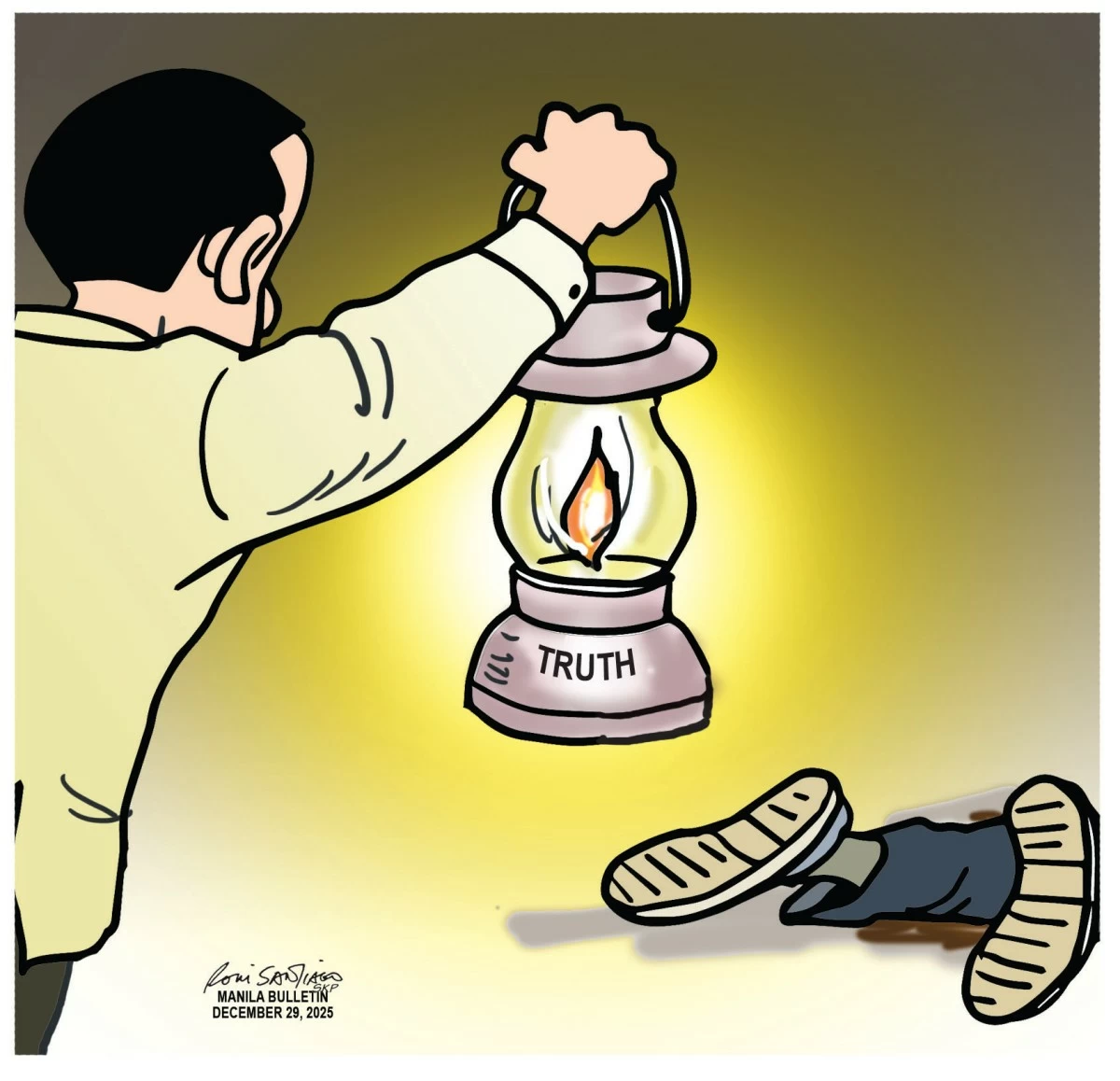
Truth Commission needed to probe extrajudicial killings

Published Dec 29, 2025 12:05 am  |  Updated Dec 28, 2025 03:37 pm
Upholding the maxim,“Truth will set us free,” has become even more imperative in our times, following the Supreme Court’s decision last week affirming the conviction of three police officers for the killing of 17-year-old student Kian de los Santos. Responding to the decision, Malacañang sounded the call supporting the formation of a National Truth and Reconciliation Commission that would conduct independent investigations into extrajudicial killings (EJKs).
House Bill 6686 was filed early this month by Rep. Leila de Lima in behalf of the Mambabatas para sa Karapatang Pantao (Makatao) coalition led by her. The measure seeks to uncover causes and patterns of EJKs, identify perpetrators, recommend institutional reforms, and provide redress for victims’ families. The proposed commission would be a five-member body with investigative subpoena and contempt powers. It is designed to complement action taken by existing bodies like the Commission on Human Rights (CHR) and the Department of Justice (DOJ).
Church leaders, notably Cardinal Pablo Virgilio David, and civil society organizations have consistently urged President Ferdinand Marcos Jr. to establish such a commission to provide a safe venue for victims' families and ensure national healing and accountability.
Earlier this year, the Ramon Magsaysay Foundation honored Fr. Flaviano ‘Flavie’ Villanueva of the Society of the Divine Word for “his lifelong mission to uphold the dignity of the poor and the oppressed, daily proving with unwavering faith that by serving the least of their brethren, all are restored.” Known as a human rights defender, Fr. Flavie focused on assisting families who lost loved ones to alleged extrajudicial killings associated with the war on drugs.
Indeed, the Supreme Court decision stands as a watershed moment for Philippine justice. It affirms with finality an unequivocal stance against the cold-blooded taking of an innocent life — a stark reality that has inflicted much pain and agony among hundreds of families whose kin had become victims of the excesses committed by police officers.
By sustaining the lower courts’ rulings, the Supreme Court has sent a clear message that fabricated accounts, planted evidence, and the abuse of authority will not stand judicial scrutiny. Beyond simply punishing three erring officers, it restores faith in institutions tasked to protect the citizenry.
The Court’s ruling has prompted Malacañang’s decision to issue a call for the Truth Commission’s creation to overcome the limitations of case-by-case justice. A formal truth and reconciliation mechanism offers a structured, transparent way to surface facts, acknowledge victims, and institute reforms. Properly constituted, such a commission can help the nation confront stark realities honestly and soberly, paving the way for healing and institutional reform. Moreover, it can complement the judiciary by documenting patterns of abuse, identifying systemic lapses, and proposing safeguards to prevent their recurrence.
The Supreme Court has performed its duty by demonstrating that justice can be served. The challenge now lies with the political branches and with the citizenry. Let this not remain an exceptional precedent, but a clarion call for demonstrating justice for all. Only then will the citizenry be assured that accountability has been institutionalized, public trust has been restored, and the primacy of human rights in our democracy has been reasserted.
ADVERTISEMENT
.most-popular .layout-ratio{ padding-bottom: 79.13%; } @media (min-width: 768px) and (max-width: 1024px) { .widget-title { font-size: 15px !important; } }

{{ articles_filter_1561_widget.title }}

.most-popular .layout-ratio{ padding-bottom: 79.13%; } @media (min-width: 768px) and (max-width: 1024px) { .widget-title { font-size: 15px !important; } }

{{ articles_filter_1562_widget.title }}

.most-popular .layout-ratio{ padding-bottom: 79.13%; } @media (min-width: 768px) and (max-width: 1024px) { .widget-title { font-size: 15px !important; } }

{{ articles_filter_1563_widget.title }}

{{ articles_filter_1564_widget.title }}

.mb-article-details { position: relative; } .mb-article-details .article-body-preview, .mb-article-details .article-body-summary{ font-size: 17px; line-height: 30px; font-family: "Libre Caslon Text", serif; color: #000; } .mb-article-details .article-body-preview iframe , .mb-article-details .article-body-summary iframe{ width: 100%; margin: auto; } .read-more-background { background: linear-gradient(180deg, color(display-p3 1.000 1.000 1.000 / 0) 13.75%, color(display-p3 1.000 1.000 1.000 / 0.8) 30.79%, color(display-p3 1.000 1.000 1.000) 72.5%); position: absolute; height: 200px; width: 100%; bottom: 0; display: flex; justify-content: center; align-items: center; padding: 0; } .read-more-background a{ color: #000; } .read-more-btn { padding: 17px 45px; font-family: Inter; font-weight: 700; font-size: 18px; line-height: 16px; text-align: center; vertical-align: middle; border: 1px solid black; background-color: white; } .hidden { display: none; }
function initializeAllSwipers() { // Get all hidden inputs with cms_article_id document.querySelectorAll('[id^="cms_article_id_"]').forEach(function (input) { const cmsArticleId = input.value; const articleSelector = '#article-' + cmsArticleId + ' .body_images'; const swiperElement = document.querySelector(articleSelector); if (swiperElement && !swiperElement.classList.contains('swiper-initialized')) { new Swiper(articleSelector, { loop: true, pagination: false, navigation: { nextEl: '#article-' + cmsArticleId + ' .swiper-button-next', prevEl: '#article-' + cmsArticleId + ' .swiper-button-prev', }, }); } }); } setTimeout(initializeAllSwipers, 3000); const intersectionObserver = new IntersectionObserver( (entries) => { entries.forEach((entry) => { if (entry.isIntersecting) { const newUrl = entry.target.getAttribute("data-url"); if (newUrl) { history.pushState(null, null, newUrl); let article = entry.target; // Extract metadata const author = article.querySelector('.author-section').textContent.replace('By', '').trim(); const section = article.querySelector('.section-info ').textContent.replace(' ', ' '); const title = article.querySelector('.article-title h1').textContent; // Parse URL for Chartbeat path format const parsedUrl = new URL(newUrl, window.location.origin); const cleanUrl = parsedUrl.host + parsedUrl.pathname; // Update Chartbeat configuration if (typeof window._sf_async_config !== 'undefined') { window._sf_async_config.path = cleanUrl; window._sf_async_config.sections = section; window._sf_async_config.authors = author; } // Track virtual page view with Chartbeat if (typeof pSUPERFLY !== 'undefined' && typeof pSUPERFLY.virtualPage === 'function') { try { pSUPERFLY.virtualPage({ path: cleanUrl, title: title, sections: section, authors: author }); } catch (error) { console.error('ping error', error); } } // Optional: Update document title if (title && title !== document.title) { document.title = title; } } } }); }, { threshold: 0.1 } ); function showArticleBody(button) { const article = button.closest("article"); const summary = article.querySelector(".article-body-summary"); const body = article.querySelector(".article-body-preview"); const readMoreSection = article.querySelector(".read-more-background"); // Hide summary and read-more section summary.style.display = "none"; readMoreSection.style.display = "none"; // Show the full article body body.classList.remove("hidden"); } document.addEventListener("DOMContentLoaded", () => { let loadCount = 0; // Track how many times articles are loaded const offset = [1, 2, 3, 4, 5, 6, 7, 8, 9, 10]; // Offset values const currentUrl = window.location.pathname.substring(1); let isLoading = false; // Prevent multiple calls if (!currentUrl) { console.log("Current URL is invalid."); return; } const sentinel = document.getElementById("load-more-sentinel"); if (!sentinel) { console.log("Sentinel element not found."); return; } function isSentinelVisible() { const rect = sentinel.getBoundingClientRect(); return ( rect.top < window.innerHeight && rect.bottom >= 0 ); } function onScroll() { if (isLoading) return; if (isSentinelVisible()) { if (loadCount >= offset.length) { console.log("Maximum load attempts reached."); window.removeEventListener("scroll", onScroll); return; } isLoading = true; const currentOffset = offset[loadCount]; window.loadMoreItems().then(() => { let article = document.querySelector('#widget_1690 > div:nth-last-of-type(2) article'); intersectionObserver.observe(article) loadCount++; }).catch(error => { console.error("Error loading more items:", error); }).finally(() => { isLoading = false; }); } } window.addEventListener("scroll", onScroll); });

Sign up by email to receive news.