







Senate ratifies ₱6.793-T 2026 national budget
Published Dec 29, 2025 03:40 pm


At A Glance
- The Senate on Monday, Dec. 29, ratified the Bicameral Conference Committee (bicam) report on the 2026 General Appropriations Bill (GAB) that proposes a ₱P6.793 -trillion national budget for next year.
The Senate on Monday, Dec. 29, ratified the Bicameral Conference Committee (bicam) report on the 2026 General Appropriations Bill (GAB) that proposes a ₱P6.793 -trillion national budget for next year.
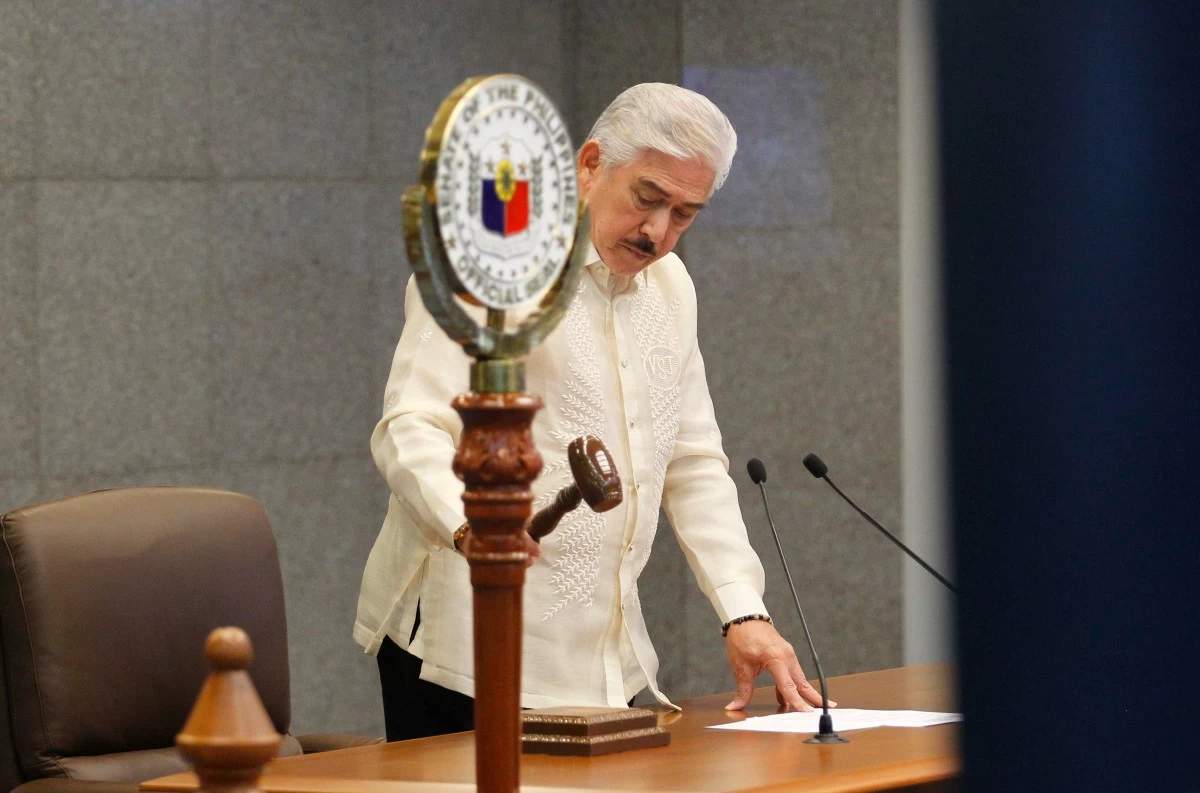
Scenes from the final session of the year as the Senate ratifies the General Appropriations Bill (GAB) for fiscal year 2026, marking a key step in finalizing the national budget and setting government spending priorities for the coming year. The approval capped months of deliberations on funding allocations for public services, infrastructure, and social programs. (Mark Balmores)
The ratified version of the 2026 GAB will then be sent to Malacañang for President Ferdinand "Bongbong" Marcos Jr.'s signature.
In a chance interview, Senate Finance Committee Chairman Senator Sherwin Gatchalian said that three senators did not sign the bicam report, namely Senators Ronald "Bato" dela Rosa, Christopher "Bong" Go and Senator Imee Marcos.
Asked for the reason, Gatchalian said that he's unaware. Two more members of the minority bloc, Senators Rodante Marcoleta and Robinhood Padilla, voted against the ratification.
During the plenary session, Gatchalian submitted for ratification a copy of the Conference Committee Report on the Disagreeing Votes on House Bill Number 4058.
He emphasized what he described as a people-centered budget anchored on education, health, agriculture, social protection, and strengthened safeguards for transparency and accountability.
Gatchalian said the bicam panel remained faithful to its commitment to make education the largest investment in the 2026 national budget, with total funding reaching ₱1.35 trillion. He emphasized that this allocation represents a historic 4.4 percent of gross domestic product, translating into concrete interventions such as measures to reduce the classroom backlog, expanded implementation of the School-Based Feeding Program to benefit millions of malnourished students, and ensuring that every learner will have access to their own textbooks.
Gatchalian also highlighted the strengthened allocation for the health sector, which now totals ₱447.6 billion under the reconciled version of the budget. Of this amount, the Philippine Health Insurance Corporation (PhilHealth) received ₱129.78 billion, reflecting a 15 percent increase compared to the House-approved General Appropriations Bill level. He noted that the additional ₱16.5 billion for PhilHealth came from the realignment of the Department of Public Works and Highways (DPWH) budget.
Gatchalian credited Finance Committee Vice Chairpersons Senators Pia Cayetano and Loren Legarda, as well as Senator Risa Hontiveros, for pushing for the increase. He added that funding for Zero Balance Billing in Department of Health (DOH) hospitals was also increased and expanded to cover selected local government units, while allocations for specialty hospitals were augmented for both the procurement of essential medical equipment and the improvement of public services.
Turning to agriculture, Gatchalian said the 2026 budget earmarks ₱214.39 billion for the sector, the highest allocation in more than a decade. He explained that the increased funding would support programs aimed at improving farmers’ incomes and strengthening national food security, including credit insurance and direct market access initiatives. According to the senator, the budget seeks to uplift the quality of life of those who produce the country’s food, and he acknowledged Senator Francis “Kiko” Pangilinan for his recommendations in shaping the agriculture budget.
In line with the people-centered thrust of the spending plan, Gatchalian said funding for social services remained robust, citing the increase in the National Disaster Risk Reduction and Management Fund to ₱39.8 billion. This represents a ₱10.5-billion increase from the House version, including a ₱4.2-billion realignment from the DPWH budget. He said this adjustment reflected the Senate’s firm position on recognizing the true cost of construction materials in DPWH projects.
Beyond sectoral allocations, Gatchalian stressed that the bicameral conference was deliberate in strengthening safeguards to protect public funds. He pointed out that all five days of bicameral deliberations were livestreamed and made accessible to the public, with transparency portals housing all budget documents. He noted that civil society organizations were involved in the process, marking a first that strengthened public oversight.
Specific provisions were also included to prevent abuse, such as requiring all infrastructure projects to carry station numbers and clear geographic coordinates to enable on-the-ground verification.
Gatchalian said these safeguards are meant to complement the substantive provisions of the budget, but emphasized that the ultimate protection lies in collective vigilance and shared responsibility to ensure that every peso is spent as intended. He acknowledged that the reform process involved difficulties and learning experiences, but said the Senate has begun instituting reforms toward a more open and transparent budget process, stressing the need to persist and resist a return to flawed systems and practices.
The senator expressed gratitude to members of the House of Representatives and his fellow bicameral conferees for scrutinizing every line of the budget and grounding their decisions in public trust and service. Gatchalian, likewise, acknowledged the Senate leadership, including Senate President Vicente Sotto III, Senate President Pro Tempore Panfilo Lacson, and Senate Majority Leader Juan Miguel Zubiri, citing their leadership and guidance in shaping what he described as a responsive and transparent 2026 national budget.
He concluded by formally moving for the reading and ratification of the bicam report and its Joint Explanation on the disagreeing provisions of House Bill No. 4058.
Yes, but with reservations
Meanwhile, Senators Risa Hontiveros, Loren Legarda, Francis “Kiko” Pangilinan, and Joseph Victor “JV” Ejercito voted yes to the bicameral conference committee report on the 2026 national budget but “with reservations.”
Pangilinan said he has reservations particularly on the provision on the 2026 General Appropriations Bill (GAB) authorizing the Department of Agriculture (DA) to enter into a memorandum of agreement (MOAs) with the DPWH in the implementation of the P33-billion farm-to-market roads (FMR) program.
“This implementation modality raises significant execution and accountability concerns. I respectfully request the President to veto this specific provision,” Pangilinan said.
Pangilinan said this specific provision violates the spirit of Republic Act No. 8435 or the Agriculture and Fisheries Modernization Act or the AFMA, which clearly states that the planning and prioritization of FMRs belong to the DA, in close coordination with LGUs and farmers and fisherfolk.
Hontiveros, on the other hand, said she has serious reservations on the unprogrammed appropriations and other issues.
“It is very unfortunate that some of the reforms we are pushing for, including an overwhelming cut in unprogrammed funds, are not carried in this budget. Still, it is an improvement that the bicam version includes safeguards aimed at preventing unprogrammed funds from becoming slush funds,” Hontiveros said.
“Another is the rejection of my proposal for a provision that would allow the MAIFIP to support the Zero Balance Billing Program of the DOH. This is why I am pushing for my Universal Healthcare Medical Assistance Program Bill, which would institutionalize less lines, less uncertainty, and less red tape in our health services,” she said.
Ejercito also said his reservation arises from the steep rise in the budget allocated for MAIFIP, which doubled compared to the amount requested in the National Expenditure Program (NEP).
“I initially raised this concern through my written manifestation during the bicameral conference,” he said.
Ejercito reiterated that under the Universal Healthcare Law, patients should no longer have to worry about paying for hospitalization and should only worry about getting better.
“That is why the social funds of PCSO and PAGCOR have been merged into a general universal healthcare fund so that people no longer have to queue up at various agencies. So although MAIFIP is also helpful while the UHC law is organizing our health system, we should gradually reallocate the funding to MAIFIP to provide more opportunities to increase PhilHealth benefits and coverage and support the implementation of Zero Balance Billing,” he stressed.