






Manila Bulletin
 Philippines
National
Procedural process, provisions of 2026 national budget questioned
Philippines
National
Procedural process, provisions of 2026 national budget questioned
Philippines
National
Procedural process, provisions of 2026 national budget questioned
Procedural process, provisions of 2026 national budget questioned
Published Dec 29, 2025 03:39 pm


At A Glance
- The proposed 2026 national budget remained controversial despite its ratification Monday, Dec. 29 as several House members flagged the procedural process the General Appropriations Bill (GAB) went through as well as its alleged questionable provisions.
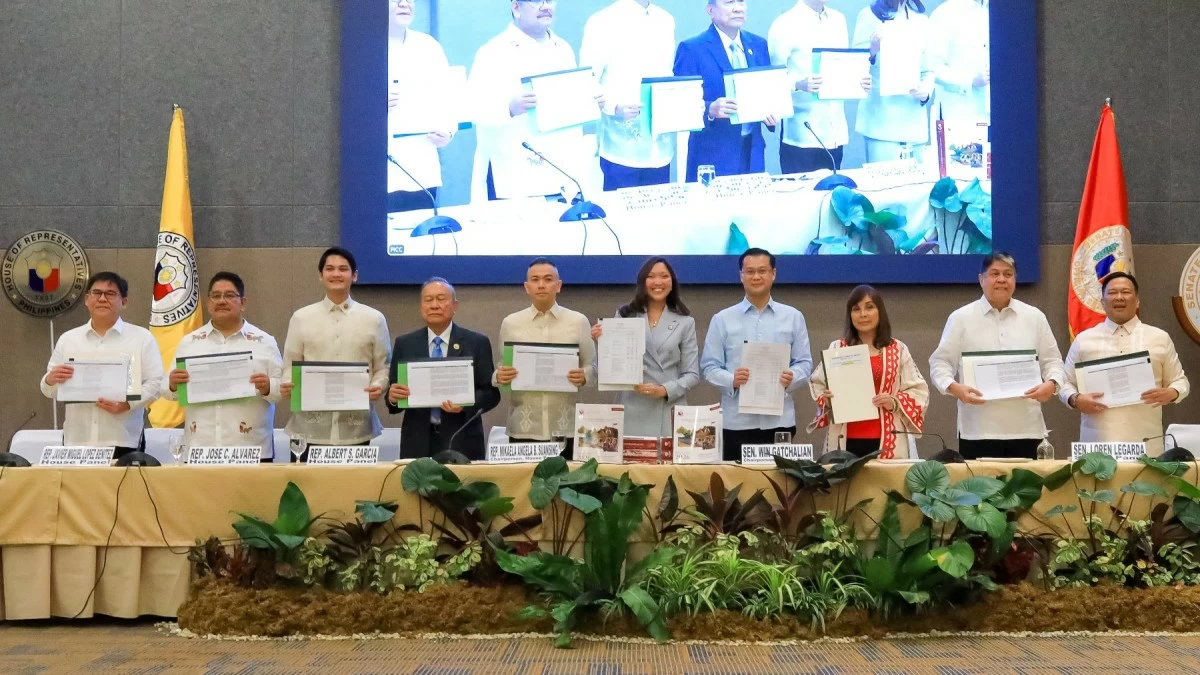
The proposed 2026 national budget remained controversial despite its ratification Monday, Dec. 29 as several House members flagged the procedural process the General Appropriations Bill (GAB) went through as well as its alleged questionable provisions.
Solons belonging to the House minority and independent blocs raised serious concern on Monday's ratification of the P6.793-trillion GAB--the biggest in the country's history.
Mamamayang Liberal (ML) Party-list Rep. Leila de Lima particularly slammed the budget measure for allowing a whooping P243 billion allocation for Unprogrammed Appropriations (UAs), the implementation of programs subject to discretion of lawmakers, and the surge of confidential and intelligence funds, among others.
For De Lima, UAs must be removed in its entirety, as she argued that "they are constitutionally baseless" for "they lack definite revenue sources, skirt constitutional safeguards, and surrender Congress’ power of the purse to executive discretion".
She also said there was an "explosion of discretionary or 'soft pork" after the Bicameral Conference Committee "authorized patronage-heavy programs at levels even higher than those in the House GAB".
Meanwhile, Kabataan Party-list Rep. Renee Co said the livestreaming of the bicam hearings that approved the budget--which was meant to show transparency--ended up as a mere "theater" and "gimmick" of the Marcos administration.
She also criticized the "hasty" passing of the bill.
"Pinagbibigyan ng ilang araw ang pagplantsa sa mga gusot at deadlock ng mga politiko sa bicam, pero minamadali naman ang pag-apruba ng publiko. Mas marami pang araw ang naubos sa behind-the-scenes negotiations kaysa sa bukas na pagkilatis ng publiko sa mahahalagang dokumento (While several days were given to lawmakers to resolve complications and deadlocks within the bicameral conference, the public approval was still fast-tracked. More time was actually consumed during the behind-the-scenes negotiations than during the public review of these critical document)," she noted.
Davao City 3rd district Rep. Isidro Ungab, a member of the independent bloc said he opposed the ratification of next year's budget because of the participation of the Department of Public Works and Highways (DPWH) in the approval process.
He said it was the department that helped facilitate the anomalous flood control projects.
"The bicam is a purely legislative exercise between the House of Representatives and the Senate, yet the Executive Branch was allowed to intervene through the participation of the Secretary of the DPWH," Ungab said.
Ungab, a former Committee on Appropriations chairman, noted that while there was an admission of errors in the Construction Materials Price Data (CMPD) presented during initial deliberation, the revised matrix from the DPWH was never projected or presented to the public, giving no assurance that the recomputed list of projects and totals are accurate.
Like De Lima, Ungab flagged what he called the "unjustified reductions in critical infrastructure programs, and the continuing misuse of Unprogrammed Appropriations".
Despite repeated appeals not to cut Foreign-Assisted Projects (FAPs), he said, the bicam approved substantial reductions, particularly in the DPWH and the Department of Transportation (DOTr). Major transport projects also suffered deep budget cuts, he added.
There was also the "continued misuse" of UAs, which he said "remain at an 'alarming' P243.4 billion—only slightly lower than the P250 billion NEP level," Ungab said.