







PIDS warns: Trade gains risky without reform
Published Dec 29, 2025 11:19 am


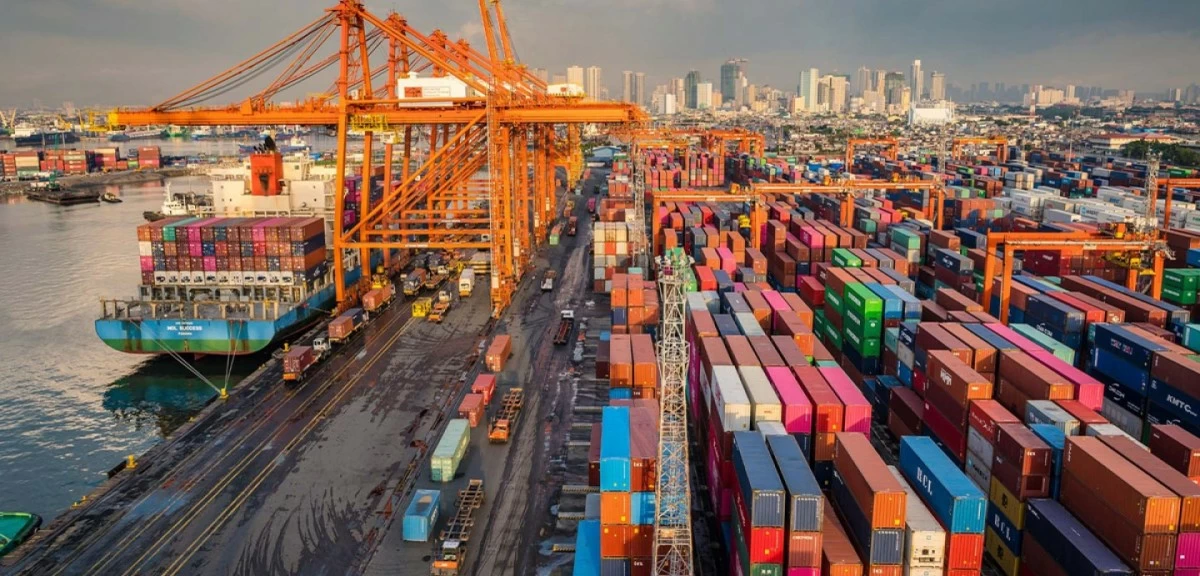
State-run policy think tank Philippine Institute for Development Studies (PIDS) has cautioned that the Philippines’ trade structure, while currently benefiting from global realignment, faces significant long-term vulnerabilities due to geoeconomic fragmentation (GEF).
In a discussion paper titled “The Economic Impact of Geoeconomic Fragmentation of Commodity Markets,” published on Dec. 23, researchers from PIDS said the Philippines’ trade structure is “opportunity-responsive but vulnerability-constrained.”
The report, authored by PIDS senior research fellow Francis Mark A. Quimba and supervising research specialist Mark Anthony A. Barral, noted that while GEF can generate short-term export gains, it poses risks to long-term economic resilience due to the country’s rising import dependence on geopolitically sensitive partners.
PIDS warned that without structural transformation, GEF and a crisis-prone global environment could increase the Philippines’ exposure to risks rather than strengthen its role in global trade.
While the Philippines benefits from the global realignment, PIDS noted that these gains are uneven and partner-specific, observing that exports to China have fallen significantly under GEF, while shipments to the United States (US) and the European Union (EU) show no consistent increase.
Conversely, PIDS noted that Philippine imports have seen significant increases from the EU and the US under GEF, while imports from China remain largely unchanged.
To address these vulnerabilities, PIDS recommended that the Philippines adopt a multi-pronged resilience strategy focused on export upgrading, import substitution, supply-chain diversification, and strategic autonomy.
While imports are more vulnerable than exports under GEF, PIDS said policies should focus on reducing upstream dependencies and strengthening domestic production capacity.
PIDS urged the Philippines to boost domestic production in sectors hit hardest by import shocks—such as pharmaceuticals, chemicals, semiconductors, electronics, food processing, fertilizers, and basic metals—calling industrial deepening essential.
The think tank also recommended developing strategic reserves and safety nets, particularly for fuel, pharmaceuticals, and food, to mitigate import shocks. It advised stockpiling petroleum products, medicine, and essential food items.
Further recommendations include diversifying import sources, reducing supplier concentration, seizing export opportunities from supply-chain realignments, and upgrading value chains through domestic mineral processing.
PIDS also called for a national supply chain risk monitoring system, urging the government to track global price shocks, semiconductor flows, shipping delays, export controls, and geopolitical risks. It suggested that a supply chain intelligence unit (SCIU) under the Department of Economy, Planning, and Development (DEPDev) or the Department of Trade and Industry (DTI) could guide firms on diversification strategies and coordinate crisis responses.
Ultimately, PIDS emphasized the importance of strengthening free-trade agreements (FTAs), boosting regional cooperation, and accelerating energy transition.
The latest preliminary data from the Philippine Statistics Authority (PSA) last week showed that the country’s total external trade in goods reached $17.33 billion in November, up 6.1 percent year-on-year, despite exports and imports hitting seven- and nine-month lows, respectively.
Total goods exports for the first 11 months of 2025 reached $77.39 billion, already surpassing full-year 2024 sales worth $73.27 billion, while imports totaled $122.59 billion.
In November, Hong Kong led Philippine exports with $1.17 billion, narrowly ahead of the US, while China remained the largest source of imports at $2.9 billion.