

ADVERTISEMENT

Philippines proves Olympic might in SEA Games stint

Published Dec 29, 2025 02:32 pm

At A Glance

  • The Philippines may have settled for sixth overall at the 33rd Southeast Asian Games, but its performance in Olympic disciplines told a far brighter story, outshining most of its neighbors and even topping host Thailand percentage-wise in the sports played on the global stage.
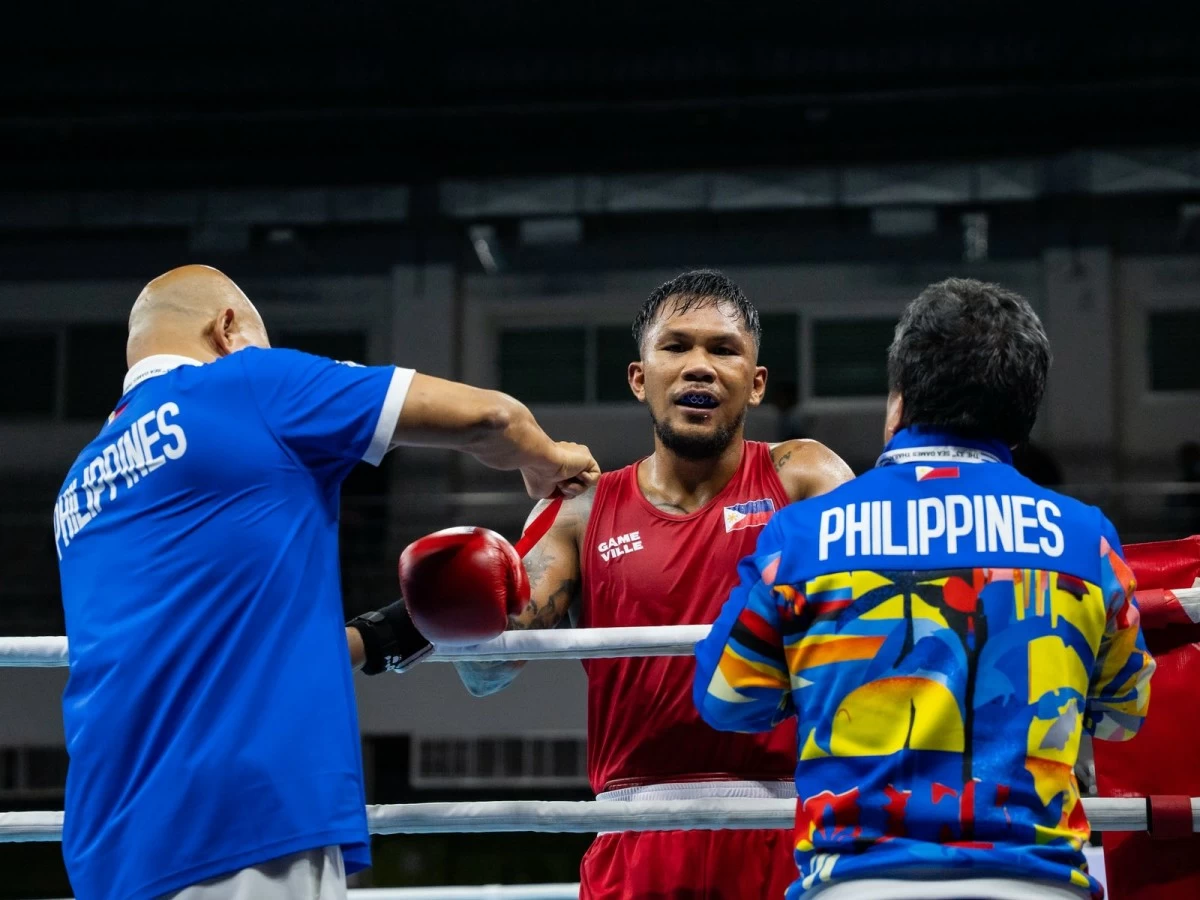
(POC Media Pool)
(POC Media Pool)
The Philippines may have settled for sixth overall at the 33rd Southeast Asian Games, but its performance in Olympic disciplines told a far brighter story, outshining most of its neighbors and even topping host Thailand percentage-wise in the sports played on the global stage.
While critics point to the overall medal tally as a measure of failure, a closer look reveals a different picture. Seventy percent of Team Philippines’ 50 gold medals came from Olympic sports, tying Singapore for the highest percentage among the 11 competing nations, according to vnexpress.net, a Vietnamese online newspaper.
Singapore finished fifth overall with 52 golds, 61 silvers, and 87 bronzes, including 20 in aquatics—an Olympic centerpiece. The Philippines, meanwhile, excelled across a wide range of disciplines, from athletics (5 golds) and swimming (3) to gymnastics (3), triathlon (3), and modern pentathlon (3).
Boxing, traditionally a Filipino stronghold, proved contentious. Eumir Marcial delivered the country’s lone gold, while Thailand swept 14 of 17 categories. Observers argue that questionable officiating cost the Philippines three to four additional titles.
Beyond boxing, the Philippines secured breakthrough victories in women’s football, men’s baseball, tennis, and beach volleyball. Other Olympic sports bolstered the tally: basketball (2), judo (2), skateboarding (2), softball (2), taekwondo (2), rowing (1), sailing (1), short-track speed skating (1), weightlifting (1), and wrestling (1).
Given the chance to compete in every men’s artistic gymnastics six apparatus and all-around event, Carlos Yulo might have added four to five more golds to the Philippines’ tally, including the men’s team title.
The nation’s two-time Olympic gold medalist sat out the SEA Games after the host restricted gymnasts to just one apparatus.
By percentage, Indonesia followed the Philippines and Singapore with just under 65 percent of its golds from Olympic sports, trailed by Thailand (64 percent), Malaysia (57 percent), and Vietnam (51.85 percent).
Thailand, as host, dominated the overall standings with 233 golds, 154 silvers, and 113 bronzes. Indonesia placed second (91-112-130), Vietnam third (87-81-110), and Malaysia fourth (57-57-117).
Yet the Philippines’ Olympic-focused success underscores its potential to shine brighter on the world stage, particularly as the 2028 Los Angeles Olympics draw nearer.
ADVERTISEMENT
.most-popular .layout-ratio{ padding-bottom: 79.13%; } @media (min-width: 768px) and (max-width: 1024px) { .widget-title { font-size: 15px !important; } }

{{ articles_filter_1561_widget.title }}

.most-popular .layout-ratio{ padding-bottom: 79.13%; } @media (min-width: 768px) and (max-width: 1024px) { .widget-title { font-size: 15px !important; } }

{{ articles_filter_1562_widget.title }}

.most-popular .layout-ratio{ padding-bottom: 79.13%; } @media (min-width: 768px) and (max-width: 1024px) { .widget-title { font-size: 15px !important; } }

{{ articles_filter_1563_widget.title }}

{{ articles_filter_1564_widget.title }}

.mb-article-details { position: relative; } .mb-article-details .article-body-preview, .mb-article-details .article-body-summary{ font-size: 17px; line-height: 30px; font-family: "Libre Caslon Text", serif; color: #000; } .mb-article-details .article-body-preview iframe , .mb-article-details .article-body-summary iframe{ width: 100%; margin: auto; } .read-more-background { background: linear-gradient(180deg, color(display-p3 1.000 1.000 1.000 / 0) 13.75%, color(display-p3 1.000 1.000 1.000 / 0.8) 30.79%, color(display-p3 1.000 1.000 1.000) 72.5%); position: absolute; height: 200px; width: 100%; bottom: 0; display: flex; justify-content: center; align-items: center; padding: 0; } .read-more-background a{ color: #000; } .read-more-btn { padding: 17px 45px; font-family: Inter; font-weight: 700; font-size: 18px; line-height: 16px; text-align: center; vertical-align: middle; border: 1px solid black; background-color: white; } .hidden { display: none; }
function initializeAllSwipers() { // Get all hidden inputs with cms_article_id document.querySelectorAll('[id^="cms_article_id_"]').forEach(function (input) { const cmsArticleId = input.value; const articleSelector = '#article-' + cmsArticleId + ' .body_images'; const swiperElement = document.querySelector(articleSelector); if (swiperElement && !swiperElement.classList.contains('swiper-initialized')) { new Swiper(articleSelector, { loop: true, pagination: false, navigation: { nextEl: '#article-' + cmsArticleId + ' .swiper-button-next', prevEl: '#article-' + cmsArticleId + ' .swiper-button-prev', }, }); } }); } setTimeout(initializeAllSwipers, 3000); const intersectionObserver = new IntersectionObserver( (entries) => { entries.forEach((entry) => { if (entry.isIntersecting) { const newUrl = entry.target.getAttribute("data-url"); if (newUrl) { history.pushState(null, null, newUrl); let article = entry.target; // Extract metadata const author = article.querySelector('.author-section').textContent.replace('By', '').trim(); const section = article.querySelector('.section-info ').textContent.replace(' ', ' '); const title = article.querySelector('.article-title h1').textContent; // Parse URL for Chartbeat path format const parsedUrl = new URL(newUrl, window.location.origin); const cleanUrl = parsedUrl.host + parsedUrl.pathname; // Update Chartbeat configuration if (typeof window._sf_async_config !== 'undefined') { window._sf_async_config.path = cleanUrl; window._sf_async_config.sections = section; window._sf_async_config.authors = author; } // Track virtual page view with Chartbeat if (typeof pSUPERFLY !== 'undefined' && typeof pSUPERFLY.virtualPage === 'function') { try { pSUPERFLY.virtualPage({ path: cleanUrl, title: title, sections: section, authors: author }); } catch (error) { console.error('ping error', error); } } // Optional: Update document title if (title && title !== document.title) { document.title = title; } } } }); }, { threshold: 0.1 } ); function showArticleBody(button) { const article = button.closest("article"); const summary = article.querySelector(".article-body-summary"); const body = article.querySelector(".article-body-preview"); const readMoreSection = article.querySelector(".read-more-background"); // Hide summary and read-more section summary.style.display = "none"; readMoreSection.style.display = "none"; // Show the full article body body.classList.remove("hidden"); } document.addEventListener("DOMContentLoaded", () => { let loadCount = 0; // Track how many times articles are loaded const offset = [1, 2, 3, 4, 5, 6, 7, 8, 9, 10]; // Offset values const currentUrl = window.location.pathname.substring(1); let isLoading = false; // Prevent multiple calls if (!currentUrl) { console.log("Current URL is invalid."); return; } const sentinel = document.getElementById("load-more-sentinel"); if (!sentinel) { console.log("Sentinel element not found."); return; } function isSentinelVisible() { const rect = sentinel.getBoundingClientRect(); return ( rect.top < window.innerHeight && rect.bottom >= 0 ); } function onScroll() { if (isLoading) return; if (isSentinelVisible()) { if (loadCount >= offset.length) { console.log("Maximum load attempts reached."); window.removeEventListener("scroll", onScroll); return; } isLoading = true; const currentOffset = offset[loadCount]; window.loadMoreItems().then(() => { let article = document.querySelector('#widget_1690 > div:nth-last-of-type(2) article'); intersectionObserver.observe(article) loadCount++; }).catch(error => { console.error("Error loading more items:", error); }).finally(() => { isLoading = false; }); } } window.addEventListener("scroll", onScroll); });

Sign up by email to receive news.