






Manila Bulletin
 Environment and Sustainability
How 2025 redefined responsibility and sustainable living
Environment and Sustainability
How 2025 redefined responsibility and sustainable living
Environment and Sustainability
How 2025 redefined responsibility and sustainable living
How 2025 redefined responsibility and sustainable living
Published Dec 29, 2025 10:22 am


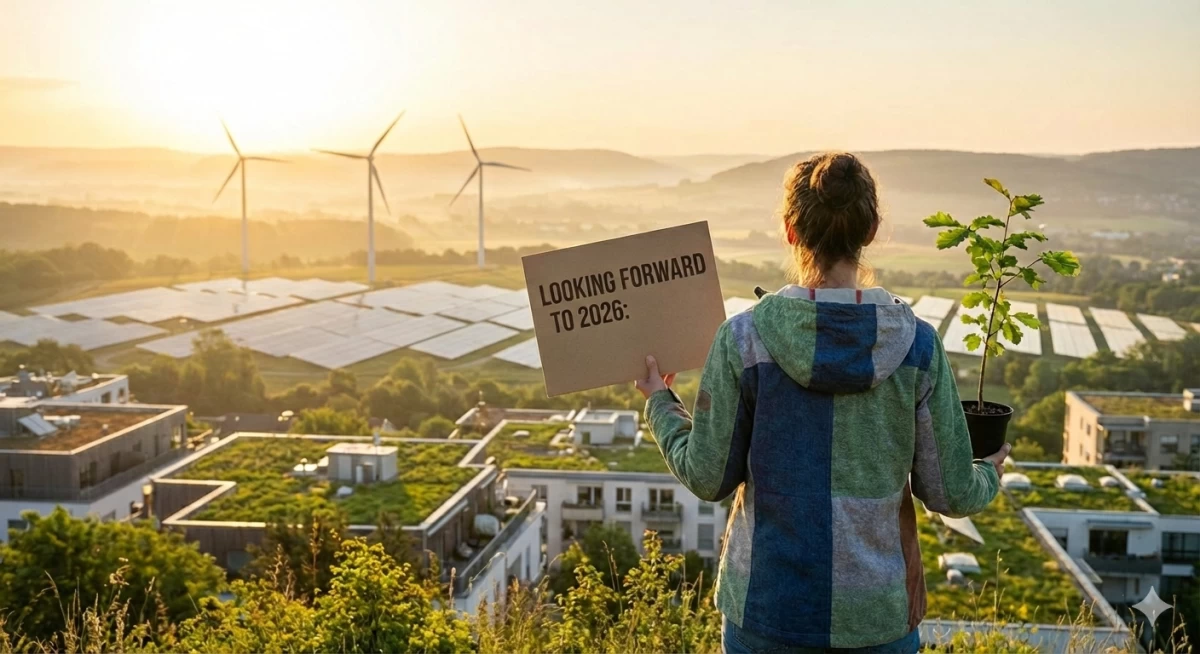
Image generated by Gemini
The year 2025 was not just a time for reflection. It was a year that asked many of us to pause, reassess and awaken— awakening to responsibility, to boundaries, to belief and to the realization that sustainability is not a distant ideal, but something shaped daily by how we live, work and choose.
This shift did not happen by accident. A study done by Hiroshima University, notes that younger generations — defined broadly as those in their late teens to early 30s — are more open-minded, proactive and intentional about sustainability than previous cohorts. Research shows they are not only more inclined to support environmentally responsible products and careers, but also more willing to change everyday behaviors in pursuit of climate goals and more equitable systems. Increasingly, the push toward sustainable living is being led by emerging voices.
For this year-end feature, I spoke with a small circle of friends and colleagues — people whose lives intersect with purpose in different ways — and asked them to share one key lesson from 2025, how they plan to carry it into 2026, and one eco-conscious habit they intend to continue or begin in the new year.
What emerged were honest reflections that serve as a reminder: meaningful change often begins quietly.
An Awakening to Responsibility
It felt fitting to begin with someone who has long been at the forefront of the sustainability conversation—Len Gatbonton-Amadora, section editor of the Manila Bulletin’s Environment and Sustainability section. When asked about her biggest lesson from 2025, her answer was refreshingly candid.
“For me, 2025 was an awakening year,” she said. “I realized that sustainability—though often talked about—had never really made it into my daily priorities. I was taking it for granted.”
That realization marked a turning point. As she looks ahead to 2026, she is choosing to be more mindful and deliberate, treating sustainability not as an option, but as a responsibility.
“Protecting the planet is a shared duty,” she said. “It cannot be an afterthought. It has to be a conscious choice.”
So I asked her what that looks like in real, everyday terms. Without hesitation, she begins with addressing food waste—an issue many households quietly struggle with.
“We are all guilty of it,” she admitted. “My family loves to eat, and more often than not, we buy more than we need.”
In the coming year, she plans to practice more mindful grocery shopping, finish what is served and embrace healthier eating habits. “Sustainability begins at home—on our plates, in our kitchens,” she said. “Small acts can ripple outward. Less waste means less strain on the planet, and healthier habits mean better care for ourselves.”
Belief as Impact
Another conversation centered on belief—specifically, belief in oneself. John Paulo Ondra Caparros, media relations lead at PRecious Communications Philippines, described 2025 as a year that forced him to confront self-doubt.
“The biggest lesson I learned is that the impact you leave begins with how deeply you believe in yourself,” he said.
Working in public relations, he explained, belief shapes everything—from how stories are told, to how strategies are defended, to how leadership shows up in a room. This year pushed him to confront self-doubt, especially in moments where leadership mattered most. This year pushed him to stop shrinking in spaces where his perspective mattered.
That shift led to clearer direction, stronger trust with clients and more confident teams. Mistakes, he added, became opportunities for learning rather than sources of fear.
Sustainability, for him, has also become part of that mindset.
“I’ve become more mindful of every event and campaign I handle,” he explained. “I avoid executions done purely for optics, especially those that create unnecessary waste. I pause and ask: does this idea add value, or does it add trash?”
It’s a mindset he plans to carry into 2026. “Sustainability should be part of the strategy,” he said, “not an afterthought.”
Wisdom, Boundaries, and Collective Action
One of the more personal conversations was with Mitch, a close family friend and entrepreneur who introduced me to the world of virtual work. When asked about her defining lesson from 2025, she did not hesitate.
“Trust without caution is a beautiful door,” she said, “but it can break you when it closes.”
Rather than becoming guarded, she explained, she’s choosing to move forward with clarity and intention.
“In 2026, I’ll treat that lesson as wisdom, not armor,” she shared. “I’ll protect my peace, honor my boundaries and choose where I place my trust more carefully.”
As a mompreneur, she sees sustainability in much the same way: small, thoughtful actions done consistently matter. One habit she plans to continue is practicing BYOB—bring your own bottle and bag.
“Small impacts may seem insignificant,” she said, “but when done collectively, they create real change.”
Turning Awakening Into Action
Looking back on these conversations, I realized that 2025 was also a year of awakening for me—one that asked me to move, to adapt and to trust the unfamiliar.
As a freelance writer and communications professional, the year took me across borders, including time spent in Australia, where new environments reshaped how I approach both work and life. It reinforced a simple truth: adaptability, like sustainability, requires intention and restraint.
Professionally, I continue to wear multiple hats, including serving as general manager of Skate Pilipinas while building a life as a freelance storyteller. Working in sports has long reinforced values that sustainability demands as well: discipline, respect, resilience and care for the spaces we occupy.
In 2026, I plan to continue growing Refill and Beyond, supporting women-led livelihood programs, and encouraging young people to make sustainable choices that feel accessible rather than overwhelming.
Because sustainability, at its core, is deeply human. It is about awareness, intention and care. And as 2025 has shown, when awakening turns into action, even the smallest choices begin to matter.
As we step into a new year, perhaps the better question is not what 2025 gave us, but what it asked of us.
What did the year awaken in you? What lesson will you carry into 2026? And what small, eco-conscious act—however ordinary—are you willing to commit to as part of your everyday life?
Change rarely begins with perfection. It begins with awareness, intention, and the decision to start.