






Manila Bulletin
 Business
Trade & Industry
APEC flags fivefold jump in Philippine electricity demand by 2060
Business
Trade & Industry
APEC flags fivefold jump in Philippine electricity demand by 2060
Business
Trade & Industry
APEC flags fivefold jump in Philippine electricity demand by 2060
APEC flags fivefold jump in Philippine electricity demand by 2060
EVs, renewables seen to drive growth
Published Dec 29, 2025 12:00 am
|
Updated Dec 27, 2025 12:14 pm


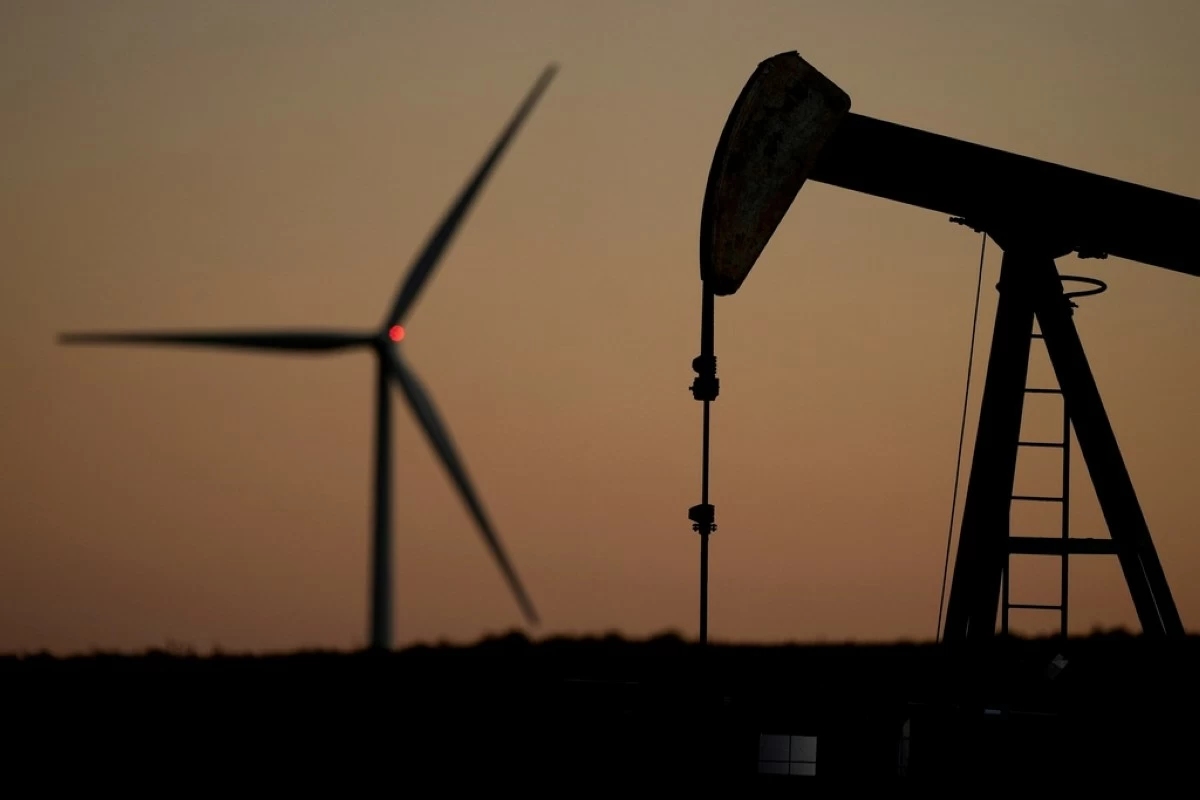
FILE - A pumpjack operates in the foreground while a wind turbine at the Buckeye Wind Energy wind farm rises in the distance, Sept. 30, 2024, near Hays, Kan. (AP Photo/Charlie Riedel, File)
The Asia-Pacific Economic Cooperation (APEC) expects Philippine electricity demand to rise sharply over the next 35 years, driven by the growing adoption of electric vehicles (EVs) and renewable energy (RE).
The ninth edition of the APEC Energy Demand and Supply Outlook, launched this month, revealed that the Philippines is likely to see its electricity demand grow fivefold as both the public and private sectors push for greater use of solar, wind, and natural gas sources. However, the share of coal generation is expected to decline to a minimum.
“Electricity demand is projected to increase by approximately five times from 2022 to 2060” in the country, according to the latest report published by Asia-Pacific Energy Research Center (APERC), noting that faster EV adoption would drive this growth, while demand from industry and buildings would likely remain flat.
“Most of the increased demand is supplied by solar, wind, and natural gas. Gas is expected to increase as it provides flexible and reliable power to complement solar and wind.”
While coal still accounted for a large share of electricity production in 2022, its contribution to generation may decline by 12 percent by 2060.
Post-2030, APEC projects that coal’s share will be reduced further as the country prepares to introduce nuclear energy.
“In both scenarios, coal use for electricity production is minimized, but it remains the primary producer when other technologies cannot meet demand growth. Oil-based electricity generation is expected to be minimal post-2030. Hydropower and geothermal show small marginal growth,” it added.
Meanwhile, RE sources such as solar and wind could account for 20 percent of the energy mix by 2030, rising to 30 percent a decade later.
In terms of energy import dependence, the target scenario shows that the Philippines would still require more imports as overall energy demand continues to increase.
“Despite efforts to reduce import dependence in TGT [target scenario], the increase in energy demand in the Philippines, to continue driving its economic growth, will require more imports. Further efforts are necessary to retain the current import dependence of around half of the total primary energy supply,” APEC noted.
As the study anticipates higher power demand in the coming years, the Department of Energy (DOE) has assured continued monitoring of around 200 power generation projects slated for completion within the next three years.
In a separate statement, the DOE said it is tracking the schedules of these power developers, as well as the grid operator, to ensure that the projects do not face delays.
“This includes close coordination with project proponents and NGCP [National Grid Corp. of the Philippines] on grid interconnection readiness, regular tracking of construction and commissioning milestones, and early identification of bottlenecks that may affect timelines, such as permitting constraints, right-of-way (ROW) issues, equipment delivery risks, and site-level implementation challenges,” the agency said.
The DOE also cited projects expected to come online in the first quarter of 2026, including stage one of Meralco PowerGen Corp.’s (MGen) Terra Solar project, which recently achieved a key grid interconnection milestone with NGCP following the energization of its 500-kilovolt (kV) substation in December.