

ADVERTISEMENT

Suzuki Fronx shows how compact cars can still deliver five-star safety

Published Dec 28, 2025 07:49 pm

At A Glance

  • The Suzuki Fronx earned a five-star rating under the ASEAN NCAP 2021 to 2025 assessment protocol for the 2025 model year vehicle.
  • Testing covered adult and child occupant protection, safety assist technologies, and motorcyclist safety, with a total score of 77.70 points.
  • The rating reflects the growing expectation that compact vehicles deliver high levels of structural integrity and active safety features.
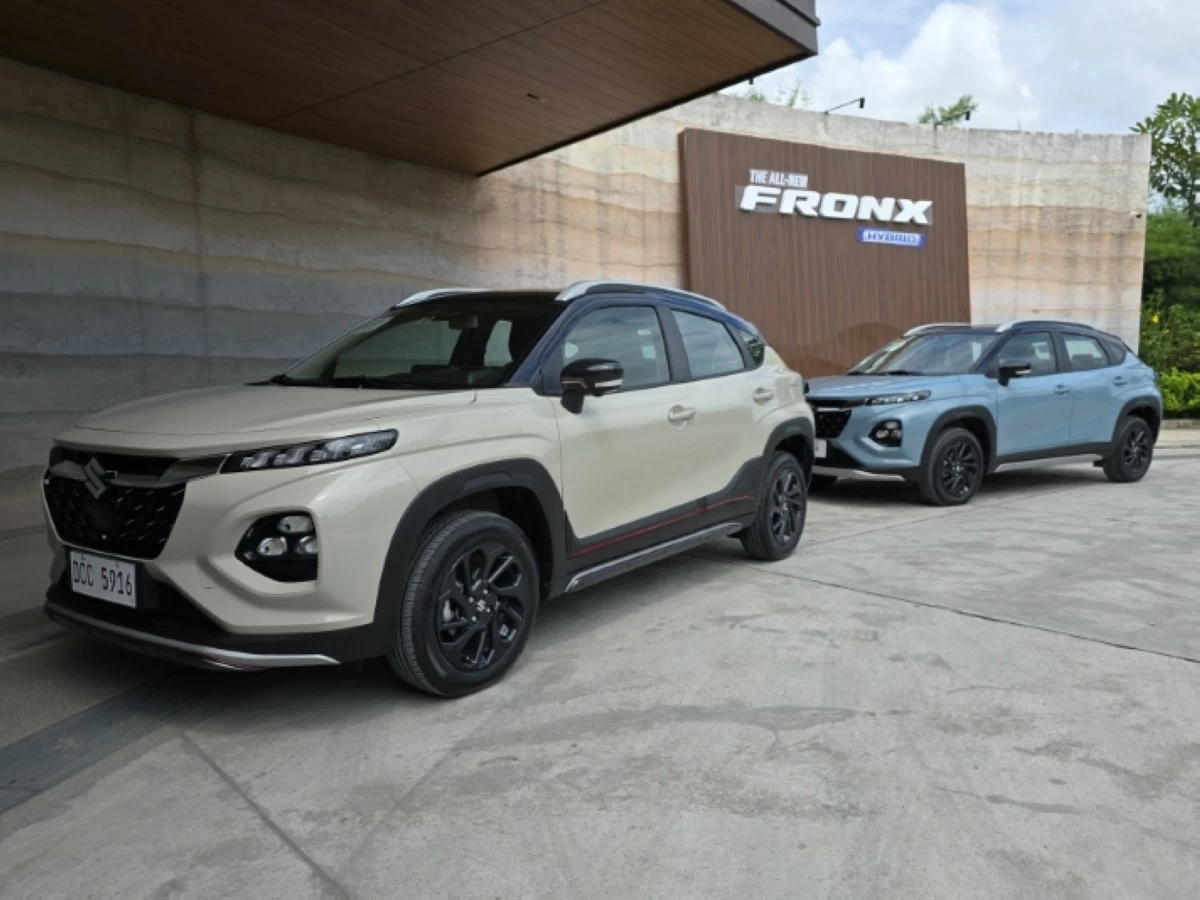
In the compact and subcompact segments, the importance of safety carries added weight to the discussion. Smaller vehicles operate in the same traffic environment as larger SUVs and pickups, yet they rely more heavily on structural design, restraint systems, and active safety technologies to manage real-world risks. Against this backdrop of rising safety expectations for smaller cars, the Suzuki Fronx has earned a five-star safety rating from the ASEAN New Car Assessment Program under its 2021 to 2025 assessment protocol.
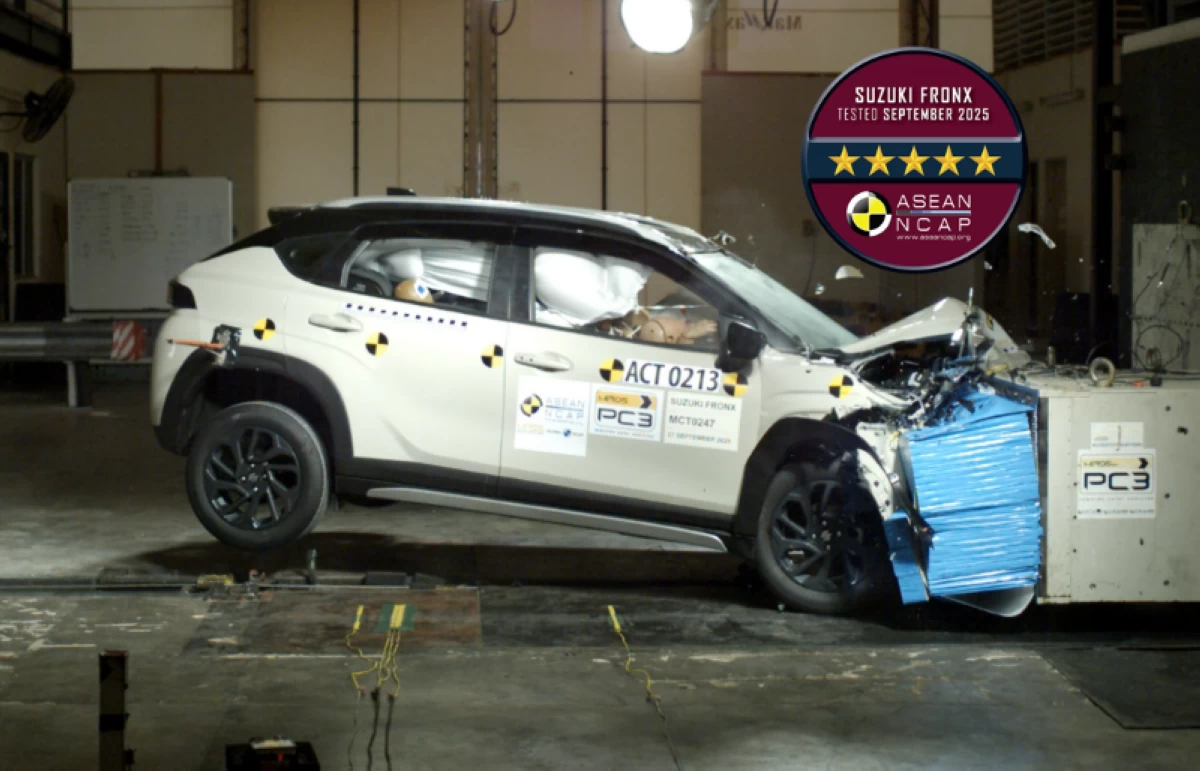
The rating applies to the 2025 model year Suzuki Fronx manufactured in Indonesia. ASEAN NCAP testing awarded the vehicle a total score of 77.70 points, based on its performance in adult occupant protection, child occupant protection, safety assist technologies, and motorcyclist safety. Together, these categories measure how well a vehicle protects occupants during a crash and how effectively it supports drivers in avoiding collisions.
Central to the Fronx’s safety performance is Suzuki’s HEARTECT platform. The structure uses high-rigidity materials engineered to absorb and distribute impact energy, helping to limit cabin deformation during a collision. This is complemented by a six-airbag system that includes front, side, and curtain airbags, providing coverage for occupants in both seating rows.
Child safety was also evaluated as part of the ASEAN NCAP assessment. The Fronx is equipped with ISOFIX anchor points and top tether mounts to support secure child seat installation. Seatbelt reminders are fitted across all seating positions, encouraging consistent restraint use for every passenger.

Active safety technologies contributed significantly to the overall score. The Fronx is equipped with Suzuki Safety Support, which includes Forward Collision Warning and Autonomous Emergency Braking to assist in detecting and responding to potential frontal collisions. Lane Departure Warning, Lane Departure Prevention, and Lane Keep Assist help drivers maintain lane position, particularly during longer drives or in situations where attention may momentarily drop.
Given regional traffic conditions, motorcyclist awareness forms a key part of the safety evaluation. Systems such as Blind Spot Detection and Rear Cross Traffic Alert enhance the driver’s ability to detect vehicles approaching from adjacent lanes or crossing behind the vehicle while reversing, scenarios that are directly addressed in ASEAN NCAP testing.
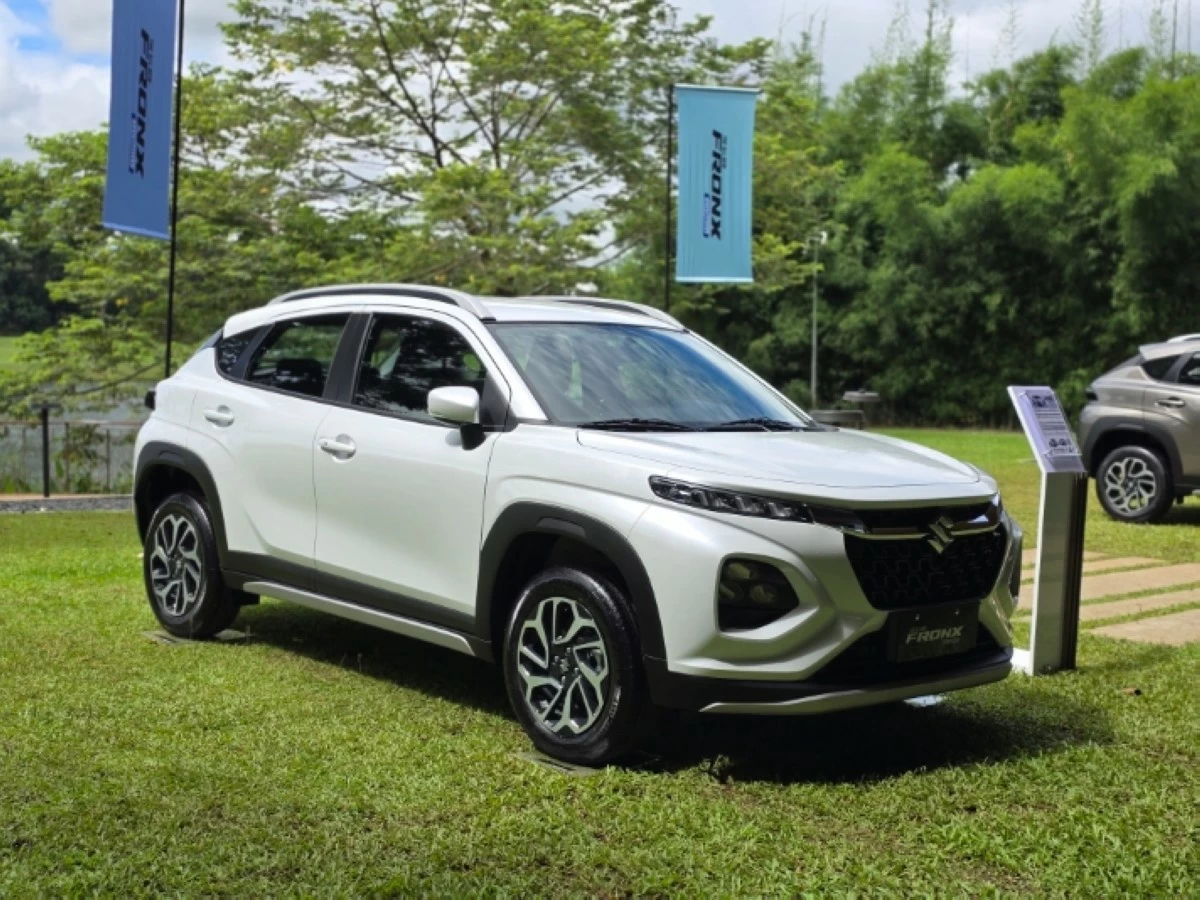
The Fronx also comes standard with Electronic Stability Control, Anti-lock Braking System, Electronic Brakeforce Distribution, and Hill Hold Control. These systems work together to support vehicle stability, braking control, and traction during sudden maneuvers or when driving on inclines. Visibility support is provided by Auto High Beam, which adjusts headlamp output automatically to improve night driving conditions while minimizing glare to other road users.
Positioned as a compact crossover for urban and everyday use, the Fronx reflects the broader shift toward bringing advanced safety features into smaller vehicles. Its five-star ASEAN NCAP rating aligns with Suzuki’s stated philosophy of being “By Your Side,” underscoring safety as a fundamental element of the vehicle’s design rather than an added extra.
With independent verification under current ASEAN NCAP standards, the Suzuki Fronx enters the market with a safety profile that reflects both evolving regulatory expectations and the growing demand for strong occupant protection in compact vehicles.

Related Tags

Suzuki Philippines (SPH) Mild hybrid electric vehicle (MHEV)
ADVERTISEMENT
.most-popular .layout-ratio{ padding-bottom: 79.13%; } @media (min-width: 768px) and (max-width: 1024px) { .widget-title { font-size: 15px !important; } }

{{ articles_filter_1561_widget.title }}

.most-popular .layout-ratio{ padding-bottom: 79.13%; } @media (min-width: 768px) and (max-width: 1024px) { .widget-title { font-size: 15px !important; } }

{{ articles_filter_1562_widget.title }}

.most-popular .layout-ratio{ padding-bottom: 79.13%; } @media (min-width: 768px) and (max-width: 1024px) { .widget-title { font-size: 15px !important; } }

{{ articles_filter_1563_widget.title }}

{{ articles_filter_1564_widget.title }}

.mb-article-details { position: relative; } .mb-article-details .article-body-preview, .mb-article-details .article-body-summary{ font-size: 17px; line-height: 30px; font-family: "Libre Caslon Text", serif; color: #000; } .mb-article-details .article-body-preview iframe , .mb-article-details .article-body-summary iframe{ width: 100%; margin: auto; } .read-more-background { background: linear-gradient(180deg, color(display-p3 1.000 1.000 1.000 / 0) 13.75%, color(display-p3 1.000 1.000 1.000 / 0.8) 30.79%, color(display-p3 1.000 1.000 1.000) 72.5%); position: absolute; height: 200px; width: 100%; bottom: 0; display: flex; justify-content: center; align-items: center; padding: 0; } .read-more-background a{ color: #000; } .read-more-btn { padding: 17px 45px; font-family: Inter; font-weight: 700; font-size: 18px; line-height: 16px; text-align: center; vertical-align: middle; border: 1px solid black; background-color: white; } .hidden { display: none; }
function initializeAllSwipers() { // Get all hidden inputs with cms_article_id document.querySelectorAll('[id^="cms_article_id_"]').forEach(function (input) { const cmsArticleId = input.value; const articleSelector = '#article-' + cmsArticleId + ' .body_images'; const swiperElement = document.querySelector(articleSelector); if (swiperElement && !swiperElement.classList.contains('swiper-initialized')) { new Swiper(articleSelector, { loop: true, pagination: false, navigation: { nextEl: '#article-' + cmsArticleId + ' .swiper-button-next', prevEl: '#article-' + cmsArticleId + ' .swiper-button-prev', }, }); } }); } setTimeout(initializeAllSwipers, 3000); const intersectionObserver = new IntersectionObserver( (entries) => { entries.forEach((entry) => { if (entry.isIntersecting) { const newUrl = entry.target.getAttribute("data-url"); if (newUrl) { history.pushState(null, null, newUrl); let article = entry.target; // Extract metadata const author = article.querySelector('.author-section').textContent.replace('By', '').trim(); const section = article.querySelector('.section-info ').textContent.replace(' ', ' '); const title = article.querySelector('.article-title h1').textContent; // Parse URL for Chartbeat path format const parsedUrl = new URL(newUrl, window.location.origin); const cleanUrl = parsedUrl.host + parsedUrl.pathname; // Update Chartbeat configuration if (typeof window._sf_async_config !== 'undefined') { window._sf_async_config.path = cleanUrl; window._sf_async_config.sections = section; window._sf_async_config.authors = author; } // Track virtual page view with Chartbeat if (typeof pSUPERFLY !== 'undefined' && typeof pSUPERFLY.virtualPage === 'function') { try { pSUPERFLY.virtualPage({ path: cleanUrl, title: title, sections: section, authors: author }); } catch (error) { console.error('ping error', error); } } // Optional: Update document title if (title && title !== document.title) { document.title = title; } } } }); }, { threshold: 0.1 } ); function showArticleBody(button) { const article = button.closest("article"); const summary = article.querySelector(".article-body-summary"); const body = article.querySelector(".article-body-preview"); const readMoreSection = article.querySelector(".read-more-background"); // Hide summary and read-more section summary.style.display = "none"; readMoreSection.style.display = "none"; // Show the full article body body.classList.remove("hidden"); } document.addEventListener("DOMContentLoaded", () => { let loadCount = 0; // Track how many times articles are loaded const offset = [1, 2, 3, 4, 5, 6, 7, 8, 9, 10]; // Offset values const currentUrl = window.location.pathname.substring(1); let isLoading = false; // Prevent multiple calls if (!currentUrl) { console.log("Current URL is invalid."); return; } const sentinel = document.getElementById("load-more-sentinel"); if (!sentinel) { console.log("Sentinel element not found."); return; } function isSentinelVisible() { const rect = sentinel.getBoundingClientRect(); return ( rect.top < window.innerHeight && rect.bottom >= 0 ); } function onScroll() { if (isLoading) return; if (isSentinelVisible()) { if (loadCount >= offset.length) { console.log("Maximum load attempts reached."); window.removeEventListener("scroll", onScroll); return; } isLoading = true; const currentOffset = offset[loadCount]; window.loadMoreItems().then(() => { let article = document.querySelector('#widget_1690 > div:nth-last-of-type(2) article'); intersectionObserver.observe(article) loadCount++; }).catch(error => { console.error("Error loading more items:", error); }).finally(() => { isLoading = false; }); } } window.addEventListener("scroll", onScroll); });

Sign up by email to receive news.