






Manila Bulletin
 Philippines
National
YEARENDER: Senate 2025, a year of power struggles, cleansing and accountability
Philippines
National
YEARENDER: Senate 2025, a year of power struggles, cleansing and accountability
Philippines
National
YEARENDER: Senate 2025, a year of power struggles, cleansing and accountability
YEARENDER: Senate 2025, a year of power struggles, cleansing and accountability
Published Dec 26, 2025 02:39 pm


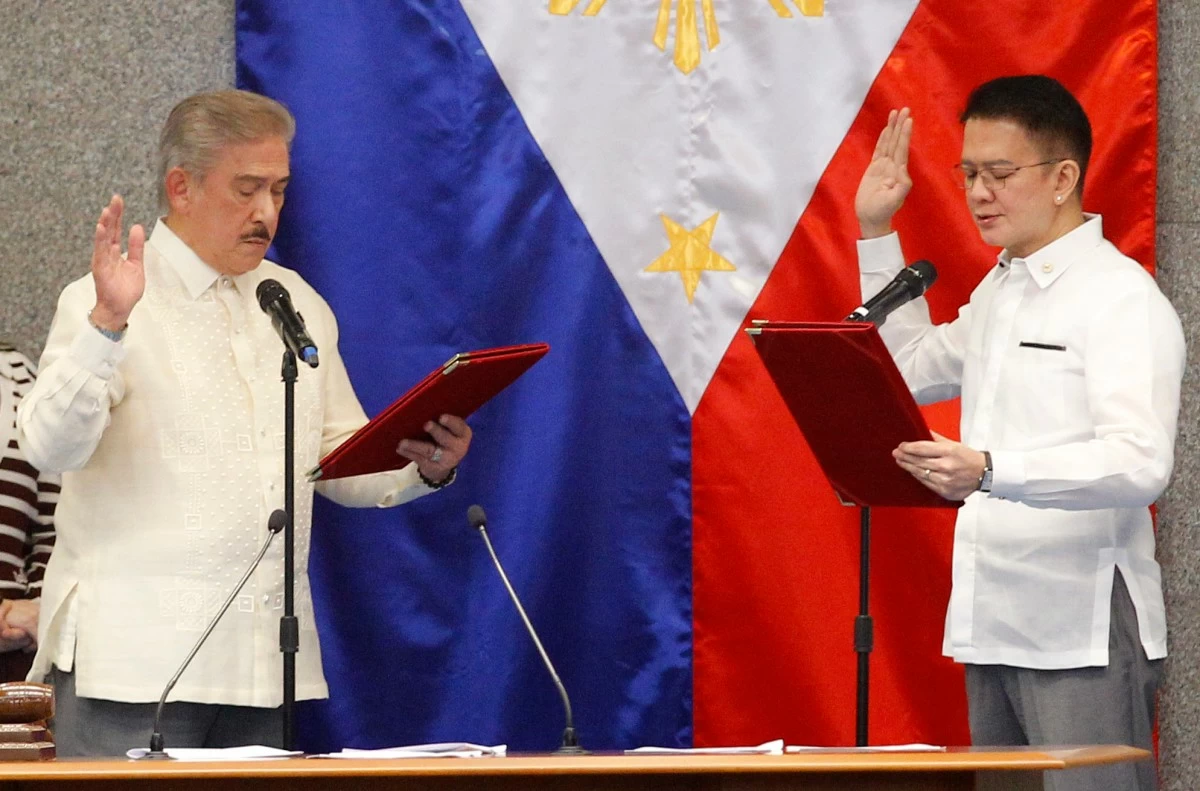
Way before public anger simmered over the flood control controversy that gripped the
nation during the third quarter of this year, the Senate was already flooded with scenarios
of power shifts and power struggles.
With the entry of 12 new and former senators who won in the 2025 midterm elections,
the Senate saw the return of key figures in the opposition—Senators Paolo “Bam”
Aquino IV and Francis “Kiko” Pangilinan—against a backdrop of a political feud between
the Marcos and Duterte camps.
The political tension build-up started in August after the Senate, which has already been
preparing for the impeachment trial of Vice President Sara Duterte, agreed to archive
the impeachment case against her following a Supreme Court (SC) ruling that declared
the impeachment complaint of the House of Representatives was unconstitutional.
There were 19 senators who voted in favor of this move, four registered their
opposition and one abstained when the chamber, then led by Senate President
Francis “Chiz” Escudero, approved the motion of Sen. Rodante Marcoleta to “adhere to
the immediately executory decision of the SC”, and effectively transferred the
impeachment complaint to the archives.
Escudero then underscored the SC’s role as the final interpreter of the Constitution,
much to the dismay of the various sectors that wanted the impeachment of the vice
president to push through.
“Respect for the rule of law requires all of us to adhere to final or immediately executory
court decisions, even when there’s a winner and a loser,” Escudero had said, warning
against “cherry-picking” court rulings.
Prior to this, the Senate, under Escudero’s leadership has been preparing for Duterte’s
impeachment trial, even going as far as preparing the robes that members of the
Senate will be using for the proceedings.
Despite having received the copies of the Articles of Impeachment from the House of
Representatives on Feb. 5, 2025, which also coincided with the last day of Congress’
session, the Upper Chamber did not convene immediately as an impeachment court.
Senators then went on recess in preparation for the May 2025 elections.
Back then, Escudero maintained that the Senate cannot start the proceedings until after
Congress reconvenes on June 2, 2025. He set the trial proper on July 30 and
maintained that the Duterte trial cannot legally start during the 2025 election campaign
period since an ongoing session is required for the Senate to convene as an
impeachment court.
While some legal experts have argued before the SC that the Senate cannot “escape its
constitutional duty” to immediately start the trial, some sectors sought to prevent the
start of the trial, while Sara Duterte also petitioned for the nullifcation of the
impeachment complaint.
Then Senate Minority Leader Aquilino “Koko” Pimentel III and then Senate deputy
minority leader Risa Hontiveros—the two minority senators—attempted to formally start
the trial. Escudero had agreed to convene the Senate as an impeachment court,
administering the oath to the 22 senators.
However, the Senate later on voted on a motion by Sen. Alan Peter Cayetano to return
the articles of impeachment to the House of Representatives. Only five (5) senators
voted no to remand the impeachment complaint—Hontiveros, Pimentel, Sen. Sherwin
Gatchalian, and then senators Nancy Binay and Grace Poe.
Even though the House unanimously passed a resolution certifying the impeachment
complaint’s compliance with the Constitution, no impeachment trial commenced
following the entry of the new set of senators of the 20 th Congress.
But still the Senate postponed the commencement of trial proceedings to give the
House prosecution panel time to reconstitute, also in accordance with the new
composition of the House of the incoming 20 th Congress. Escudero then planned to
convene the court on July 29 a day after President Ferdinand “Bongbong” Marcos, Jr.’s
fourth State of the Nation Address (SONA).
But on July 25, the SC unanimously nullified the impeachment complaint, ruling that it
was “unconstitutional” due to the “one year-bar rule.” As a result, the Senate did not
hold a trial as the SC ruling meant that the upper chamber did not acquire jurisdiction of
the impeachment complaint.
The preceding weeks saw criticisms being hurled against the Senate leadership, with
Escudero facing criticisms over his controversial interpretation of the constitutional term
“forthwith.” This has caused the public to debate and accuse the Senate of delaying
tactics.
Then, barely a few months after this issue, the Senate found itself bombarded by
criticisms following the widespread flooding that submerged parts of the Philippines and
forced thousands out of their homes.
Flooded by intrigues
The anomalous flood control scandal was one of the topics that dominated the country's
political discourse in 2025, supposedly because the flood problem that affected
everyone regardless of status, especially the marginalized sector, like never before, and
placed the public at the peak of frustration. This necessitated instant and substantial
accountability from concerned individuals, especially from the part of lawmakers.
For the part of the Senate, it prompted an unprecedented series of hearings,
investigations, and the release of affidavits, with several big names being tagged,
including lawmakers, former and current officials of the Department of Public Works and
Highways (DPWH), and other key government personalities.
And once again, with the alleged involvement of some senators, including Escudero,
changes in the Senate leadership occurred with Sen. Vicente Sotto III replacing
Escudero as the Senate President.
The leadership shakeup saw Sotto now taking the helm of the Senate leadership, with
Sen. Panfilo “Ping” Lacson being the Senate President Pro Tempore and Sen. Juan
Miguel “Migz” Zubiri returning as Senate Majority Leader.
The new leadership also meant Lacson taking over the Senate Blue Ribbon Committee,
which Escudero had given to Marcoleta despite being a neophyte senator.
Initial probe
As early as August, Sen. Joel Villanueva, who was then the Senate Majority Leader,
said no senator is involved with any of the 15 contractors flagged in the P545-billion
flood control program, following President Marcos' disclosure that the firms got 20
percent of the projects.
Lacson then began a series of privilege speeches, all about the anomalous flood control
program. One of the most notable was in Aug. 27, when he revealed that accreditations
are being offered to contractors for a fee starting at P2-million.
It was also during this month that Lacson revealed a text message showing the late
former DPWH Usec. Ma. Catalina Cabral's attempt to solicit early project insertions from
Senate President Vicente Sotto III, which the latter rejected. Lacson also identified five
DPWH officials from Bulacan’s 1st DEO as the “BGC Boys,” linked to ghost and
substandard projects with casino records showing billions of pesos in cash-to-chips and
chips-to-cash transactions, raising money-laundering concerns.
Ghost, substandard projects
As a country that is no stranger to storms, a series of typhoons that led to the loss of
lives, livelihood and infrastructure, led public uproar about the government's flood
control initiatives. This led to the discovery of the existence of “ghost” and substandard
flood mitigation projects.
The Senate later started to examine the allocation and release of funds for flood control
projects amid allegations surfacing that unprogrammed funds for 2023 had been
diverted or misused. Also, it was found, through Lacson's initiatives, that several flood
control projects in Bulacan had unrealistic completion reports, reused photos, and
immediate billings, indicating falsification. During the course of the hearings it was found
that contractors often acted under coercion, using borrowed licenses or complying with
DPWH insiders’ schemes.
Villanueva and Sen. Jinggoy Estrada were among the first senators mentioned by
former DPWH engineers in the kickback scheme or the so-called "standard operating
procedure" (SOP) which implied commissions or kickbacks allegedly instigated by Brice
Hernandez and Henry Alcantara.
Villanueva allegedly received ₱150-million via proponents’ shares. Lacson later
confirmed the release of worth P600-million for Bulacan but indicated that further
hearings were necessary to clarify the flow of money and the involvement of specific
officials.
During the same period, questions arose over whether certain projects, such as multi-
purpose buildings requested by legislators, were improperly converted into flood control
projects to accommodate these funds. Former Bulacan 1st district engineer Jaypee
Mendoza testified that requests exceeding the approved budget were repurposed, with
25 percent of project allocations reportedly taken from contractors, sparking concerns
over transparency and accountability.
The kickback scheme
On Sept. 25, retired DPWH undersecretary for Operations Roberto Bernardo came
forward and submitted an affidavit revealing the intricate workings of alleged corruption.
Prior to this, Alcantara also revealed a multibillion-peso kickback scheme from 2022 to
2025, with 25 to 30 percent of project funds going to intermediaries and politicians.
Alcantara and Bernardo named multiple lawmakers, including former Senators Ramon
“Bong” Revilla, Jr., Nancy Binay, incumbent Senator Francis "Chiz" Escudero, and
former Representative Zaldy Co claiming they were involved in a system of kickbacks
and ghost projects. Bernardo described a “20-20-20-40” profit-sharing arrangement
among DPWH engineers and officials, with larger portions reportedly going to the office
heads.
Their separate affidavits also implicated Department of Education (DepEd)
Undersecretary Trygve Olaivar and Commission on Audit (COA) Commissioner Mario
Lipana, who allegedly participated in collecting or facilitating payments tied to project
approvals. Bernardo, citing his decades-long career at the DPWH, underscored his
willingness to cooperate fully with the Senate.
By October, tensions were visible as Lacson expressed frustration with the handling of
the investigations, eventually resigning from his post as the panel's chairman. Senate
President Vicente “Tito” Sotto III clarified that Lacson’s frustrations stemmed from the
contradictory pressures of holding or not holding hearings, but affirmed full support for
the committee’s work.
In November, Bernardo delivered a second supplemental affidavit, offering further
details on the alleged kickbacks. He claimed to have personally delivered cash and
managed commitments for various legislators. Once again the names of Revilla,
Estrada, Mark Villar (a former DPWH secretary), and Grace Poe, were floated.
According to Bernardo, Cabral and former DPWH Secretary Manuel Bonoan had
significant control over project allocations, influencing the National Expenditure Program
(NEP) and soliciting project titles and commitments from legislators.
Cabral's role
He revealed this as "a general rule and with very little exceptions" that it was
Cabral—with the imprimatur of the former DPWH secretaries—who had control, at the
DPWH level, "to remove, include, add, deduct or modify insertions of items" in the
National Expenditure Program (NEP) for Infrastructure or those pertaining to DPWH.
It was also Cabral, he said, who would communicate and meet legislators to inform
them of the amount of their allocations and ask them for project titles that they want to
include in the DPWH budget. Moreover, he said it was Cabral who had ‘total influence
and authority’ in the preparation and finalization of the NEP for Infrastructure.
Bernardo recounted delivering hundreds of millions in commitments to Revilla and
Estrada, sometimes in boxes and paper bags, for projects ostensibly included in the
General Appropriations Act (GAA). Transactions with Binay, Angara, Escudero, and Poe
were allegedly handled through intermediaries, such as aides or staff, rather than
directly with the lawmakers. Villar, Angara, Poe and Binay, categorically denied
involvement.
Meanwhile, in his affidavit, Bernardo expressed remorse for participating in the system,
describing his actions as stemming from a desire to maintain professional relationships
and ensure smooth operations within the DPWH.
On November 18, Lacson addressed allegations from Co that President Marcos had
directed ₱100-billion in project insertions and received a supposed ₱25-billion
commission.
Lacson rejected these claims, noting that certain individuals had
misrepresented the President without his authorization. Bernardo’s admissions of
delivering kickbacks, he clarified, did not implicate the Chief Executive but were made to
intermediaries, such as Olaivar.
No holiday furlough
The Senate also did not provide any holiday furlough to the personalities involved in the
flood control anomalies who were cited for contempt.
On December 23, Lacson confirmed that contractor Pacifico “Curlee” Discaya and three
former DPWH engineers—Hernandez, Mendoza, and Alcantara—would not be granted
holiday furloughs due to security concerns and impending arrest warrants. Families
were allowed limited visits, while hearings and legal proceedings continued. Lacson
emphasized the importance of the Ombudsman filing charges promptly to uphold
accountability and deter further misappropriation of public funds.
The Senate’s investigation into anomalous flood control projects also revealed a
complex network of alleged corruption spanning legislators, high-ranking DPWH
officials, contractors, and intermediaries. Through testimonies and affidavits, particularly
those of Bernardo, the committee traced patterns of ghost projects, unprogrammed
funds, and monetary commitments in the hundreds of millions of pesos. While several
lawmakers have denied wrongdoing, and some claims involve intermediaries rather
than principals, the hearings underscored systemic vulnerabilities in budget oversight
and project allocation processes.
As the year closes, the Senate’s probe, under Senate Blue Ribbon panel's direction
through Lacson, continues to highlight the need for transparency, accountability, and
institutional reforms to ensure that public funds meant for critical infrastructure, such as
flood control, genuinely serve the Filipino people.
Livestreamed bicam
For the first time in Philippine history, the Senate also initiated to livestream the
bicameral conference committee (bicam) deliberations on the national budget. Sen.
Sherwin Gatchalian, chairman of the Senate Committee on Finance, said this allowed
unprecedented transparency, giving the public an opportunity to see how lawmakers
reconciled differences between the Senate and House versions of the General
Appropriations Bill (GAB).
This historic approach signaled a significant shift in how Congress handles the nation’s
finances, with reforms aimed at ensuring accountability, traceability, and citizen
oversight.
The process began on December 13, 2025, at the Philippine International Convention
Center (PICC) in Pasay City. The first day of hearings lasted more than 10 hours,
covering the budgets of major agencies such as the Department of Education (DepEd),
Commission on Higher Education (CHED), Department of Health (DOH), and
Department of Agriculture (DA) and their attached agencies. For the first time, the
proceedings were livestreamed, allowing citizens to witness firsthand the discussions
between the Senate and House contingents.
Gatchalian, and House Committee on Appropriations Chair Mikaela Angela Suansing,
led their respective contingents, ensuring that both sides engaged in detailed scrutiny
rather than relying on summaries or backroom negotiations.
The Senate leadership and the majority welcomed this “new normal” in budget
preparation. As they pointed out, the public could now follow every step, from
subcommittee deliberations to full Senate and House approvals, all the way to the final
bicam reconciliation. Supporting documents were made available for auditors, civil
society groups, and the media, making the process fully traceable and verifiable.
According to Senate leadership, this transparency was more than a symbolic
gesture—it became policy, not just a catchphrase.
The bicam faced particular scrutiny over the Department of Public Works and Highways
(DPWH) budget, the most controversial agency in this budget cycle due to past
allegations of overpricing and “ghost” projects. During the hearings, DPWH Secretary
Vince Dizon personally attended and acknowledged that the department’s initial data
submission had been insufficient for accurate budget allocation. The committee required
additional project-level data, incorporating regional adjustment factors, hauling
distances, and local market behaviors, to ensure a realistic computation of allocations.
These efforts led to a substantial reduction in DPWH’s budget, slashing approximately
P300-billion from the original P881-billion allocation in the National Expenditure
Program (NEP). Even the House-approved allocation, which was lower than the NEP,
was further reduced. Importantly, only foreign-assisted projects worth P14.5-billion
remained, honoring commitments to multilateral partners like the World Bank, Japan
International Cooperation Agency (JICA), and Korea.
The reallocation of P20.773-billion freed by these reductions benefited other critical
sectors, including P16.5-billion for PhilHealth and P4.25-billion for the National Disaster
Risk Reduction and Management Fund (NDRRMF).
Key reforms highlighted in the 2026 budget process emphasized accountability and
citizen oversight:
Open and livestreamed hearings: Every deliberation, from subcommittee to bicam, was
livestreamed and archived, allowing the public to monitor the entire budget process.
Elimination of “allocables” and ghost projects: Lawmakers removed vague allocations
and overpricing, ensuring all line items were traceable and measurable.
Strict safeguards against political interference
Lacson and Gatchalian emphasized that this time, politicians would no longer influence
or manipulate social programs. Programs like the Medical Assistance to Indigent and
Financially Incapacitated Patients (MAIFIP) under Universal Health Care (UHC) are now
strictly implemented according to law.
Detailed project documentation: Projects such as farm-to-market roads (FMR) now
include exact coordinates and program of work submissions. This prevents vague or
unimplementable projects, ensuring funds are properly spent.
The Senate also made sure to activate the Joint Congressional Oversight on Public
Expenditures: This oversight body will operate year-round, monitoring spending and
project implementation, ensuring funds are both used and properly accounted for.
The bicam deliberations continued for four hearings, reconciling differences between
the House and Senate versions. The final session concluded before dawn on December
18, 2025, with a formal adjournment at 2:22 a.m., marking the completion of a historic
and transparent budget process. Senate leaders, including Lacson and Gatchalian,
lauded the efforts of their colleagues for prioritizing transparency and accountability over
speed.
Senators Francis “Kiko” Pangilinan and Gatchalian underscored that this year’s budget
represents a paradigm shift in the legislative process. Gone are the days of secretive
“alok-able” talks, overpriced projects, and political middlemen influencing allocations.
With all hearings livestreamed and documented, citizens can now scrutinize the budget
from start to finish.
Education received the largest share of the budget at P1.38 trillion, approximately 20
percent of the total, supporting learning recovery, classroom construction, and teacher
salaries. Funding for health, food security, and employment programs was also carefully
safeguarded through clearly documented line items, realistic timelines, and measurable
outcomes.
The bicam also instituted practical reforms to prevent unspent or misused funds, a
recurring challenge in past budgets. By monitoring expenditures monthly, the oversight
committee can ensure that agencies use allocated funds efficiently and transparently.
As Gatchalian noted, the goal is to enable “careful spending—or not spending
either”—so that government resources genuinely respond to citizens’ needs.
Lacson expressed pride in the bicam panel’s achievements, noting that despite
imperfections, the safeguards and oversight mechanisms in place make this a budget
every Filipino can trust. He particularly highlighted the prohibition of guarantee letters,
the elimination of political influence in social programs, and the use of project
coordinates to enhance public monitoring.
The 2026 national budget bicam process not only consolidated the P6.793-trillion
General Appropriations Bill but also set a new standard for openness, accountability,
and citizen participation in government budgeting. With reforms addressing
transparency, traceability, and oversight, this year’s process demonstrated that
deliberate, principled discussion—even if longer and more detailed—produces a budget
that is responsive, corruption-free, and worthy of public trust.