






Manila Bulletin
 Business
Trade & Industry
The rice farmer's son who built the internet age: A tribute to Dado Banatao
Business
Trade & Industry
The rice farmer's son who built the internet age: A tribute to Dado Banatao
Business
Trade & Industry
The rice farmer's son who built the internet age: A tribute to Dado Banatao
The rice farmer's son who built the internet age: A tribute to Dado Banatao
Published Dec 26, 2025 04:03 pm


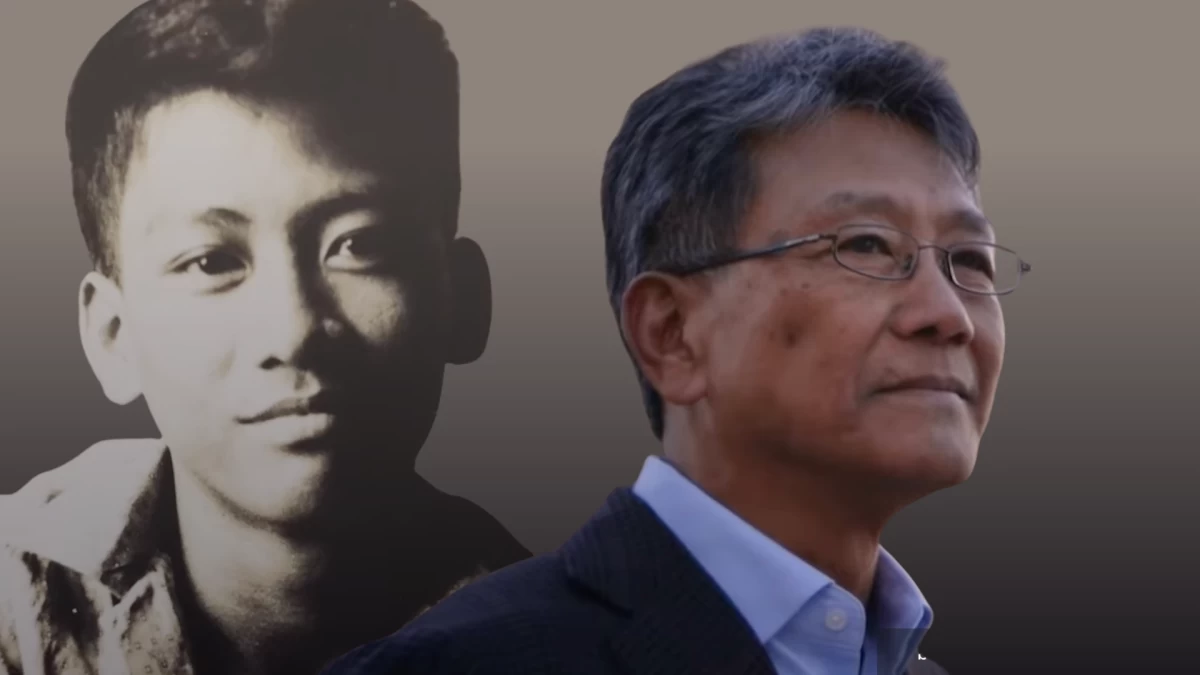
Diosdado “Dado” Banatao, a venture capitalist who believes in the Filipino talent.
If you are reading this on a computer or a smartphone, you are looking at the digital fingerprints of Diosdado “Dado” Banatao. He didn’t just participate in the digital revolution; he designed the hardware that made it possible.
From the dirt tracks of Cagayan Valley to the boardrooms of Silicon Valley, Banatao’s life was a masterclass in what happens when raw grit meets high-level physics. A tech titan who never forgot his roots, Banatao passed away on Dec. 25 at 79 in the United States (US), leaving behind a legacy that remains the bedrock of the modern computing era.
Banatao was the son of a rice farmer and a housekeeper in Malabbac, Iguig. His early years were defined by walking barefoot to school—a reality that stayed with him even after he began flying his own planes and funding multi-million dollar startups.
“My inspiration came from my father, who was just a simple farmer, but he climbed his way up so that we could go to school,” Banatao once shared in an interview. “My passion for studying and working hard came from my family... I did not give up, and my father did not give up either.”
In the mid-1980s, Banatao changed the trajectory of the personal computer forever. He developed the first system logic chip set for IBM’s PC-AT. Before his intervention, computers were clunky assemblies of hundreds of individual chips; Banatao condensed that complexity, making machines faster, smaller, and more affordable.
He followed that by inventing the graphics accelerator chip, moving the “brain” of a computer’s visuals to a dedicated space. Every time a screen renders a high-definition image today, it owes a debt to his early startups, Mostron and Chips and Technologies.
Despite his success—including selling companies to giants like Intel—Banatao remained a “hardware guy” at heart. He was an engineer who spoke in terms of rigor and critical thinking. He often credited his success to the Jesuit education he received in Tuguegarao, where he learned that math and science were not just subjects, but tools for survival.
“Being in Silicon Valley, it’s a matter of ‘you better survive or you’re done,’” he said. “It is a natural way of weeding out those who cannot compete. Once you are there and you survive, that is pretty much your advantage over everyone else.”
In his later years, Banatao shifted his focus from building chips to building people. Through Tallwood Venture Capital and the Philippine Development Foundation (PhilDev), he poured his wealth back into his homeland. He wasn’t interested in simple charity; he wanted to spark a mindset shift. He famously pushed for more “rigor” in Philippine engineering, believing that Filipino talent was world-class but required a more competitive environment to truly excel.
Arthur Tan, former CEO of Integrated Micro-Electronics Inc. (IMI), recalled that Banatao’s primary mission was to use science and technology to forge a stronger national economy.
“The greatest lesson I’ve learned from Dado is humility,” Tan said. “He was making sure those opportunities exist for other talented Filipinos... so they can find the same success he did.”
This sentiment is echoed by tycoon Jaime Zobel de Ayala of Ayala Corp., who observed Banatao’s deliberate approach to innovation.
“He is a legacy for anyone who thinks things are unreachable,” Zobel noted. “He creates impact by lighting many more fires in the engineering field.”
But to Dado’s wife, Maria, he was a man without pretension—the guy who served her Twinkies and orange juice on their first date.
“Dado is a very honest guy... He’s not pretending to be ‘the smart guy,’ but I knew he was someone very focused on what he wanted to do in life,” she recalled.
However, to the rest of the world, he was the visionary who consumerized GPS and paved the way for the internet age. To the young scholars at the AIM-Dado Banatao Incubator, he was living proof that a kid from a remote province could teach the world how to think.
Maria emphasized that her husband’s most important lesson wasn’t technical, but psychological: “More than just having more ‘Dados,’ I think we need more risk-takers. That is probably the biggest thing you can learn from him.”