







Peace on earth, justice on the ground
Published Dec 26, 2025 12:01 am
|
Updated Dec 25, 2025 03:37 pm


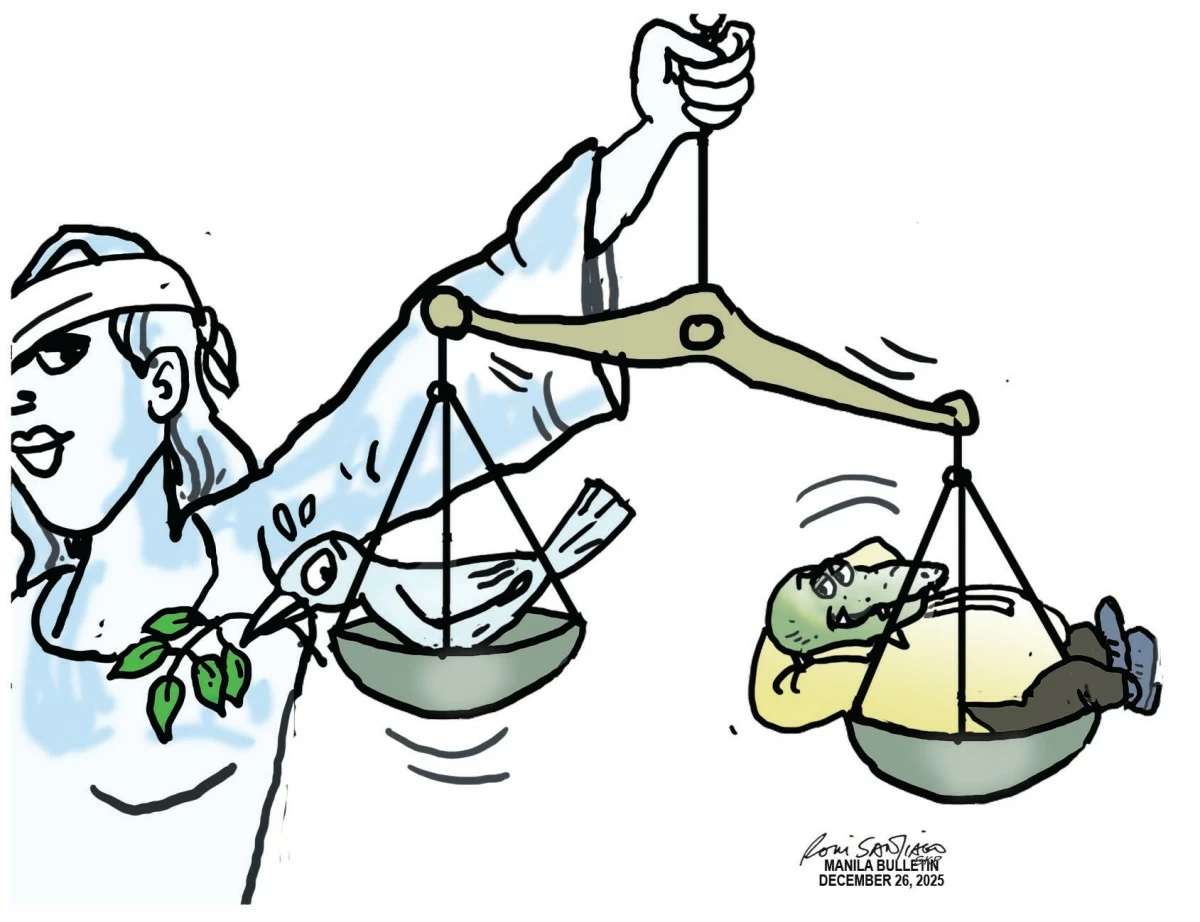
“Peace on earth, goodwill toward men” is not a phrase reserved for carols and Christmas cards during the holiday season. In biblical context, it is a moral summon. It announces not the absence of conflict, but the presence of truth, justice, and accountability. It is a call to reflect on God’s love and live with inner peace. But when these are delayed, obscured, or denied, peace becomes fragile—and goodwill rings hollow.
This situation confronts us today amid the slow and disorderly investigations surrounding anomalous flood control projects and the unresolved questions following the controversial death of former Department of Public Works and Highways undersecretary Ma. Catalina Cabral. The vacuum created by delay and silence has been filled by suspicion, rumor, and conspiracy. In a nation long acquainted with impunity, such an atmosphere is unfortunate and treads on dangerous ground.
The Scripture repeatedly links peace with justice. The prophet Isaiah reminds us that “the fruit of righteousness will be peace (Isaiah 32:17).” Peace is not a product of official statements or is enforced by forgetting. It is earned through transparent processes that honor truth. When investigations drag on without clarity, when findings are partial or selectively disclosed, or when key personalities declare they have the goods but decline to expose them, these acts unintentionally invite public distrust and anger. The result is not calm, but collective unease.
Legally, the government bears the first and heaviest burden. The state must ensure that investigations—whether into public works anomalies or controversial deaths—are independent, competent, and insulated from political pressure. Timelines must be clear, findings must be evidence-based, and conclusions must be communicated plainly to the public. Justice delayed is not only justice denied; it is justice destabilizing, eroding confidence in democratic order itself.
Morally, government officials must remember that public office is stewardship—it is a public trust. The biblical ethic of servant leadership rejects secrecy that protects power at the expense of truth. If peace is to be more than a slogan, accountability must be embraced not as a threat, but as a duty owed to the people.
The private sector, particularly contractors, consultants, and financiers involved in infrastructure projects, is not morally neutral. Profit divorced from integrity corrodes the common good. Businesses must submit to scrutiny, cooperate fully with lawful inquiries, and reject the culture of silence that enables corruption. Ethical compliance is a civic obligation, not an act of charity.
Yet peace cannot be outsourced to institutions alone. Each Filipino has a role. In an age of instant outrage and viral speculation, moral restraint is essential. To seek justice does not require surrendering to rumor or sensationalism. Truth demands patience, discernment, and respect for due process. Goodwill to one another means resisting the temptation to weaponize grief or uncertainty for political ends.
The biblical vision of peace is demanding because it is honest. It insists that light be brought into dark places, even when doing so is uncomfortable. It calls societies to mourn responsibly, to question courageously, and to conclude wisely.
Peace on earth will not come through denial or distraction. It will come when truth is pursued without fear, justice is administered without favor, and goodwill is practiced not as sentiment, but as shared moral resolve. Only then can a wounded nation move forward—not toward forgetting—but toward healing.