








At A Glance
- Through the BPI Sinag Program and in partnership with Bayan Academy, the BPI Foundation has been nurturing entrepreneurs who use business as a force for social good.
- Through initiatives like Sinag, the Foundation hopes to complement national priorities for inclusive growth, poverty reduction, and environmental stewardship.
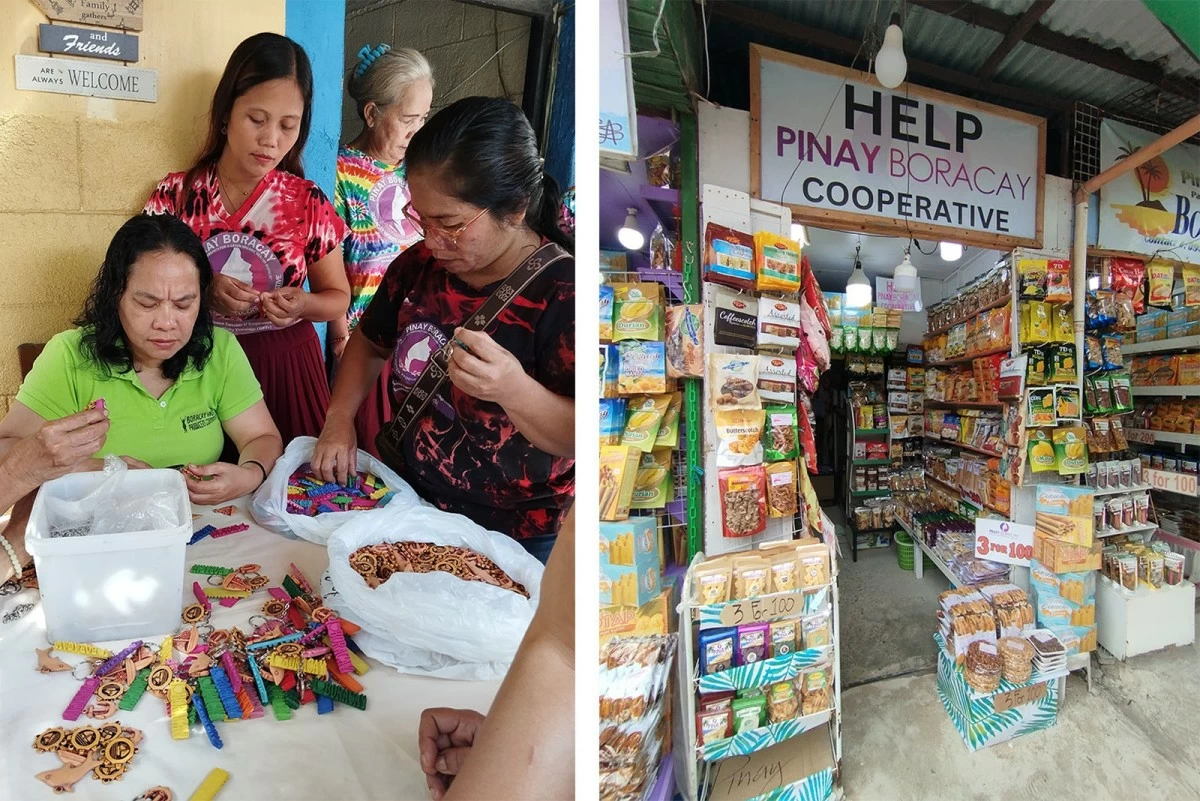
BPI Sinag supports Pinay Boracay, the brand of the Boracay Women Producers Cooperative, highlighting women’s empowerment through sustainable livelihoods that uplift their communities.
By Ma. Carmina T. Marquez, Executive Director of BPI Foundation
Across the Philippines, a new kind of enterprise is changing the way business is done, one that blends purpose with profit. These are called social enterprises, which are businesses that prove economic growth and social impact can go hand in hand, transforming lives while helping build a more inclusive economy.
The 2021 National Social Enterprise Development Roadmap Executive Report by the Bayan Innovation Group, with support from BPI Foundation, describes social enterprises as organizations that operate as viable businesses while pursuing a clear socio-environmental mission aligned with the Sustainable Development Goals (SDGs). They differ from traditional enterprises because the majority of their benefits are directed toward advancing this mission. Regardless of their legal form as corporations, cooperatives, non-governmental organizations (NGOs), or associations, social enterprises are defined by their focus on the triple bottom line: people, planet, and profit.
These changemakers embody a powerful idea: doing good is good business.
Empowering enterprises, empowering communities
For BPI Foundation, empowering social enterprises has long been at the heart of its inclusive development agenda. Through the BPI Sinag Program and in partnership with Bayan Academy, the Foundation has been nurturing entrepreneurs who use business as a force for social good.
Since its launch 11 years ago, BPI Sinag has supported over various social enterprises through mentorship, training, and access to finance. These enterprises work across a range of sectors— from sustainable agriculture and education to health care and environmental innovation. Through Sinag’s capacity-building programs, these enterprises are equipped to grow their operations, attract investment, and expand their community impact.
This program also links Sinag alumni to new markets and funding opportunities, helping them scale responsibly while staying true to their mission. Many graduates have since become advocates themselves, creating sustainable livelihoods and driving women’s and youth empowerment in their own communities.
In 2025, we launched the BPI Sinag in Focus Business Challenge for social enterprises with focus on sustainable business models that address social and environmental problems, specifically in agribusiness, education, health, energy, technology, and other marginalized sectors. The top social enterprises that qualified under this program are given free boot camp training, cash grants, and mentoring sessions.
Each success story reinforces our belief that empowering social enterprises is a vital step toward building an inclusive and sustainable economy.
Raising awareness, addressing misconceptions
The BPI Sinag program is a cornerstone of the Foundation’s work, but its support for social enterprises extends further. BPI Foundation has also partnered with the Bayan Family of Foundations (BFF), as the former is one of the first movers of the National Social Enterprise Development Roadmap. This multi-sectoral movement aims to strengthen the social enterprise ecosystem in the Philippines.
Despite the proven benefits social enterprises deliver, the sector often faces a significant challenge: a lack of public awareness and some misconceptions. The 2021 executive report by the Bayan Innovation Group highlighted some myths of what social enterprises are. Even entrepreneurs are subjected to the notion that social enterprises are not profitable, that they are only micro-enterprises, or that they cease to be "social" once they scale into small enterprises.
These negative notions can hinder the sector's advancement. Therefore, a core tenet of the Roadmap is promoting the idea that social enterprises must be run as commercially viable organizations to achieve the necessary scale and sustainability to deliver their social mission effectively.
To address this, the Roadmap mobilizes three key strategies: establishing a sector-led governance system represented by national sectoral authorities, initiating a sector-led social enterprise registry and accreditation system, and advocating for the recognition of social enterprises through supportive policies.
This vision was further advanced during the 2025 Philippine Social Enterprise Roadmap Conference, held from November 5 to 7. The event gathered entrepreneurs, the public and private sector, civil society, and the academe under the theme “Technology Innovations in Social Enterprises and the Social and Solidarity Economy for the SGDs.” It featured the launch of the National Social Enterprise Registry and discussions on financing, impact measurement, and youth entrepreneurship. This highlights the growing role of social enterprises in driving inclusive development.
These initiatives are crucial to BPI Foundation's operational support for social enterprises. However, for these enterprises to truly flourish and reach their full potential, a supportive national policy framework is essential.
Towards an enabling policy environment
While the social enterprise sector continues to thrive, it still lacks a dedicated legal framework. Bayan Innovation Group’s executive report further found that there are currently many policies that benefit social enterprises, but these remain fragmented and not specifically designed to address the sector’s unique needs. The proposed Poverty Reduction through Social Entrepreneurship (PRESENT) Act seeks to address this gap. The bill aims to establish a National Council for Social Enterprises, expand access to financing and capacity-building, and integrate social enterprises into national poverty reduction strategies. Most importantly, it institutionalizes the triple bottom line approach. This measures success not only through profit, but also through impact on people and the planet.
Once enacted, the bill can unlock more opportunities for collaboration and growth and create a stronger ecosystem where social enterprises can thrive.
Partnering for inclusive development
BPI Foundation believes that sustainable progress requires partnership, between the private sector, government, and civil society. The Foundation is committed to working with the government to co-develop programs and policies that strengthen the social enterprise ecosystem.
By combining policy support, financial inclusion, and capacity-building, these partnerships can expand opportunities for Filipino entrepreneurs and empower more communities nationwide. Through initiatives like Sinag, the Foundation hopes to complement national priorities for inclusive growth, poverty reduction, and environmental stewardship.
As BPI moves closer to its 175th anniversary, this commitment grows even stronger. The Foundation’s journey reflects BPI’s broader purpose: to “Do More” for Filipinos by supporting enterprises that create lasting social value.
Building a future of shared prosperity
Social enterprises remind us that business success is most meaningful when shared. They show that innovation, compassion, and resilience can drive national progress and that when given the right support, small ideas can grow into powerful movements for change.
BPI Foundation remains steadfast in its mission to help these changemakers thrive. Through partnership, advocacy, and continued investment in Filipino ingenuity, the Foundation envisions a future where every enterprise uplifts lives and every community has the chance to prosper.
Together, we can build a nation where purpose and progress move forward as one, where the success of every social enterprise becomes a success for the entire Philippines.