






Manila Bulletin
 Philippines
National
DHSUD rolls out modular shelters as new benchmark for disaster housing
Philippines
National
DHSUD rolls out modular shelters as new benchmark for disaster housing
Philippines
National
DHSUD rolls out modular shelters as new benchmark for disaster housing
DHSUD rolls out modular shelters as new benchmark for disaster housing
Published Dec 26, 2025 02:52 pm


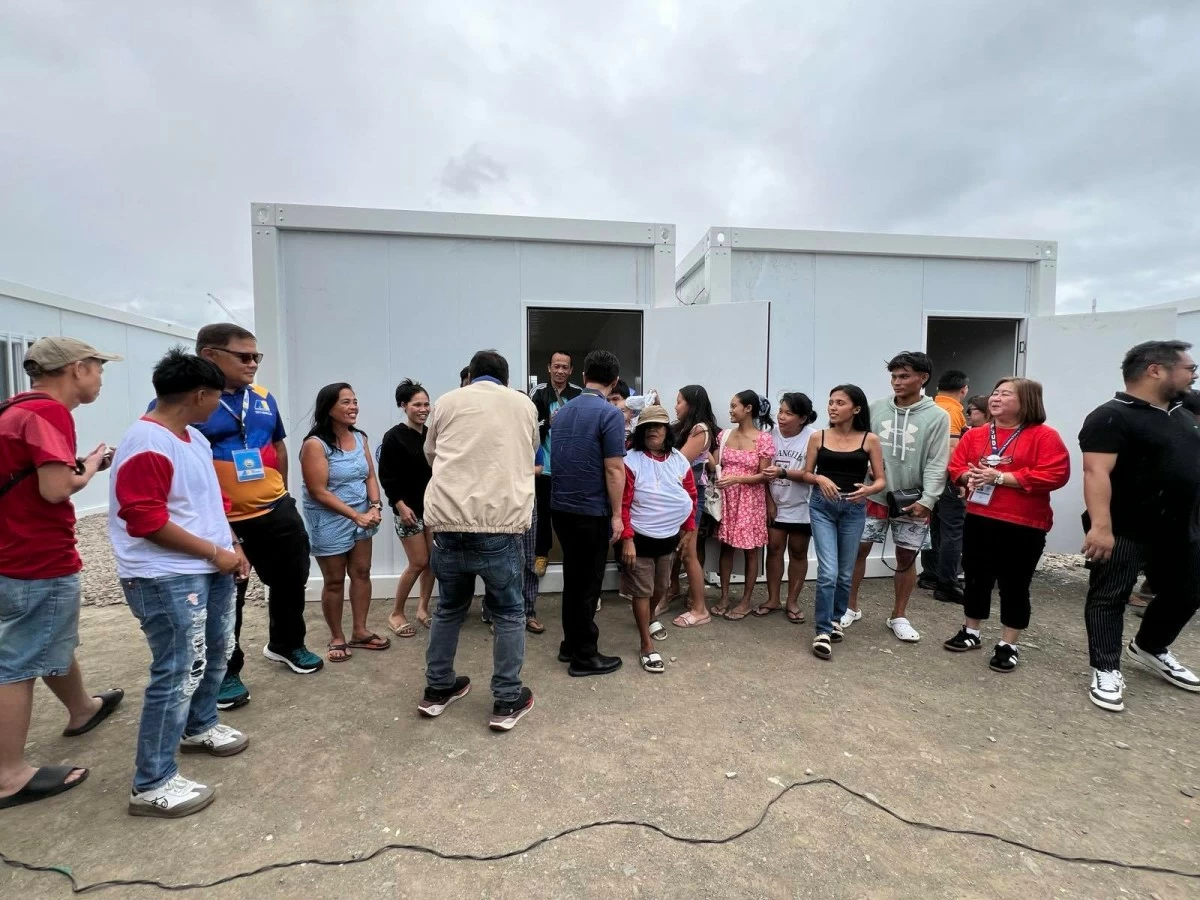
Families rendered homeless by Super Typhoon "Uwan" in Mandaue City, Cebu receive modular shelter units (MSUs) turned over by the Department of Human Settlements and Urban Development (DHSUD) to the local government unit on Dec. 18, 2025. (Photo: DHSUD)
The Department of Human Settlements and Urban Development (DHSUD) has begun deploying modular shelter units to disaster-hit areas to serve a new standard for transitory housing.
In a statement Friday, Dec. 26, the DHSUD said the modular units are designed for faster installation while ensuring safety and dignity for occupants.
DHSUD Undersecretary Ed Robles led the deployment of the shelters in coordination with other government agencies and local government units. The units are intended for families whose homes were damaged or destroyed by earthquakes, fires, and typhoons.
In October, the DHSUD and partner agencies launched Bayanihan Villages made up of modular shelter units in areas hit by strong earthquakes in Cebu and Davao Oriental. These sites marked the first large-scale use of the units as temporary communities.
As of December 12, the DHSUD has completed deployments in San Remigio, Daantabantayan, and Bogo in Cebu. Installations were also finished in Tarragona and Manay in Davao Oriental. The shelters now house families affected by recent earthquakes.
In San Juan City, modular shelter units were turned over to families displaced by a fire. The units will also serve as a staging area for beneficiaries of the government’s Expanded 4PH housing program.
Installation work continues in parts of Cebu and Davao Oriental, including Bogo, Baganga, Tarragona, and Mandaue City. Additional units have been allocated to Mandaue City to support families affected by recent typhoons.
The DHSUD said more deployments are underway, pending inspection and approval by the Mines and Geosciences Bureau (MGB). These are planned for Cebu, Davao Oriental, Camarines Sur, Albay, Catanduanes, Negros Occidental, and Negros Oriental.
DHSUD Secretary Jose Ramon Aliling said the program goes beyond speed of construction as the shelters aim to give displaced families a safe and dignified place to stay while communities recover.
Aliling added that the DHSUD plans to improve facilities inside Bayanihan Villages, including health clinics and learning centers. He said the goal is to help families regain stability as they rebuild their lives.
The DHSUD said it will continue to monitor conditions on the ground and work with partner agencies to speed up deliveries and installations. The department said the effort reflects the government’s commitment to people-centered disaster recovery.