ADVERTISEMENT

Rice imports fall 30% as import ban bites

Published Dec 25, 2025 01:05 pm
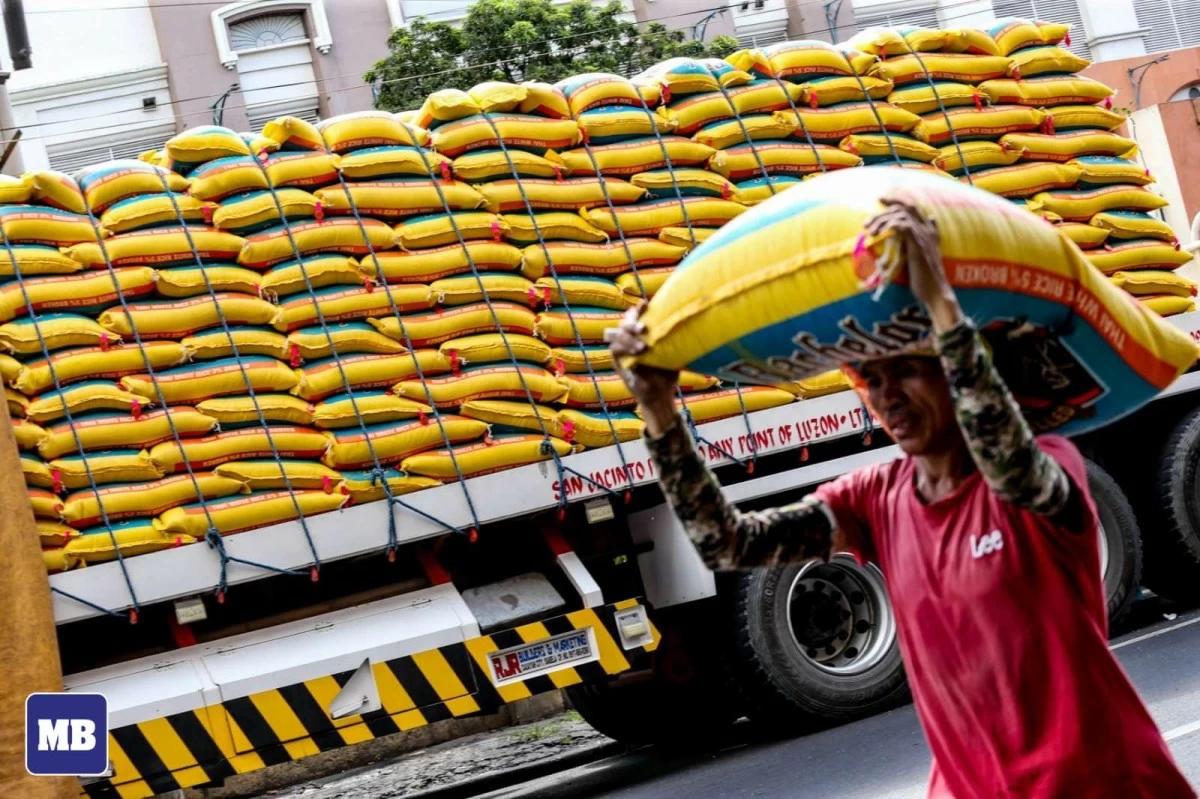
(Manila Bulletin file photo)
The country’s rice imports reached 3.36 million metric tons (MT) as of mid-December, reflecting the projected decline in shipments this year due to the four-month import suspension.
The latest data from the Bureau of Plant Industry (BPI) showed that total rice import volume as of Dec. 18 fell by 30 percent to 3.36 million MT, compared with 4.81 million MT from January to December last year.
Vietnam was the country’s top supplier during the period, shipping a total of 2.73 million MT, or 81 percent of the rice import tally.
Other major sources included Myanmar with 343,910 MT, Thailand with 176,840 MT, Pakistan with 76,448 MT, and India with 20,657 MT.
Before the imposition of the temporary import ban in September, monthly rice shipments to the country averaged around 370,000 MT.
Following the arrival of 331,606 MT in the same month, average arrivals from October to Dec. 18 dropped to about 30,700 MT per month. These imports consist of specialty varieties such as Japanese, black, and basmati rice, which are exempt from the import freeze.
The Department of Agriculture (DA) expects rice imports this year to settle at 3.5 million MT, a forecast echoed by the United States Department of Agriculture (USDA).
Based on the USDA’s projection, the Philippines will remain the world’s largest importer of rice if imports reach 3.5 million MT this year. However, the country will share the title with Vietnam, which is also expected to import the same volume.
President Ferdinand “Bongbong” Marcos earlier issued Executive Order (EO) No. 93, suspending the importation of regular and well-milled rice for 60 days, from Sept. 1 to Oct. 31.
The suspension was later extended to Dec. 31 as the government moved to further protect farmers from downward pressure on farmgate prices of palay (unmilled rice) caused by the influx of cheaper foreign rice.
Agriculture Secretary Francisco Tiu Laurel said the government will implement quantitative restrictions (QR) on import volumes once the suspension is lifted in January.
At the start of the new year, the BPI will begin processing applications for sanitary and phytosanitary import clearances (SPSICs) for an allocation of only 500,000 MT.
Of this volume, 450,000 MT will be allocated to rice importers, while 50,000 MT will be reserved for government agencies in case market intervention is needed.
Tiu Laurel has said that all shipments must arrive in the country by mid-February to reduce potential impacts on palay prices at the start of the summer harvest.
BPI data showed that it issued 4,262 SPSICs from January to Dec. 18 for the importation of 3.92 million MT of rice.
As of the same period, SPSIC utilization stood at 91.39 percent, while expected import volume reached 85.72 percent.
An SPSIC is a document issued by the relevant government agency to ensure that the imported commodity does not pose any threat to human, animal, or plant life.
Starting January, the government will also raise tariffs on rice imports to 20 percent from 15 percent.
The Economy and Development (ED) Council, chaired by the President, earlier approved a more gradual and flexible tariff adjustment mechanism for rice imports. Under this scheme, the tariff rate will be adjusted by five percentage points (ppts) for every five-percent change in international palay prices, subject to a minimum of 15 percent and a maximum of 35 percent.
ADVERTISEMENT
.most-popular .layout-ratio{ padding-bottom: 79.13%; } @media (min-width: 768px) and (max-width: 1024px) { .widget-title { font-size: 15px !important; } }

{{ articles_filter_1561_widget.title }}

.most-popular .layout-ratio{ padding-bottom: 79.13%; } @media (min-width: 768px) and (max-width: 1024px) { .widget-title { font-size: 15px !important; } }

{{ articles_filter_1562_widget.title }}

.most-popular .layout-ratio{ padding-bottom: 79.13%; } @media (min-width: 768px) and (max-width: 1024px) { .widget-title { font-size: 15px !important; } }

{{ articles_filter_1563_widget.title }}

{{ articles_filter_1564_widget.title }}

.mb-article-details { position: relative; } .mb-article-details .article-body-preview, .mb-article-details .article-body-summary{ font-size: 17px; line-height: 30px; font-family: "Libre Caslon Text", serif; color: #000; } .mb-article-details .article-body-preview iframe , .mb-article-details .article-body-summary iframe{ width: 100%; margin: auto; } .read-more-background { background: linear-gradient(180deg, color(display-p3 1.000 1.000 1.000 / 0) 13.75%, color(display-p3 1.000 1.000 1.000 / 0.8) 30.79%, color(display-p3 1.000 1.000 1.000) 72.5%); position: absolute; height: 200px; width: 100%; bottom: 0; display: flex; justify-content: center; align-items: center; padding: 0; } .read-more-background a{ color: #000; } .read-more-btn { padding: 17px 45px; font-family: Inter; font-weight: 700; font-size: 18px; line-height: 16px; text-align: center; vertical-align: middle; border: 1px solid black; background-color: white; } .hidden { display: none; }
function initializeAllSwipers() { // Get all hidden inputs with cms_article_id document.querySelectorAll('[id^="cms_article_id_"]').forEach(function (input) { const cmsArticleId = input.value; const articleSelector = '#article-' + cmsArticleId + ' .body_images'; const swiperElement = document.querySelector(articleSelector); if (swiperElement && !swiperElement.classList.contains('swiper-initialized')) { new Swiper(articleSelector, { loop: true, pagination: false, navigation: { nextEl: '#article-' + cmsArticleId + ' .swiper-button-next', prevEl: '#article-' + cmsArticleId + ' .swiper-button-prev', }, }); } }); } setTimeout(initializeAllSwipers, 3000); const intersectionObserver = new IntersectionObserver( (entries) => { entries.forEach((entry) => { if (entry.isIntersecting) { const newUrl = entry.target.getAttribute("data-url"); if (newUrl) { history.pushState(null, null, newUrl); let article = entry.target; // Extract metadata const author = article.querySelector('.author-section').textContent.replace('By', '').trim(); const section = article.querySelector('.section-info ').textContent.replace(' ', ' '); const title = article.querySelector('.article-title h1').textContent; // Parse URL for Chartbeat path format const parsedUrl = new URL(newUrl, window.location.origin); const cleanUrl = parsedUrl.host + parsedUrl.pathname; // Update Chartbeat configuration if (typeof window._sf_async_config !== 'undefined') { window._sf_async_config.path = cleanUrl; window._sf_async_config.sections = section; window._sf_async_config.authors = author; } // Track virtual page view with Chartbeat if (typeof pSUPERFLY !== 'undefined' && typeof pSUPERFLY.virtualPage === 'function') { try { pSUPERFLY.virtualPage({ path: cleanUrl, title: title, sections: section, authors: author }); } catch (error) { console.error('ping error', error); } } // Optional: Update document title if (title && title !== document.title) { document.title = title; } } } }); }, { threshold: 0.1 } ); function showArticleBody(button) { const article = button.closest("article"); const summary = article.querySelector(".article-body-summary"); const body = article.querySelector(".article-body-preview"); const readMoreSection = article.querySelector(".read-more-background"); // Hide summary and read-more section summary.style.display = "none"; readMoreSection.style.display = "none"; // Show the full article body body.classList.remove("hidden"); } document.addEventListener("DOMContentLoaded", () => { let loadCount = 0; // Track how many times articles are loaded const offset = [1, 2, 3, 4, 5, 6, 7, 8, 9, 10]; // Offset values const currentUrl = window.location.pathname.substring(1); let isLoading = false; // Prevent multiple calls if (!currentUrl) { console.log("Current URL is invalid."); return; } const sentinel = document.getElementById("load-more-sentinel"); if (!sentinel) { console.log("Sentinel element not found."); return; } function isSentinelVisible() { const rect = sentinel.getBoundingClientRect(); return ( rect.top < window.innerHeight && rect.bottom >= 0 ); } function onScroll() { if (isLoading) return; if (isSentinelVisible()) { if (loadCount >= offset.length) { console.log("Maximum load attempts reached."); window.removeEventListener("scroll", onScroll); return; } isLoading = true; const currentOffset = offset[loadCount]; window.loadMoreItems().then(() => { let article = document.querySelector('#widget_1690 > div:nth-last-of-type(2) article'); intersectionObserver.observe(article) loadCount++; }).catch(error => { console.error("Error loading more items:", error); }).finally(() => { isLoading = false; }); } } window.addEventListener("scroll", onScroll); });

Sign up by email to receive news.