

ADVERTISEMENT

IMF presses Philippines on bank secrecy reforms to combat dirty money flows

Published Dec 24, 2025 06:00 pm

At A Glance

  • Even after the exit of the Philippines from the high-risk watchlists of global money laundering watchdogs, the International Monetary Fund (IMF) said several efforts need to be made, including some amendments to laws affecting banks.
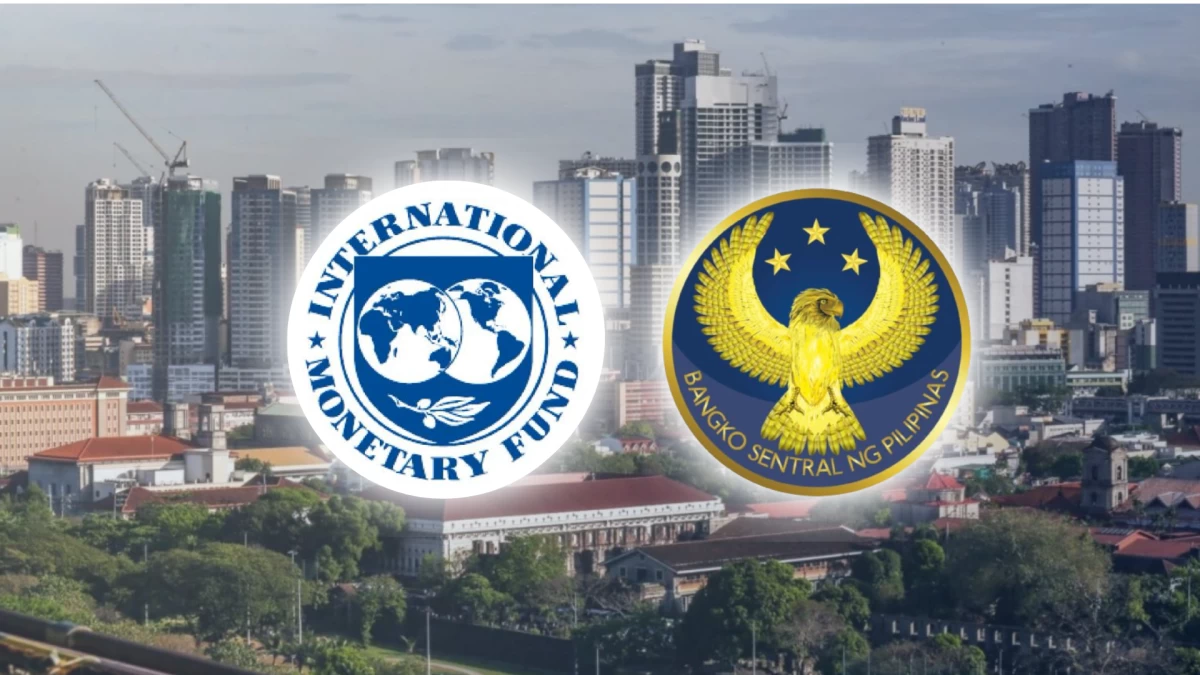
Even after the Philippines’ exit from the high-risk watchlists of global money laundering watchdogs, the International Monetary Fund (IMF) said several efforts still need to be made, including amendments to laws affecting banks.
According to the Washington-based multilateral lender’s staff report published last Dec. 15, the Philippines is urged to amend its antiquated Bank Deposits Secrecy Law to measure up to internationally accepted “good practices.”
Adopting such a measure would strengthen the Bangko Sentral ng Pilipinas’ (BSP) effectiveness in supervising banks on the front of combating dirty money flows and terrorism financing.
In particular, the IMF suggested enhancing the identification and prosecution of terrorist financing cases, ramping up capacity to conduct probes involving crypto assets, and adopting an updated national anti-money laundering and combating the financing of terrorism (AML/CFT) framework.
Results from the Anti-Money Laundering Council’s (AMLC) latest national risk assessment (NRA) showed that the Philippines remains at “high” risk for money laundering, as criminal networks exploit a wide range of illicit activities, including drug trafficking, fraud, and environmental crimes.
Threats persist despite the government’s intensified efforts to protect the financial system. Criminal schemes, AMLC said, are evolving rapidly through the misuse of digital platforms, cryptocurrency-based transfers, and casino junket operators.
“Strengthening the AML/CFT frameworks is also important to support broader anti-corruption efforts and effectively combat the laundering of proceeds of corruption,” the IMF said.
Early findings from the initial stages of the probe into the flood control mess showed that suspicious large cash flows moved through government-run lenders, as individuals involved in the alleged graft are officials from the Department of Public Works and Highways (DPWH).
For its part, the BSP deems vulnerabilities in the financial system, including the banking and non-banking segments, to be within control.
“Stress tests conducted by the BSP confirm that banks have sufficient capital buffers to absorb potential asset quality deterioration, including in the real estate, household, and manufacturing sectors,” the IMF said.
“Risks stemming from the interconnectedness between banks and non-bank financial institutions (NBFIs) are assessed to be manageable,” it further said, adding that the BSP continues to keep watch over these linkages.
To assess systemic risks, the BSP’s macroprudential stress-testing model is also currently taking shape.
Meanwhile, the BSP clarified that crypto assets are primarily used for remittances and investments. A risk assessment of virtual assets was also included in the recently concluded NRA.
To recall, the Philippines exited the Financial Action Task Force’s (FATF) gray list early this year, followed swiftly by its removal from the European Union’s (EU) list of high-risk jurisdictions for money laundering and terrorist financing.
To reassess the Philippines’ standards on this front, FATF has set the next mutual evaluation for 2027.
ADVERTISEMENT
.most-popular .layout-ratio{ padding-bottom: 79.13%; } @media (min-width: 768px) and (max-width: 1024px) { .widget-title { font-size: 15px !important; } }

{{ articles_filter_1561_widget.title }}

.most-popular .layout-ratio{ padding-bottom: 79.13%; } @media (min-width: 768px) and (max-width: 1024px) { .widget-title { font-size: 15px !important; } }

{{ articles_filter_1562_widget.title }}

.most-popular .layout-ratio{ padding-bottom: 79.13%; } @media (min-width: 768px) and (max-width: 1024px) { .widget-title { font-size: 15px !important; } }

{{ articles_filter_1563_widget.title }}

{{ articles_filter_1564_widget.title }}

.mb-article-details { position: relative; } .mb-article-details .article-body-preview, .mb-article-details .article-body-summary{ font-size: 17px; line-height: 30px; font-family: "Libre Caslon Text", serif; color: #000; } .mb-article-details .article-body-preview iframe , .mb-article-details .article-body-summary iframe{ width: 100%; margin: auto; } .read-more-background { background: linear-gradient(180deg, color(display-p3 1.000 1.000 1.000 / 0) 13.75%, color(display-p3 1.000 1.000 1.000 / 0.8) 30.79%, color(display-p3 1.000 1.000 1.000) 72.5%); position: absolute; height: 200px; width: 100%; bottom: 0; display: flex; justify-content: center; align-items: center; padding: 0; } .read-more-background a{ color: #000; } .read-more-btn { padding: 17px 45px; font-family: Inter; font-weight: 700; font-size: 18px; line-height: 16px; text-align: center; vertical-align: middle; border: 1px solid black; background-color: white; } .hidden { display: none; }
function initializeAllSwipers() { // Get all hidden inputs with cms_article_id document.querySelectorAll('[id^="cms_article_id_"]').forEach(function (input) { const cmsArticleId = input.value; const articleSelector = '#article-' + cmsArticleId + ' .body_images'; const swiperElement = document.querySelector(articleSelector); if (swiperElement && !swiperElement.classList.contains('swiper-initialized')) { new Swiper(articleSelector, { loop: true, pagination: false, navigation: { nextEl: '#article-' + cmsArticleId + ' .swiper-button-next', prevEl: '#article-' + cmsArticleId + ' .swiper-button-prev', }, }); } }); } setTimeout(initializeAllSwipers, 3000); const intersectionObserver = new IntersectionObserver( (entries) => { entries.forEach((entry) => { if (entry.isIntersecting) { const newUrl = entry.target.getAttribute("data-url"); if (newUrl) { history.pushState(null, null, newUrl); let article = entry.target; // Extract metadata const author = article.querySelector('.author-section').textContent.replace('By', '').trim(); const section = article.querySelector('.section-info ').textContent.replace(' ', ' '); const title = article.querySelector('.article-title h1').textContent; // Parse URL for Chartbeat path format const parsedUrl = new URL(newUrl, window.location.origin); const cleanUrl = parsedUrl.host + parsedUrl.pathname; // Update Chartbeat configuration if (typeof window._sf_async_config !== 'undefined') { window._sf_async_config.path = cleanUrl; window._sf_async_config.sections = section; window._sf_async_config.authors = author; } // Track virtual page view with Chartbeat if (typeof pSUPERFLY !== 'undefined' && typeof pSUPERFLY.virtualPage === 'function') { try { pSUPERFLY.virtualPage({ path: cleanUrl, title: title, sections: section, authors: author }); } catch (error) { console.error('ping error', error); } } // Optional: Update document title if (title && title !== document.title) { document.title = title; } } } }); }, { threshold: 0.1 } ); function showArticleBody(button) { const article = button.closest("article"); const summary = article.querySelector(".article-body-summary"); const body = article.querySelector(".article-body-preview"); const readMoreSection = article.querySelector(".read-more-background"); // Hide summary and read-more section summary.style.display = "none"; readMoreSection.style.display = "none"; // Show the full article body body.classList.remove("hidden"); } document.addEventListener("DOMContentLoaded", () => { let loadCount = 0; // Track how many times articles are loaded const offset = [1, 2, 3, 4, 5, 6, 7, 8, 9, 10]; // Offset values const currentUrl = window.location.pathname.substring(1); let isLoading = false; // Prevent multiple calls if (!currentUrl) { console.log("Current URL is invalid."); return; } const sentinel = document.getElementById("load-more-sentinel"); if (!sentinel) { console.log("Sentinel element not found."); return; } function isSentinelVisible() { const rect = sentinel.getBoundingClientRect(); return ( rect.top < window.innerHeight && rect.bottom >= 0 ); } function onScroll() { if (isLoading) return; if (isSentinelVisible()) { if (loadCount >= offset.length) { console.log("Maximum load attempts reached."); window.removeEventListener("scroll", onScroll); return; } isLoading = true; const currentOffset = offset[loadCount]; window.loadMoreItems().then(() => { let article = document.querySelector('#widget_1690 > div:nth-last-of-type(2) article'); intersectionObserver.observe(article) loadCount++; }).catch(error => { console.error("Error loading more items:", error); }).finally(() => { isLoading = false; }); } } window.addEventListener("scroll", onScroll); });

Sign up by email to receive news.