ADVERTISEMENT

Finally, justice for teachers, the architects of PH's future

Published Dec 24, 2025 12:05 am  |  Updated Dec 23, 2025 06:54 pm
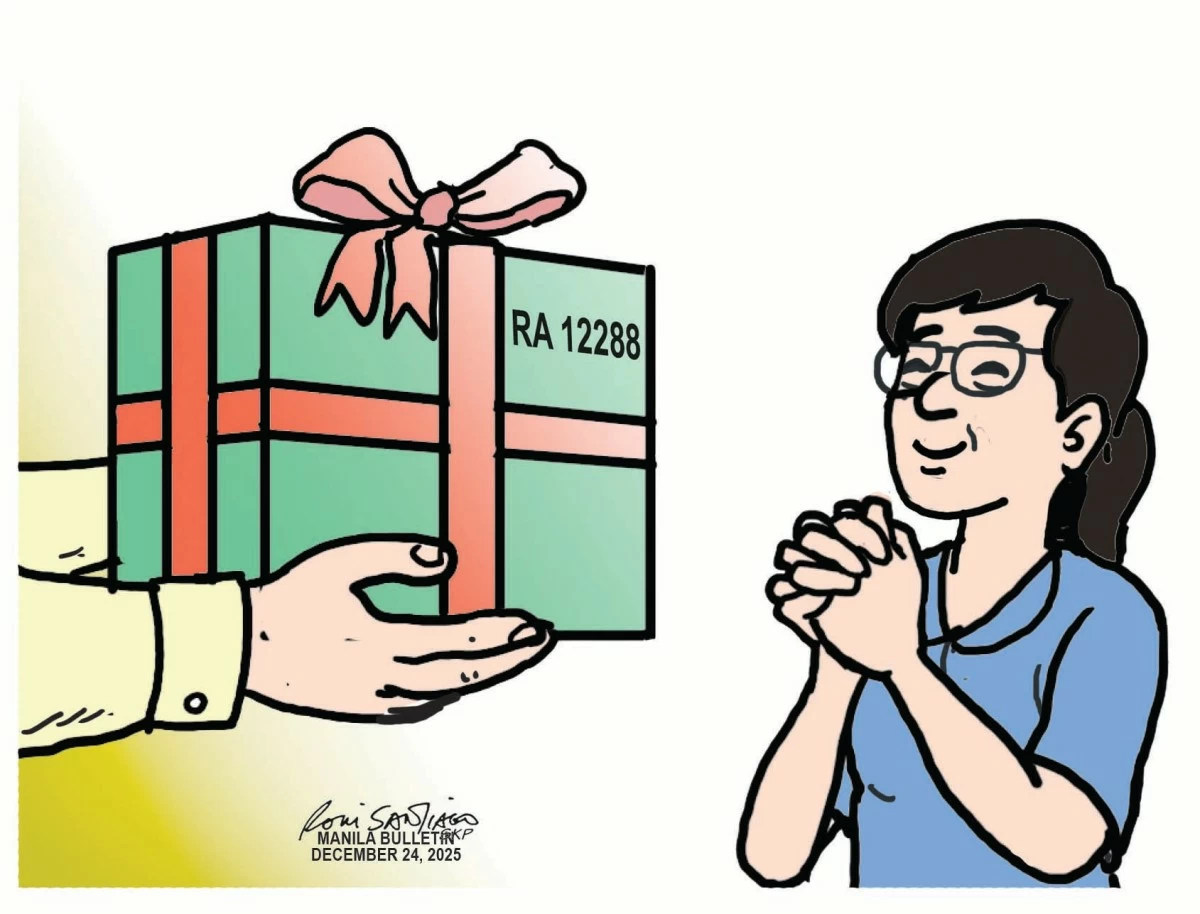
With the enactment of Republic Act No. 12288, the Career Progression System for Public School Teachers and School Leaders Act, the Philippine government has finally addressed a decades-old inequity that quietly burdened the backbone of our education system—our public school teachers.
For far too long, the teachers’ professional growth was constrained by a rigid structure that failed to recognize merit, dedication, and sustained excellence in the classroom. Today, that stagnation has begun to give way to dignity, recognition, and hope. And history will remember this moment as a long-overdue act of justice.
This reform in the promotion system is profoundly human. For generations, public school teachers devoted their lives to educating Filipino children, often in overcrowded classrooms, with limited resources, and under immense societal expectations. Many remained in the same rank for years, even decades, not because of a lack of competence or commitment, but because promotions depended on vacancies rather than performance. Their reward was service itself—noble, yes, but insufficient. RA 12288 corrects this injustice by institutionalizing a career progression grounded on merit, competence and fitness rather than bureaucratic bottlenecks. It sends a clear message: No teacher shall retire in the profession without the fulfillment of their potential as educators.
With the new law, thousands of teachers have now received promotions that affirm their value—not just through higher salary grades, but through restored dignity. These promotions recognize the countless hours spent preparing lesson plans, mentoring struggling learners, guiding values formation, and shaping citizens who now serve as leaders across government, business, science, culture, and civil society. Every Filipino success story carries within it the invisible imprint of a teacher who once believed, guided, and persevered.
Yet this milestone must not be mistaken for an endpoint. It is, instead, a solemn commitment. The government bears the continuing responsibility to ensure that this reform is sustained through adequate funding, transparent implementation, and constant refinement. Career progression must be accompanied by robust professional development, leadership training, and institutional support so that promotions translate into stronger schools and improved learning outcomes. Political will must endure beyond celebratory headlines, embedded firmly in national priorities and annual budgets.
The private sector, too, cannot remain a passive observer. Industries that benefit from a skilled, disciplined, and values-oriented workforce owe a debt to the public school teachers who laid that foundation. Meaningful partnerships—through scholarships, training grants, technology support, and advocacy—can help strengthen the teaching profession. Investing in teachers is not charity; it is a strategic investment in national stability, productivity, and innovation.
And finally, this moment calls upon every Filipino to reflect. Nearly all of us trace our beginnings to a public school classroom. We were once shaped by teachers who saw potential where we saw uncertainty, who instilled discipline when we lacked direction, and who nurtured confidence long before we earned titles or positions. The promotions they now receive are, in many ways, collective acknowledgments from a grateful nation.
RA 12288 affirms a simple but powerful message. A country that truly values its future must honor those who shape it. Let this reform be sustained not only by law, but by shared resolve—across government, private enterprise, and citizenry—to ensure that teachers are respected, supported, and empowered throughout their careers.
Only then can we rightfully claim that we have honored the architects of our nation’s future.
ADVERTISEMENT
.most-popular .layout-ratio{ padding-bottom: 79.13%; } @media (min-width: 768px) and (max-width: 1024px) { .widget-title { font-size: 15px !important; } }

{{ articles_filter_1561_widget.title }}

.most-popular .layout-ratio{ padding-bottom: 79.13%; } @media (min-width: 768px) and (max-width: 1024px) { .widget-title { font-size: 15px !important; } }

{{ articles_filter_1562_widget.title }}

.most-popular .layout-ratio{ padding-bottom: 79.13%; } @media (min-width: 768px) and (max-width: 1024px) { .widget-title { font-size: 15px !important; } }

{{ articles_filter_1563_widget.title }}

{{ articles_filter_1564_widget.title }}

.mb-article-details { position: relative; } .mb-article-details .article-body-preview, .mb-article-details .article-body-summary{ font-size: 17px; line-height: 30px; font-family: "Libre Caslon Text", serif; color: #000; } .mb-article-details .article-body-preview iframe , .mb-article-details .article-body-summary iframe{ width: 100%; margin: auto; } .read-more-background { background: linear-gradient(180deg, color(display-p3 1.000 1.000 1.000 / 0) 13.75%, color(display-p3 1.000 1.000 1.000 / 0.8) 30.79%, color(display-p3 1.000 1.000 1.000) 72.5%); position: absolute; height: 200px; width: 100%; bottom: 0; display: flex; justify-content: center; align-items: center; padding: 0; } .read-more-background a{ color: #000; } .read-more-btn { padding: 17px 45px; font-family: Inter; font-weight: 700; font-size: 18px; line-height: 16px; text-align: center; vertical-align: middle; border: 1px solid black; background-color: white; } .hidden { display: none; }
function initializeAllSwipers() { // Get all hidden inputs with cms_article_id document.querySelectorAll('[id^="cms_article_id_"]').forEach(function (input) { const cmsArticleId = input.value; const articleSelector = '#article-' + cmsArticleId + ' .body_images'; const swiperElement = document.querySelector(articleSelector); if (swiperElement && !swiperElement.classList.contains('swiper-initialized')) { new Swiper(articleSelector, { loop: true, pagination: false, navigation: { nextEl: '#article-' + cmsArticleId + ' .swiper-button-next', prevEl: '#article-' + cmsArticleId + ' .swiper-button-prev', }, }); } }); } setTimeout(initializeAllSwipers, 3000); const intersectionObserver = new IntersectionObserver( (entries) => { entries.forEach((entry) => { if (entry.isIntersecting) { const newUrl = entry.target.getAttribute("data-url"); if (newUrl) { history.pushState(null, null, newUrl); let article = entry.target; // Extract metadata const author = article.querySelector('.author-section').textContent.replace('By', '').trim(); const section = article.querySelector('.section-info ').textContent.replace(' ', ' '); const title = article.querySelector('.article-title h1').textContent; // Parse URL for Chartbeat path format const parsedUrl = new URL(newUrl, window.location.origin); const cleanUrl = parsedUrl.host + parsedUrl.pathname; // Update Chartbeat configuration if (typeof window._sf_async_config !== 'undefined') { window._sf_async_config.path = cleanUrl; window._sf_async_config.sections = section; window._sf_async_config.authors = author; } // Track virtual page view with Chartbeat if (typeof pSUPERFLY !== 'undefined' && typeof pSUPERFLY.virtualPage === 'function') { try { pSUPERFLY.virtualPage({ path: cleanUrl, title: title, sections: section, authors: author }); } catch (error) { console.error('ping error', error); } } // Optional: Update document title if (title && title !== document.title) { document.title = title; } } } }); }, { threshold: 0.1 } ); function showArticleBody(button) { const article = button.closest("article"); const summary = article.querySelector(".article-body-summary"); const body = article.querySelector(".article-body-preview"); const readMoreSection = article.querySelector(".read-more-background"); // Hide summary and read-more section summary.style.display = "none"; readMoreSection.style.display = "none"; // Show the full article body body.classList.remove("hidden"); } document.addEventListener("DOMContentLoaded", () => { let loadCount = 0; // Track how many times articles are loaded const offset = [1, 2, 3, 4, 5, 6, 7, 8, 9, 10]; // Offset values const currentUrl = window.location.pathname.substring(1); let isLoading = false; // Prevent multiple calls if (!currentUrl) { console.log("Current URL is invalid."); return; } const sentinel = document.getElementById("load-more-sentinel"); if (!sentinel) { console.log("Sentinel element not found."); return; } function isSentinelVisible() { const rect = sentinel.getBoundingClientRect(); return ( rect.top < window.innerHeight && rect.bottom >= 0 ); } function onScroll() { if (isLoading) return; if (isSentinelVisible()) { if (loadCount >= offset.length) { console.log("Maximum load attempts reached."); window.removeEventListener("scroll", onScroll); return; } isLoading = true; const currentOffset = offset[loadCount]; window.loadMoreItems().then(() => { let article = document.querySelector('#widget_1690 > div:nth-last-of-type(2) article'); intersectionObserver.observe(article) loadCount++; }).catch(error => { console.error("Error loading more items:", error); }).finally(() => { isLoading = false; }); } } window.addEventListener("scroll", onScroll); });

Sign up by email to receive news.