






 Philippines
National
Senators: No more 'allocables,' 'ghost projects', patronage spending in 2026 national budget
Philippines
National
Senators: No more 'allocables,' 'ghost projects', patronage spending in 2026 national budget
Senators: No more 'allocables,' 'ghost projects', patronage spending in 2026 national budget


At A Glance
- Senators on Sunday, December 21, assured that the the bicameral conference committee-approved P6.793-trillion national budget for 2026 now contains strong, enforceable safeguards for transparency, traceability and citizen oversight.
Senators on Sunday, December 21, assured that the the bicameral conference committee-approved P6.793-trillion national budget for 2026 now contains strong, enforceable safeguards for transparency, traceability and citizen oversight.
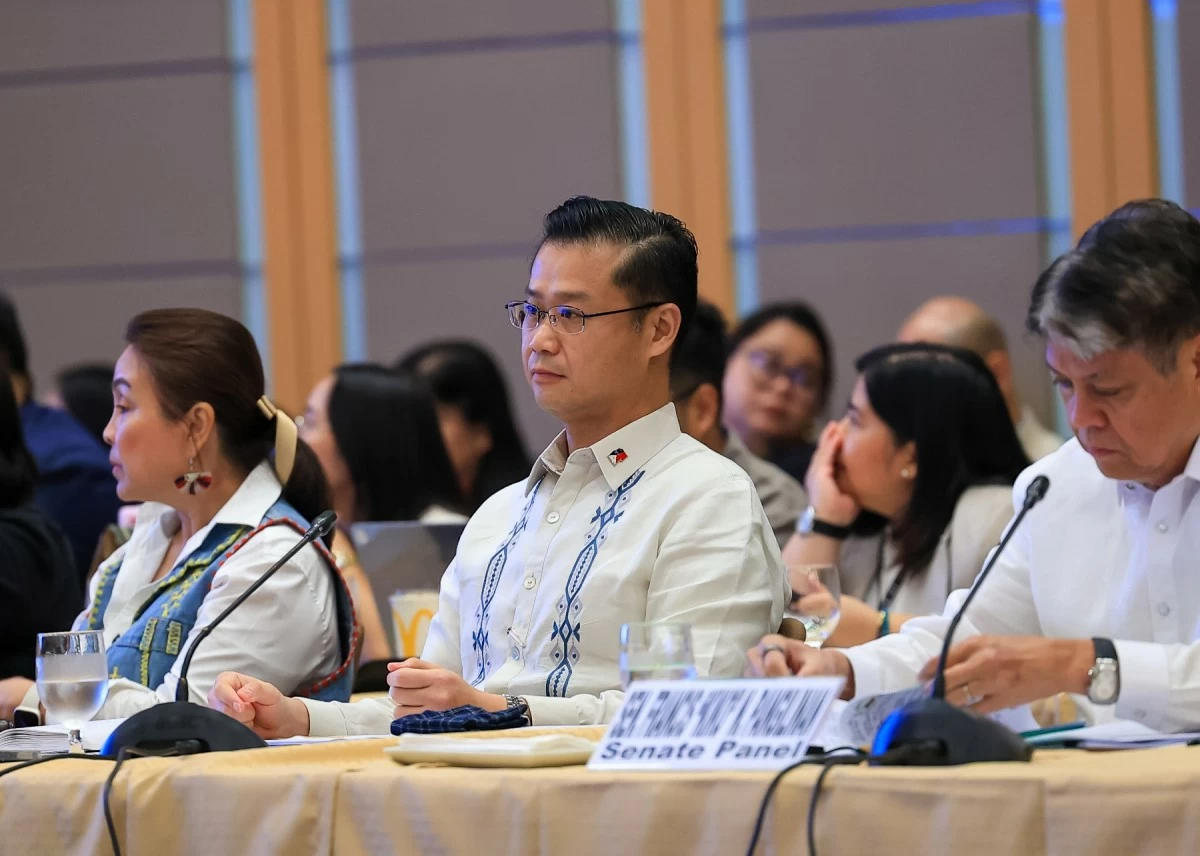
“Gone are the secretive and ‘alok-able’ talks that result in ‘ghost’ projects, overpricing, and public-infra peddlers or political middlemen,” said Sen. Francis “Kiko” Pangilinan, a member of the bicameral panel that helped reconcile the House and Senate versions.
“For the first time, the entire process from subcommittee and committee hearings, House and Senate approvals, to bicam is livestreamed,” he stressed.
Pangilinan said he is grateful to citizens’ groups, like the People’s Budget Coalition, who helped them draft policies and provisions to strengthen the budget process.
“Aside from holding accountable those who have committed corruption in the past, we have put in place safeguards so that it will not happen again,” he added.
Sen. Sherwin Gatchalian, chairman of the Senate Finance Committee, also assured safeguards have been put in place particularly in controversial provisions, particularly the budgets of the Department of Public Works and Highways (DPWH), Department of Agriculture (DA) and Department of Health (DOH).
Gatchalian said he is grateful that Senate President Pro Tempore Panfilo “Ping” Lacson pushed to put an end to political patronage system giving politicians leverage and right to interfere when it comes to the distribution and implementation of social programs like the Medical Assistance to Indigent and Financially Incapacitated Patients (MAIFIP) Program.
“And it's not just for medical assistance in all the social services of our government. That's why I, I agree with him that politicians should not interfere so as not to be politicized,” Gatchalian said in a Radio DZBB interview.
Moreover, he said, the bicameral panel took long in reconciling the disagreeing provisions in the House and Senate version because the Sente was firm to remove overpricing.
“And we got that during our hearing, during the DPWH (budget) hearing. That's why the hearings are very important, because that's where the details come out. And when the computation was given to us, that's what we applied to the budget. That's why the P45 billion overpricing came out,” he said, referring to the P45-billion that Sec. Vince Dizon appealed to be restored in their budget.
“That's why Secretary Dizon also said and apologized that the data he gave us or the formula was too general and there were projects that could not be implemented because what was given was too general. That's why it was reviewed again, this is where we were delayed and when it was reviewed, it turned out that we saved P20.7 billion pesos that we put into PhilHealth,” he stressed.
On the other hand, Gatchalian said the Senate contingent also made sure that the DA’s farm-to-market road (FMR) projects will have or are complete with coordinates.
“The most important thing is the coordinates. Before, there were no coordinates. So the budget could be one kilometer, it could be half a kilometer, so it could be a joke, it could be a ghost. Now, that's not possible,” he said.
“The exact length of the farm-to-market road is stated there. So, that means, before you submit it to us, measure it. And if that measurement, if you already know it, put in a corresponding budget to submit to us,” the lawmaker stressed.
Congress, he also said, will activate the Joint Congressional Oversight on Public Expenditures as part of transparency efforts.
“This is a great, and very powerful committee, but it has not been activated in many, many years,” he said.
“So this Oversight Committee will be activated so that every month, maybe every week, there will be oversight here on the key programs of the government,” the lawmaker stressed.
The oversight panel will not only have hearings when the National Expenditure Program (NEP) arrives but will function “all-year round” so lawmakers can focus on careful spending, or “and not spending either.”
“One of the things we discovered is that a lot of funds are not being spent. So, the agency asks for funds, but they are not being spent. Or they are being spent, but they are not being spent properly. So, that is one thing we will do when the new year comes,” Gatchalian said.