






Manila Bulletin
 Lifestyle
Arts and Culture
What was it like as a UP college student in the 1950s? (Part One)
Lifestyle
Arts and Culture
What was it like as a UP college student in the 1950s? (Part One)
Lifestyle
Arts and Culture
What was it like as a UP college student in the 1950s? (Part One)
What was it like as a UP college student in the 1950s? (Part One)
Recalling memories of Diliman's past
Published Dec 20, 2025 08:42 am
|
Updated Dec 20, 2025 03:03 pm


At A Glance
- Like the rest of South Manila, the UP campus was badly damaged in the Battle of Manila, and the decision was made in 1949 to move to Diliman.
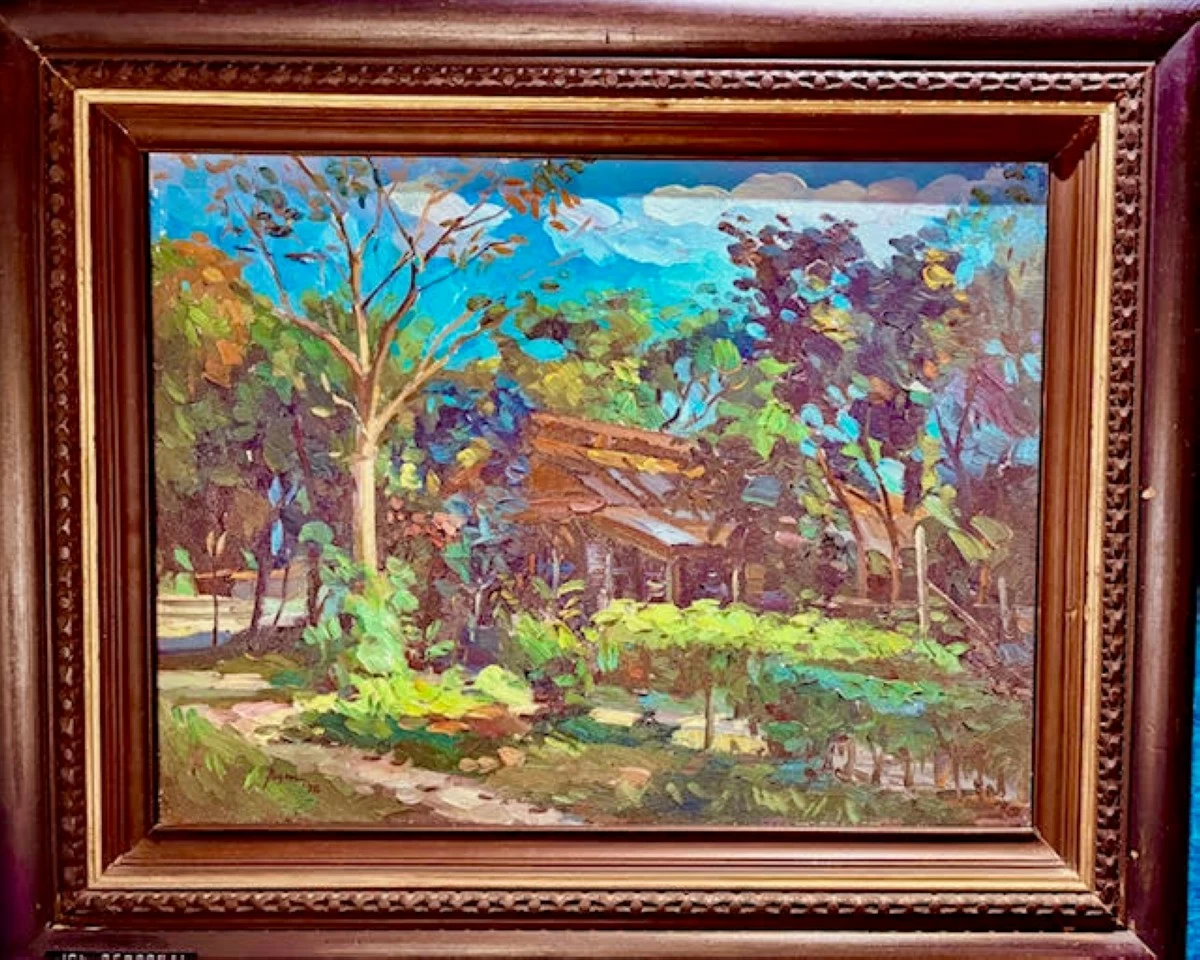
COLORFUL PAST A painting of a UP faculty cottage by SYM.
The University of the Philippines (UP) had been in the large Ermita block bounded by Taft Avenue, Padre Faura, Florida, and Isaac Peral. With the Commonwealth government’s plan to move the capital to Quezon City, land had been acquired in Diliman for the university. Building construction had begun, and by the outbreak of World War II, the law and education buildings were complete.
Together with the rest of South Manila, the university was badly damaged in the Battle of Manila, and the decision was made in 1949 to move to Diliman. The new location was unknown territory for most. There were homes in Kamuning, San Francisco del Monte, and Cubao, but much of the rest was cogon land.
In 1945, the US Military had actually taken over some parts of Quezon City, including Heroes’ Hills and JUSMAG near Timog and West Avenues and the UP campus. Diliman had become practically a small town for US Military personnel, with barracks and an armory, single story cottages of wood and sawali raised above ground on stilts, a chapel, a hospital, shops, a bowling alley, two large adjoining structures that were the theater and the gym, a social hall named Gregory Terrace, and a golf course at the campus center. Several small buildings were at about today’s intersection of Commonwealth and University Avenues, probably the camp’s entrance checkpoint.
The US turned the Diliman camp over to the Philippine government, and by 1953, when I was an incoming freshman, the College of Liberal Arts (LA) building was built. Administration Building, the main library, Carillon, the long wing of the College of Engineering building, and two dormitories, each for men and women, were already built. Many of the former military structures continued to be in use. Faculty and staff occupied most of the residential cottages, with a few for student housing.
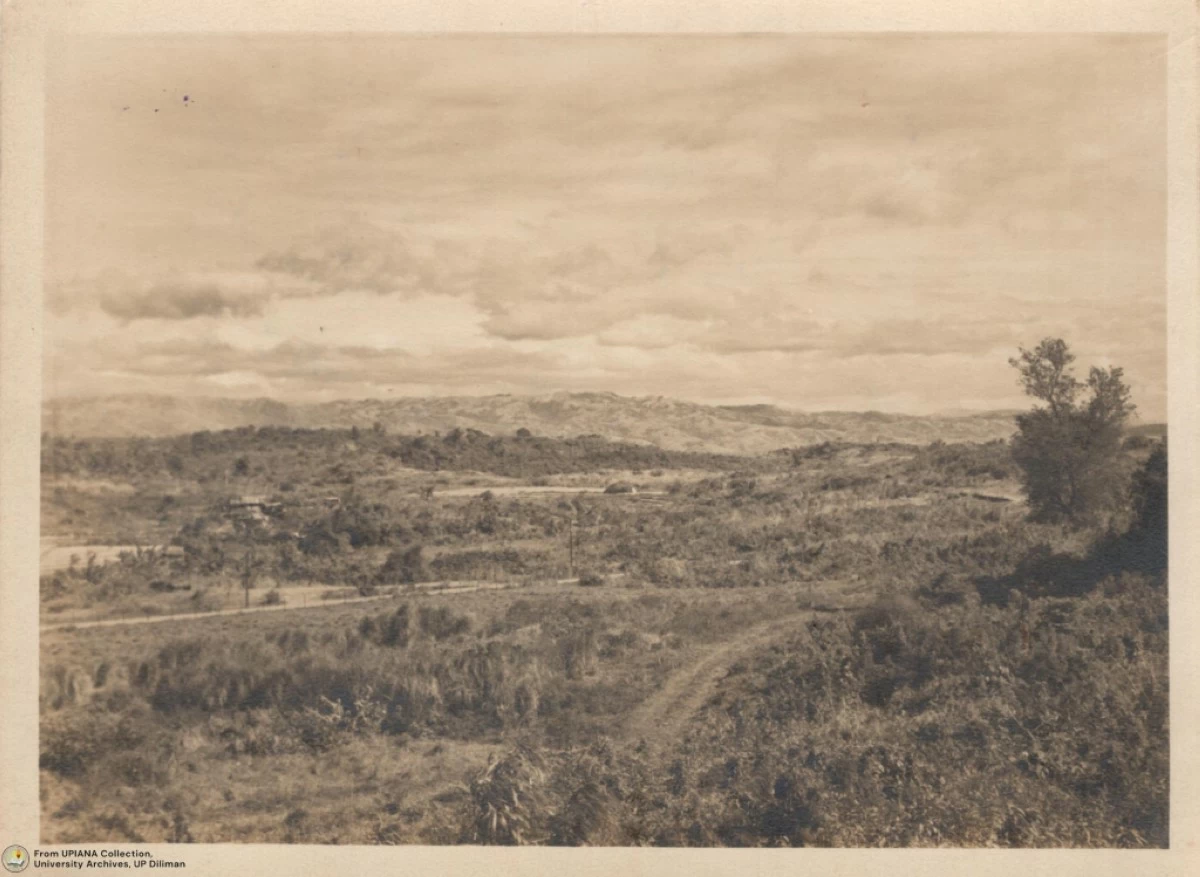
BEFORE EVERYTHING A wide-angle view of Diliman, pre-UP days. (Photo University Archives, UPD)
As a high school honor graduate, I didn’t have to take an entrance exam, and my introduction to higher education was a physical exam. The Infirmary was behind the Engineering Building, probably the former US Army camp hospital. There were several dozen of us lined up before the doctor, all buck naked. We had all been directed to strip, totally. The doctor stethoscoped my racing heart, poked here and there, tapped this and that, and asked me to turn around and bend over. He then checked out territory that sunlight never reaches, for what I can’t imagine. Anyway, he either found or didn’t find whatever it was he was looking for, and it was smooth sailing after that. I was considered an entrance scholar and paid something like ₱215 in student fees for the first semester.
Freshmen were grouped in blocks and attended the same classes together. I was a pre-business student, and all my classes were in the LA building because the College of Business Administration (BA) was on the building’s third floor, in the short wing. I would go to the Main Library whenever I needed quiet for serious cramming. The School of Fine Arts’ plaster casts of classical sculpture (nudes) on the third-floor lobby were a welcome diversion for kids from sheltered childhoods like mine.
Most of my teachers were tops, with some who were already or would eventually be among the very best in their fields, such as S.V. Epistola in English, Cesar E.A. Virata in management, and Amado A. Castro in economics. There was one, though, whose fake Bronx accent I simply couldn’t understand.
Everyone was required to have a semester of swimming, and all I could really do was splash around with my eyes shut. The final exam was to do 20 laps within the hour. I did only four while holding on to the gutter, but confidently reported “16, sir” to Prof. Cailao, who, bless him, said, “Very good for a non-swimmer, Laya.” For the second semester, I decided, wrongly, that fencing was the least life-threatening and again got a “three.” I did learn to say en garde and touché, and the difference between a saber and an épée.
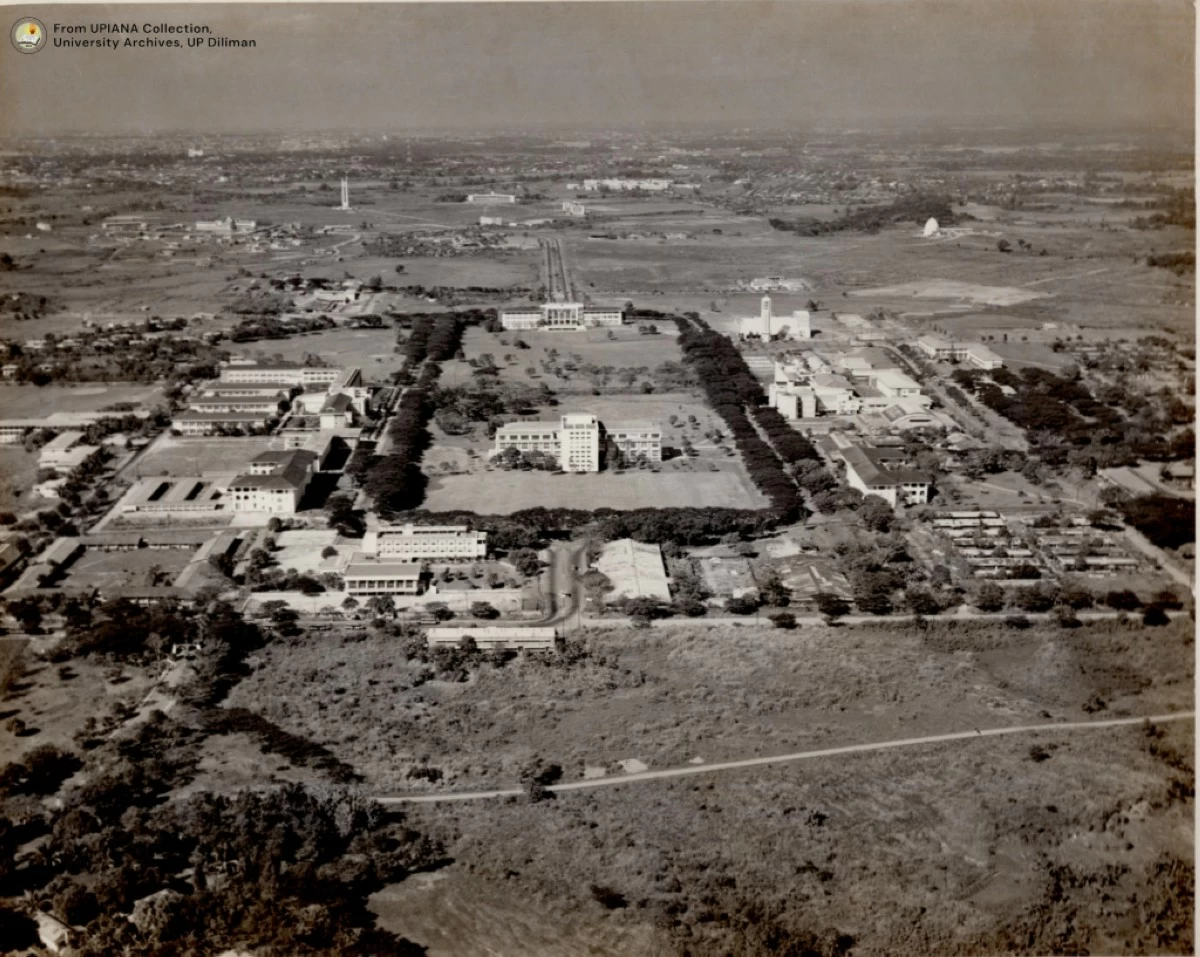
EARLY DAYS An aerial overview of the UP Diliman campus in the '60s. (Photo University Archives, UPD)
First and second year males had to spend Saturday afternoons at ROTC, half of which were lectures on sundry topics and the other half marching back and forth under the 3 p.m. sun in the Sunken Garden behind the Main Library. We had to learn how to disassemble and reassemble a rifle, which I did so expertly that everything clattered to the ground piece-by-piece when I snapped to attention.
Lunch was at the cafeteria in the Women’s South Dorm behind LA. Food was served on metal trays, evidently military leftovers, 80 centavos for a veggie, an ulam, a sweet, and a mound of rice. For merienda, we went down to the LA basement where “Mommy” served her famous adobo sandwich.
Rallies and the Diliman Republic were decades away, and the only exciting event I remember was the total solar eclipse of June 20, 1955, when everyone trooped to the LA roof deck with black photo negatives to watch the sun get smaller and everything darker and cooler.
(to be continued)
Notes: (a) Florida Street is now Maria Orosa and Isaac Peral Street is now United Nations Avenue; (b) The Battle of Manila took place in February 1945 but war continued until the US dropped atomic bombs on Hiroshima and Nagasaki and Japan surrendered on Sept. 5 1945; and (c) JUSMAG stands for Joint US Military Assistance Group that “manages military assistance training and security cooperation.” For a long time, it was the place for the privileged to go for steaks and PX goods brought in from Clark Air Base, then in US hands.
Comments are cordially invited, addressed to [email protected]