






Manila Bulletin
 Philippines
National
Father-and-son suspects in Bondi mass shooting 'jogged, slept, bonded' in Davao hotel – NSA
Philippines
National
Father-and-son suspects in Bondi mass shooting 'jogged, slept, bonded' in Davao hotel – NSA
Philippines
National
Father-and-son suspects in Bondi mass shooting 'jogged, slept, bonded' in Davao hotel – NSA
Father-and-son suspects in Bondi mass shooting 'jogged, slept, bonded' in Davao hotel – NSA
National Security Adviser Eduardo Año insists no evidence of terror training in PH
Published Dec 20, 2025 03:01 pm


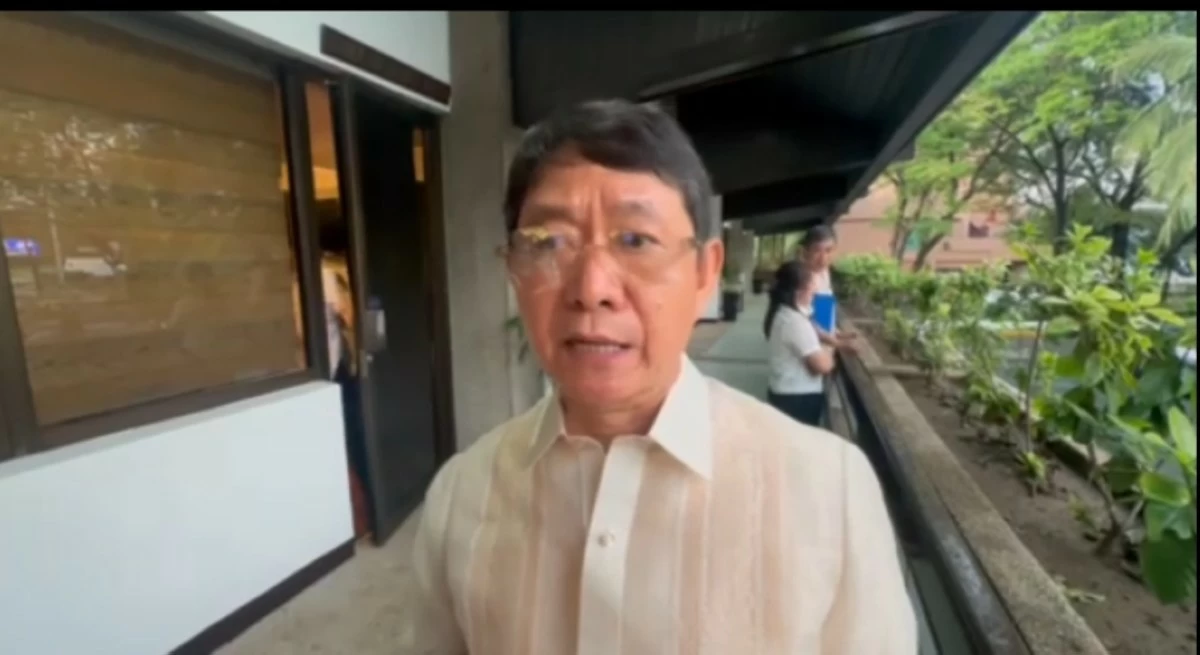
National Security Adviser Eduardo Año (Defense Press Corps pool)
National Security Adviser (NSA) Eduardo Año on Friday, Dec. 20, rejected claims that the Philippines is a terrorist hotspot as he bared that the father-and-son suspects in the recent mass shooting at the Bondi Beach in Syndey, Australia spent their entire stay at a hotel in Davao City simply “jogging, sleeping, and bonding” with no indication that they underwent any form of terror training.
Sajid Akram, 50, and his son Naveed, 24, arrived in the country on Nov. 1 and allegedly stayed at a one-star accommodation along Pichon Street in Poblacion District, Davao City until their departure on Nov. 28.
Two weeks later, they allegedly opened fire at attendees of the Hanukkah celebration at the Bondi Beach on Dec. 14, killing at least 15 people. Sajid was killed by responding Australian police while Naveed was critically injured. Forty people were also hurt in the attack.
“All the 28 days that they stayed in Davao, every night they slept in the same hotel so there is no way they can or they underwent any training in Maguindanao or in Lanao or wherever. Nobody came to the hotel to visit them,” Año said.
Authorities, he added, have already established the pair’s daily routine.
“Every morning, they would go out jogging then leave and return after two to three hours, with the longest being eight hours. Even then, that time window is not enough to get out of Davao so they really stayed there,” he noted.
No evidence of terror training
While investigators are looking into the possibility that the suspects used the internet extensively or communicated with others online, Año stressed that there is no evidence of any physical training or contact with terrorist groups.
“Maybe they are heavily using the internet, maybe they are talking to somebody else but any other physical activity wala na (there’s none),” Año added.
Authorities are still reviewing CCTV footage to determine if the two met anyone during their stay.
For now, Año said one working theory is that the son may have been indoctrinating the father during their time together in Davao.
The NSA revealed that the son, Naveed, had been red-flagged in 2019 and investigated by the Australian Security Intelligence Organisation (ASIO), which is Australia's domestic intelligence agency.
Naveed was reportedly investigated by ASIO in 2019 for six months for his close ties to a Sydney-based Islamic State (IS) terrorism cell after Australian authorities foiled a supposed IS terror attack.
“We are still trying to obtain CCTV footage from different places. We will look into that later. But for now, we can probably say that the father and son were bonding here, and that the son may have been indoctrinating the father since Naveed was recruited earlier,” Año said.
“Back in 2019, he was already red-flagged and subjected to an investigation by the Australian Secret Intelligence [Organisation] but he was later cleared. Two of Naveed’s associates were jailed,” he added.
“These kinds of persons who are on watchlists should really be monitored closely,” Año said, noting that individuals traveling on Indian and Australian passports are not flagged by Philippine authorities alone.
Año said accounts from hotel staff and nearby individuals were verified through multiple sources and corroborated by reports from the Bureau of Immigration (BI), the Philippine National Police (PNP), and Armed Forces of the Philippines (AFP) intelligence units.
Operatives also checked all shooting ranges in Davao, none of which recorded any appearance by the suspects.
Beyond the Bondi case, Año dismissed allegations branding the Philippines as a terror hotspot. He cited major security gains since the 2017 Marawi siege.
“Since 2017, after the Marawi crisis, we have decimated all local terrorist groups. Ang naiwan na lang ay DI-Hassan [Dawlah Islamiyah] at DI-Maute so dalawa na lang ang armado diyan, and on the other side I think less than 20 (What remains are only DI-Hassan and DI-Maute, and there are just two armed individuals there, and on the other side, I think less than 20),” he said.
He described claims linking the Bondi shooting to the Philippines as speculation and malign information aimed at damaging the country’s image.
“May mga grupo na sumasakay dito (Groups are riding on this issue) and trying to destroy the image of our country,” Año said. He added that even international partners, including the United States and the United Nations, have acknowledged improvements in the country’s security situation.
Año said he has discussed the matter with his counterparts in the Australian government and that cooperation between the two countries is ongoing. He urged the public to wait for the investigation’s conclusion before drawing conclusions.