ADVERTISEMENT

US passes bill allocating $2.5-B security assistance to PH

Published Dec 19, 2025 02:45 pm
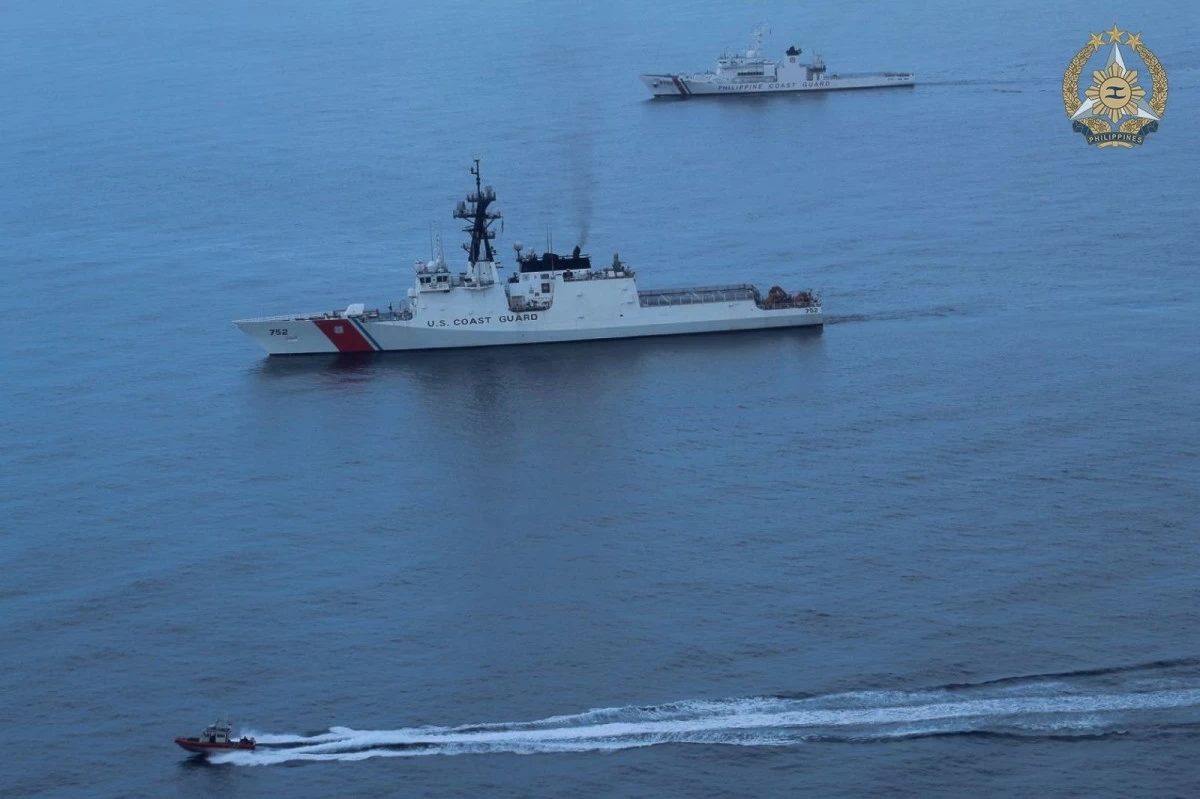
USCG Cutter Stratton (WMSL 752) and BRP Melchora Aquino (MRRV 9702) maneuver in unison during the 6th bilateral Maritime Cooperative Activity on May 20, 2025. (photo: AFP)
​US lawmakers have passed a bill allotting $2.5 billion worth of security assistance to the Philippines.
Introduced by Senators Bill Hagerty (R-TN) and Tim Kaine (D-VA), the Philippines Enhanced Resilience Act (PERA Act) is now up for US President Donald Trump's signing.
Once passed into law, the measure will provide up to $500 million in Foreign Military Financing (FMF) grant assistance to the Philippines from 2026 to 2030, for a total of 2.5 billion US dollars over five years.
“As the United States and the Philippines face growing challenges to security and prosperity in the West Philippines Sea and the wider Indo-Pacific, it’s critical for our two nations to deepen cooperation and raise our decades-long Alliance to even greater heights,” Hagerty said.
According to him, the bipartisan bill will significantly increase the US' security assistance to the Philippines, and profoundly strengthen and modernize the defense and deterrence capabilities of our Alliance."
“The Philippines is a key ally of the United States, and we must strengthen cooperation with our partners across the region to counter China’s aggression and help ensure freedom, security, and prosperity in the Indo-Pacific," Kaine said.
The measure will also require the US State Secretary, in consultation with the Defense Secretary and other appropriate department heads, to submit an annual report to Congress on steps taken to enhance the US-Philippines defense relationship.
These include:
  • A description of the capabilities needed to modernize the defense capabilities of the Philippines, including with respect to coastal defense, long-range fires, integrated air defenses, maritime security, manned and unmanned aerial systems, mechanized ground mobility vehicles, intelligence, surveillance, and reconnaissance, defensive cybersecurity, and any other defense capabilities that the Secretary of State determines, including jointly with the Philippines, are crucial to the defense of the Philippines, and
  • A description of additional appropriations and/or authorization laws required to provide support for and cooperation with the Philippines on these capabilities.
The bill is part of Washington's policy bill called the National Defense Authorization Act (NDAA), which authorizes the Pentagon to spend $900 billion.

Related Tags

PH-US Donald Trump security assistance
ADVERTISEMENT
.most-popular .layout-ratio{ padding-bottom: 79.13%; } @media (min-width: 768px) and (max-width: 1024px) { .widget-title { font-size: 15px !important; } }

{{ articles_filter_1561_widget.title }}

.most-popular .layout-ratio{ padding-bottom: 79.13%; } @media (min-width: 768px) and (max-width: 1024px) { .widget-title { font-size: 15px !important; } }

{{ articles_filter_1562_widget.title }}

.most-popular .layout-ratio{ padding-bottom: 79.13%; } @media (min-width: 768px) and (max-width: 1024px) { .widget-title { font-size: 15px !important; } }

{{ articles_filter_1563_widget.title }}

{{ articles_filter_1564_widget.title }}

.mb-article-details { position: relative; } .mb-article-details .article-body-preview, .mb-article-details .article-body-summary{ font-size: 17px; line-height: 30px; font-family: "Libre Caslon Text", serif; color: #000; } .mb-article-details .article-body-preview iframe , .mb-article-details .article-body-summary iframe{ width: 100%; margin: auto; } .read-more-background { background: linear-gradient(180deg, color(display-p3 1.000 1.000 1.000 / 0) 13.75%, color(display-p3 1.000 1.000 1.000 / 0.8) 30.79%, color(display-p3 1.000 1.000 1.000) 72.5%); position: absolute; height: 200px; width: 100%; bottom: 0; display: flex; justify-content: center; align-items: center; padding: 0; } .read-more-background a{ color: #000; } .read-more-btn { padding: 17px 45px; font-family: Inter; font-weight: 700; font-size: 18px; line-height: 16px; text-align: center; vertical-align: middle; border: 1px solid black; background-color: white; } .hidden { display: none; }
function initializeAllSwipers() { // Get all hidden inputs with cms_article_id document.querySelectorAll('[id^="cms_article_id_"]').forEach(function (input) { const cmsArticleId = input.value; const articleSelector = '#article-' + cmsArticleId + ' .body_images'; const swiperElement = document.querySelector(articleSelector); if (swiperElement && !swiperElement.classList.contains('swiper-initialized')) { new Swiper(articleSelector, { loop: true, pagination: false, navigation: { nextEl: '#article-' + cmsArticleId + ' .swiper-button-next', prevEl: '#article-' + cmsArticleId + ' .swiper-button-prev', }, }); } }); } setTimeout(initializeAllSwipers, 3000); const intersectionObserver = new IntersectionObserver( (entries) => { entries.forEach((entry) => { if (entry.isIntersecting) { const newUrl = entry.target.getAttribute("data-url"); if (newUrl) { history.pushState(null, null, newUrl); let article = entry.target; // Extract metadata const author = article.querySelector('.author-section').textContent.replace('By', '').trim(); const section = article.querySelector('.section-info ').textContent.replace(' ', ' '); const title = article.querySelector('.article-title h1').textContent; // Parse URL for Chartbeat path format const parsedUrl = new URL(newUrl, window.location.origin); const cleanUrl = parsedUrl.host + parsedUrl.pathname; // Update Chartbeat configuration if (typeof window._sf_async_config !== 'undefined') { window._sf_async_config.path = cleanUrl; window._sf_async_config.sections = section; window._sf_async_config.authors = author; } // Track virtual page view with Chartbeat if (typeof pSUPERFLY !== 'undefined' && typeof pSUPERFLY.virtualPage === 'function') { try { pSUPERFLY.virtualPage({ path: cleanUrl, title: title, sections: section, authors: author }); } catch (error) { console.error('ping error', error); } } // Optional: Update document title if (title && title !== document.title) { document.title = title; } } } }); }, { threshold: 0.1 } ); function showArticleBody(button) { const article = button.closest("article"); const summary = article.querySelector(".article-body-summary"); const body = article.querySelector(".article-body-preview"); const readMoreSection = article.querySelector(".read-more-background"); // Hide summary and read-more section summary.style.display = "none"; readMoreSection.style.display = "none"; // Show the full article body body.classList.remove("hidden"); } document.addEventListener("DOMContentLoaded", () => { let loadCount = 0; // Track how many times articles are loaded const offset = [1, 2, 3, 4, 5, 6, 7, 8, 9, 10]; // Offset values const currentUrl = window.location.pathname.substring(1); let isLoading = false; // Prevent multiple calls if (!currentUrl) { console.log("Current URL is invalid."); return; } const sentinel = document.getElementById("load-more-sentinel"); if (!sentinel) { console.log("Sentinel element not found."); return; } function isSentinelVisible() { const rect = sentinel.getBoundingClientRect(); return ( rect.top < window.innerHeight && rect.bottom >= 0 ); } function onScroll() { if (isLoading) return; if (isSentinelVisible()) { if (loadCount >= offset.length) { console.log("Maximum load attempts reached."); window.removeEventListener("scroll", onScroll); return; } isLoading = true; const currentOffset = offset[loadCount]; window.loadMoreItems().then(() => { let article = document.querySelector('#widget_1690 > div:nth-last-of-type(2) article'); intersectionObserver.observe(article) loadCount++; }).catch(error => { console.error("Error loading more items:", error); }).finally(() => { isLoading = false; }); } } window.addEventListener("scroll", onScroll); });

Sign up by email to receive news.