ADVERTISEMENT

Everyone's vigilance necessary in restoring faith in nat'l budget

Published Dec 19, 2025 12:05 am  |  Updated Dec 18, 2025 05:30 pm
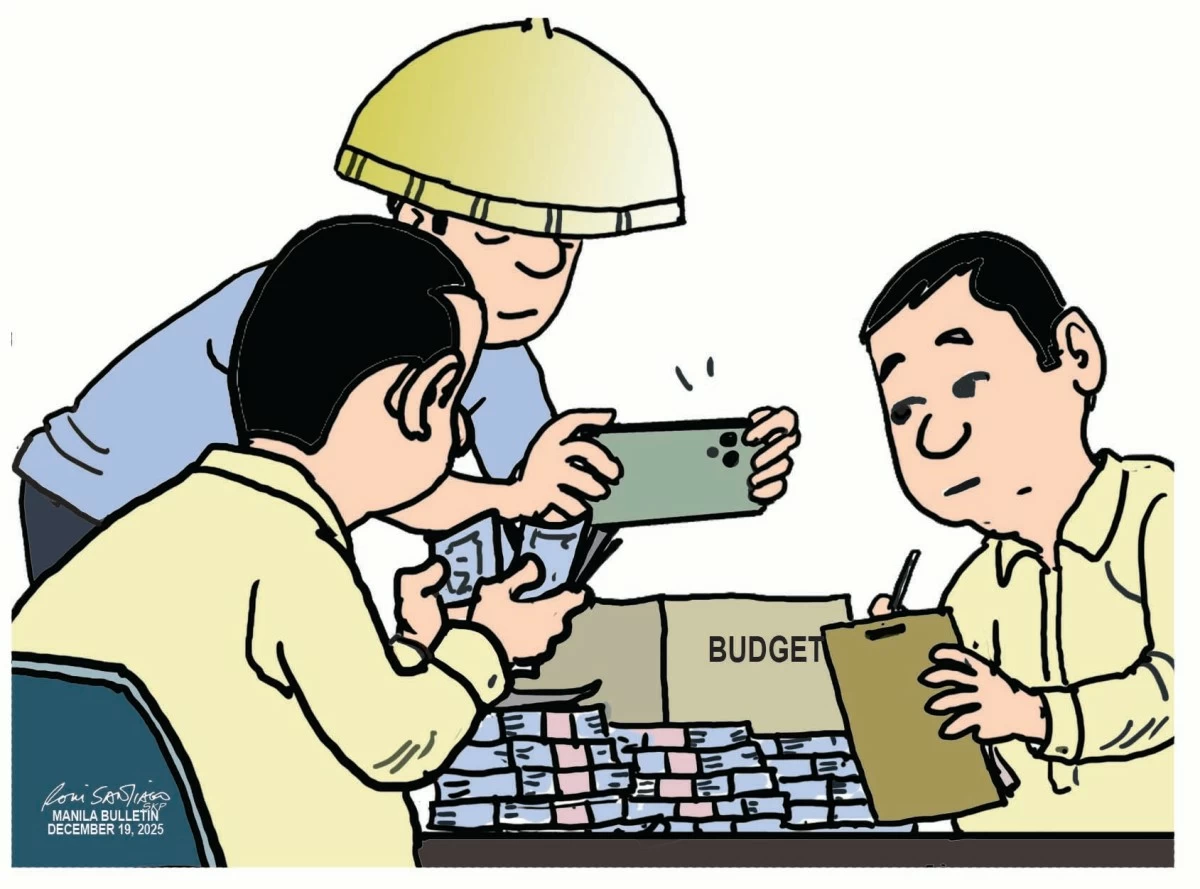
The reconciliation of the disagreeing provisions in the proposed 2026 national budget by the Bicameral Conference Committee is a welcome, if overdue, development. With the slashing of ₱20.7 billion from contentious Department of Public Works and Highways projects and the realignment of a substantial portion to the Philippine Health Insurance Corporation (PhilHealth), lawmakers have taken a step that signals responsiveness to public clamor. But reconciliation is only half the task. What the country urgently needs now is swift ratification by both houses of Congress, so President Ferdinand Marcos Jr. is given ample lead time to study the budget thoroughly before signing it into law.
Time is crucial here. It is the difference between a well-considered national spending plan and a rushed enactment that invites suspicion and undermines credibility. The nation cannot afford a repeat of the tainted 2025 national budget—one marred by questions of insertions, blurred accountability, and last-minute maneuvering that eroded public trust. A reenacted budget, or one signed under pressure and without careful scrutiny, would only deepen cynicism toward institutions already struggling to regain confidence.
The unresolved issue of the Medical Assistance to Indigent and Financially Incapacitated Patients (MAIFIP) illustrates why caution is essential. The opacity surrounding how this was settled in the bicam is troubling. Senate President Protempore Panfilo Lacson’s firm stance that there should “absolutely” be no guarantee letters (GLs) is a position grounded in principle. GLs, when issued by lawmakers and politicians, blur the line between compassionate governance and patronage politics. If additional funds are to be channeled to the Department of Health and PhilHealth, they must be institutionalized, transparent, and free from political fingerprints.
The same warning applies to the Assistance to Individuals in Crisis Situations (AICS). Both MAIFIP and AICS address real and urgent human needs, no doubt about it. But they also carry the perennial risk of becoming smokescreens for pork barrel—disguised discretionary funds that reward loyalty, cultivate dependency, and undermine the rule-based delivery of social services. Members of both the House of Representatives and the Senate must temper their influence over these programs. Compassion should never be confused with control.
The ratification of the 2026 budget should therefore be seen not as a race to adjournment, but as a test of maturity. Congress must show that it can rise above parochial interests and respect the constitutional balance of powers by giving the President sufficient time for review. In doing so, lawmakers affirm that the budget is not a personal or political instrument, but a national covenant.
Yet responsibility does not rest with the government alone. The private sector has a vital role to play—not as a passive beneficiary of public spending, but as an active partner in monitoring outcomes, promoting efficiency, and ensuring that health and social protection funds translate into real services. Corporate social responsibility, public-private partnerships, and independent audits can reinforce accountability where public oversight is stretched thin.
Every Filipino, too, has a stake. Keep in mind that vigilance is not optional; it is civic duty. Asking questions, demanding transparency, and refusing to normalize abuse are small acts that collectively safeguard the integrity of the national budget, which we all should consider as a moral document. How it is crafted, ratified, and implemented reflects who we are—and who we aspire to be. Swift ratification, careful scrutiny, and shared vigilance can make the 2026 budget a tool for healing trust rather than reopening old wounds.
ADVERTISEMENT
.most-popular .layout-ratio{ padding-bottom: 79.13%; } @media (min-width: 768px) and (max-width: 1024px) { .widget-title { font-size: 15px !important; } }

{{ articles_filter_1561_widget.title }}

.most-popular .layout-ratio{ padding-bottom: 79.13%; } @media (min-width: 768px) and (max-width: 1024px) { .widget-title { font-size: 15px !important; } }

{{ articles_filter_1562_widget.title }}

.most-popular .layout-ratio{ padding-bottom: 79.13%; } @media (min-width: 768px) and (max-width: 1024px) { .widget-title { font-size: 15px !important; } }

{{ articles_filter_1563_widget.title }}

{{ articles_filter_1564_widget.title }}

.mb-article-details { position: relative; } .mb-article-details .article-body-preview, .mb-article-details .article-body-summary{ font-size: 17px; line-height: 30px; font-family: "Libre Caslon Text", serif; color: #000; } .mb-article-details .article-body-preview iframe , .mb-article-details .article-body-summary iframe{ width: 100%; margin: auto; } .read-more-background { background: linear-gradient(180deg, color(display-p3 1.000 1.000 1.000 / 0) 13.75%, color(display-p3 1.000 1.000 1.000 / 0.8) 30.79%, color(display-p3 1.000 1.000 1.000) 72.5%); position: absolute; height: 200px; width: 100%; bottom: 0; display: flex; justify-content: center; align-items: center; padding: 0; } .read-more-background a{ color: #000; } .read-more-btn { padding: 17px 45px; font-family: Inter; font-weight: 700; font-size: 18px; line-height: 16px; text-align: center; vertical-align: middle; border: 1px solid black; background-color: white; } .hidden { display: none; }
function initializeAllSwipers() { // Get all hidden inputs with cms_article_id document.querySelectorAll('[id^="cms_article_id_"]').forEach(function (input) { const cmsArticleId = input.value; const articleSelector = '#article-' + cmsArticleId + ' .body_images'; const swiperElement = document.querySelector(articleSelector); if (swiperElement && !swiperElement.classList.contains('swiper-initialized')) { new Swiper(articleSelector, { loop: true, pagination: false, navigation: { nextEl: '#article-' + cmsArticleId + ' .swiper-button-next', prevEl: '#article-' + cmsArticleId + ' .swiper-button-prev', }, }); } }); } setTimeout(initializeAllSwipers, 3000); const intersectionObserver = new IntersectionObserver( (entries) => { entries.forEach((entry) => { if (entry.isIntersecting) { const newUrl = entry.target.getAttribute("data-url"); if (newUrl) { history.pushState(null, null, newUrl); let article = entry.target; // Extract metadata const author = article.querySelector('.author-section').textContent.replace('By', '').trim(); const section = article.querySelector('.section-info ').textContent.replace(' ', ' '); const title = article.querySelector('.article-title h1').textContent; // Parse URL for Chartbeat path format const parsedUrl = new URL(newUrl, window.location.origin); const cleanUrl = parsedUrl.host + parsedUrl.pathname; // Update Chartbeat configuration if (typeof window._sf_async_config !== 'undefined') { window._sf_async_config.path = cleanUrl; window._sf_async_config.sections = section; window._sf_async_config.authors = author; } // Track virtual page view with Chartbeat if (typeof pSUPERFLY !== 'undefined' && typeof pSUPERFLY.virtualPage === 'function') { try { pSUPERFLY.virtualPage({ path: cleanUrl, title: title, sections: section, authors: author }); } catch (error) { console.error('ping error', error); } } // Optional: Update document title if (title && title !== document.title) { document.title = title; } } } }); }, { threshold: 0.1 } ); function showArticleBody(button) { const article = button.closest("article"); const summary = article.querySelector(".article-body-summary"); const body = article.querySelector(".article-body-preview"); const readMoreSection = article.querySelector(".read-more-background"); // Hide summary and read-more section summary.style.display = "none"; readMoreSection.style.display = "none"; // Show the full article body body.classList.remove("hidden"); } document.addEventListener("DOMContentLoaded", () => { let loadCount = 0; // Track how many times articles are loaded const offset = [1, 2, 3, 4, 5, 6, 7, 8, 9, 10]; // Offset values const currentUrl = window.location.pathname.substring(1); let isLoading = false; // Prevent multiple calls if (!currentUrl) { console.log("Current URL is invalid."); return; } const sentinel = document.getElementById("load-more-sentinel"); if (!sentinel) { console.log("Sentinel element not found."); return; } function isSentinelVisible() { const rect = sentinel.getBoundingClientRect(); return ( rect.top < window.innerHeight && rect.bottom >= 0 ); } function onScroll() { if (isLoading) return; if (isSentinelVisible()) { if (loadCount >= offset.length) { console.log("Maximum load attempts reached."); window.removeEventListener("scroll", onScroll); return; } isLoading = true; const currentOffset = offset[loadCount]; window.loadMoreItems().then(() => { let article = document.querySelector('#widget_1690 > div:nth-last-of-type(2) article'); intersectionObserver.observe(article) loadCount++; }).catch(error => { console.error("Error loading more items:", error); }).finally(() => { isLoading = false; }); } } window.addEventListener("scroll", onScroll); });

Sign up by email to receive news.