ADVERTISEMENT

British baker's criticism of Mexican 'ugly' bread triggers social media outrage

Published Dec 19, 2025 11:35 am
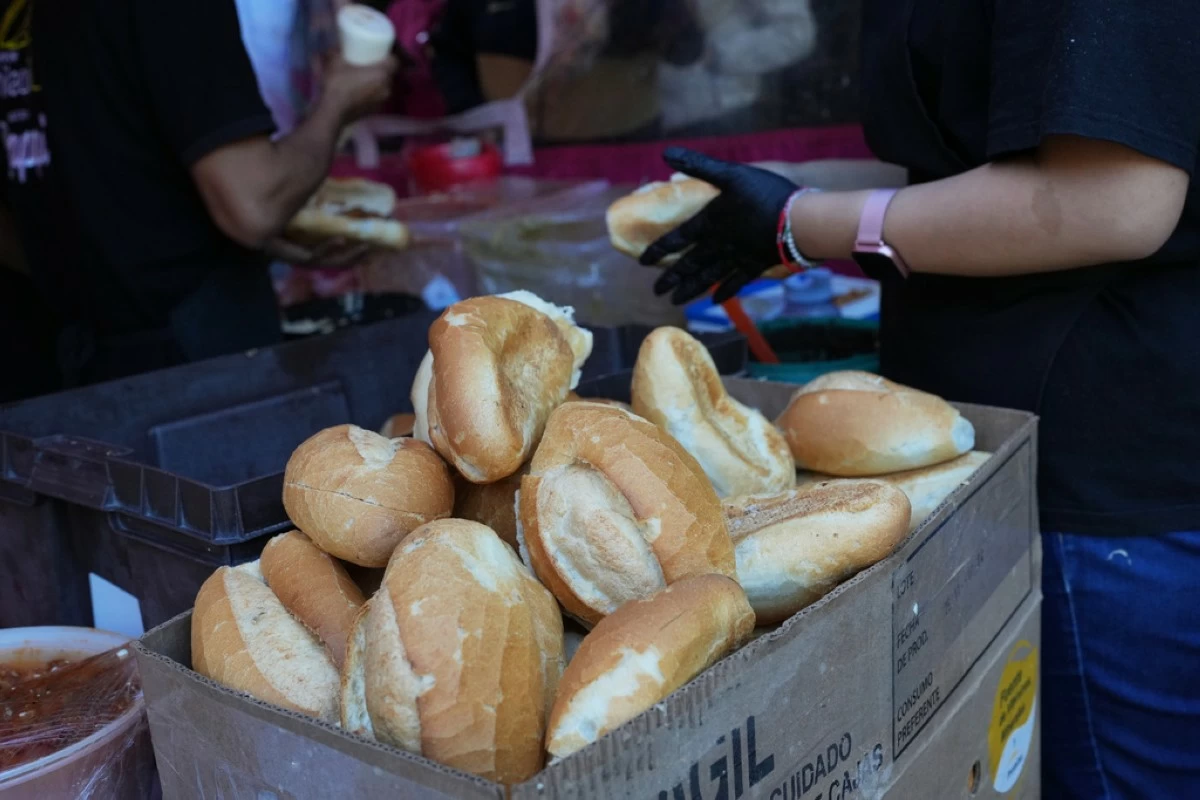
Bolillos, a traditional Mexican bread, for sale at a street stand in Mexico City, Thursday, Dec. 18, 2025. (AP Photo/Marco Ugarte)
MEXICO CITY (AP) — A blunt critique of Mexican bread by a British baker sparked a cascade of social media outrage, ultimately leading to a public apology.
In an interview for a food-themed podcast that resurfaced online, Richard Hart, the co-founder of Green Rhino bakery in Mexico City and a well-known figure in international baking circles, said Mexicans “don’t really have much of a bread culture,” adding that “They make sandwiches on these white, ugly rolls that are pretty cheap and industrially made.”
His comments quickly rippled across Instagram, TikTok and X, with many Mexicans accusing him of being dismissive and insulting of Mexico's traditional breads.
What began as a dispute over bread soon ignited a national debate over food identity — not only over who defines Mexican culinary traditions, but also over the growing influence of foreigners in a capital already tense from a surge of U.S. expatriates and tourists.
“He offended the community of bakers in Mexico and all the people in Mexico who like bread, which is almost everyone," said Daniela Delgado, a university student in Mexico City.
‘Don’t mess with the bolillo’
Social media was soon flooded with memes, reaction videos, and passionate defenses of Mexican bread. Users took to social media to praise everyday staples — from the crusty bolillos used for tortas to the iconic conchas found in neighborhood bakeries. In many cases, these simple street foods act as a uniting factor across social groups and classes, and often cut to the core of the country's cultural identity.
While wheat bread was introduced to Mexico during the colonial period, the classic food staple evolved into a distinct national tradition, blending European techniques with local tastes and ingredients. Today, small neighborhood bakeries remain central to daily life in cities and towns, serving as social hubs as well as food sources.
A vendor prepares a bolillo, a traditional Mexican bread, for consumption at a street stand in Mexico City, Thursday, Dec. 18, 2025. (AP Photo/Marco Ugarte)
The incident prompted many to question why a foreign entrepreneur would publicly disparage a staple so deeply embedded in Mexican life. For many, Hart's remarks echoed long-standing frustrations over foreign chefs and restaurateurs receiving disproportionate prestige, as well as concerns over gentrification in the capital.
“Don't mess with the bolillo,” warned one viral post on X.
An opportunity to learn’
As criticism mounted, Hart issued a public apology on Instagram, saying his comments were poorly phrased and did not show respect for Mexico and its people. He acknowledged the emotional response and said he didn't behave as a “guest."
“I made a mistake,” Hart said in his statement. “I regret it deeply.”
The Associated Press reached out to Green Rhino, but representatives of the bakery declined to comment.
Hart previously worked at high-profile bakeries in the United States and Europe and has been part of Mexico City’s growing artisanal bread scene. That market caters largely to middle and upper-class customers, many of them foreigners, seeking sourdough loaves and European-style pastries, often at prices far above those of neighborhood bakeries.
The apology did little to immediately quiet the debate. While some users accepted it, others said it failed to address deeper concerns about cultural authority and who gets to critique Mexican traditions.
“If you want to be part of Mexican culture by owning a restaurant or bakery, you have to educate yourself,” Delgado said.
Others, like Josué Martínez, a chef at the Mexican Culinary School, said he was happy that the debate was happening because it opened the door for a more robust and nuanced discussion.
Mexican bread has long been criticized domestically for its industrialization and reliance on white flour and sugar. But many like Martínez say those conversations are different and more nuanced when led by Mexicans themselves rather than by a foreign entrepreneur.
“It’s an opportunity to learn about the culture of Mexican breadmaking and pastry, to take pride in it, to highlight the richness of our ingredients, and to stop thinking that the so-called first world represents the ultimate standard," Martínez said.

Related Tags

WORLDNEWS
ADVERTISEMENT
.most-popular .layout-ratio{ padding-bottom: 79.13%; } @media (min-width: 768px) and (max-width: 1024px) { .widget-title { font-size: 15px !important; } }

{{ articles_filter_1561_widget.title }}

.most-popular .layout-ratio{ padding-bottom: 79.13%; } @media (min-width: 768px) and (max-width: 1024px) { .widget-title { font-size: 15px !important; } }

{{ articles_filter_1562_widget.title }}

.most-popular .layout-ratio{ padding-bottom: 79.13%; } @media (min-width: 768px) and (max-width: 1024px) { .widget-title { font-size: 15px !important; } }

{{ articles_filter_1563_widget.title }}

{{ articles_filter_1564_widget.title }}

.mb-article-details { position: relative; } .mb-article-details .article-body-preview, .mb-article-details .article-body-summary{ font-size: 17px; line-height: 30px; font-family: "Libre Caslon Text", serif; color: #000; } .mb-article-details .article-body-preview iframe , .mb-article-details .article-body-summary iframe{ width: 100%; margin: auto; } .read-more-background { background: linear-gradient(180deg, color(display-p3 1.000 1.000 1.000 / 0) 13.75%, color(display-p3 1.000 1.000 1.000 / 0.8) 30.79%, color(display-p3 1.000 1.000 1.000) 72.5%); position: absolute; height: 200px; width: 100%; bottom: 0; display: flex; justify-content: center; align-items: center; padding: 0; } .read-more-background a{ color: #000; } .read-more-btn { padding: 17px 45px; font-family: Inter; font-weight: 700; font-size: 18px; line-height: 16px; text-align: center; vertical-align: middle; border: 1px solid black; background-color: white; } .hidden { display: none; }
function initializeAllSwipers() { // Get all hidden inputs with cms_article_id document.querySelectorAll('[id^="cms_article_id_"]').forEach(function (input) { const cmsArticleId = input.value; const articleSelector = '#article-' + cmsArticleId + ' .body_images'; const swiperElement = document.querySelector(articleSelector); if (swiperElement && !swiperElement.classList.contains('swiper-initialized')) { new Swiper(articleSelector, { loop: true, pagination: false, navigation: { nextEl: '#article-' + cmsArticleId + ' .swiper-button-next', prevEl: '#article-' + cmsArticleId + ' .swiper-button-prev', }, }); } }); } setTimeout(initializeAllSwipers, 3000); const intersectionObserver = new IntersectionObserver( (entries) => { entries.forEach((entry) => { if (entry.isIntersecting) { const newUrl = entry.target.getAttribute("data-url"); if (newUrl) { history.pushState(null, null, newUrl); let article = entry.target; // Extract metadata const author = article.querySelector('.author-section').textContent.replace('By', '').trim(); const section = article.querySelector('.section-info ').textContent.replace(' ', ' '); const title = article.querySelector('.article-title h1').textContent; // Parse URL for Chartbeat path format const parsedUrl = new URL(newUrl, window.location.origin); const cleanUrl = parsedUrl.host + parsedUrl.pathname; // Update Chartbeat configuration if (typeof window._sf_async_config !== 'undefined') { window._sf_async_config.path = cleanUrl; window._sf_async_config.sections = section; window._sf_async_config.authors = author; } // Track virtual page view with Chartbeat if (typeof pSUPERFLY !== 'undefined' && typeof pSUPERFLY.virtualPage === 'function') { try { pSUPERFLY.virtualPage({ path: cleanUrl, title: title, sections: section, authors: author }); } catch (error) { console.error('ping error', error); } } // Optional: Update document title if (title && title !== document.title) { document.title = title; } } } }); }, { threshold: 0.1 } ); function showArticleBody(button) { const article = button.closest("article"); const summary = article.querySelector(".article-body-summary"); const body = article.querySelector(".article-body-preview"); const readMoreSection = article.querySelector(".read-more-background"); // Hide summary and read-more section summary.style.display = "none"; readMoreSection.style.display = "none"; // Show the full article body body.classList.remove("hidden"); } document.addEventListener("DOMContentLoaded", () => { let loadCount = 0; // Track how many times articles are loaded const offset = [1, 2, 3, 4, 5, 6, 7, 8, 9, 10]; // Offset values const currentUrl = window.location.pathname.substring(1); let isLoading = false; // Prevent multiple calls if (!currentUrl) { console.log("Current URL is invalid."); return; } const sentinel = document.getElementById("load-more-sentinel"); if (!sentinel) { console.log("Sentinel element not found."); return; } function isSentinelVisible() { const rect = sentinel.getBoundingClientRect(); return ( rect.top < window.innerHeight && rect.bottom >= 0 ); } function onScroll() { if (isLoading) return; if (isSentinelVisible()) { if (loadCount >= offset.length) { console.log("Maximum load attempts reached."); window.removeEventListener("scroll", onScroll); return; } isLoading = true; const currentOffset = offset[loadCount]; window.loadMoreItems().then(() => { let article = document.querySelector('#widget_1690 > div:nth-last-of-type(2) article'); intersectionObserver.observe(article) loadCount++; }).catch(error => { console.error("Error loading more items:", error); }).finally(() => { isLoading = false; }); } } window.addEventListener("scroll", onScroll); });

Sign up by email to receive news.